Drug Withdrawal Risk Calculator
This tool helps you understand the potential risk of a drug being withdrawn from the market. The FDA's new 2023 reforms have shortened withdrawal timelines, but the process depends on approval pathway and confirmatory study status.
Drug Information
Results
Every year, dozens of medications disappear from pharmacy shelves-not because they’re outdated, but because they’re dangerous or don’t work. The FDA doesn’t remove drugs lightly, but when the evidence piles up, it has to act. And yet, the system has taken far too long to catch up with the science. Patients have been stuck on drugs that later proved ineffective, sometimes for years, while regulators scrambled to respond. The process of pulling a drug off the market is complex, slow, and often painfully delayed-but recent changes are finally starting to fix it.
How a Drug Gets Removed from the Market
Not all drug removals are the same. Some are voluntary, others are forced. When a company decides to stop selling a drug because of low sales or manufacturing issues, that’s a voluntary withdrawal. But if the FDA steps in because the drug is unsafe or doesn’t deliver on its promised benefits, that’s a mandatory withdrawal-and it’s where the real problems have historically occurred.
The FDA defines a drug as "withdrawn from sale" only when the manufacturer stops distributing it due to safety or effectiveness concerns. A temporary stockout? That doesn’t count. A supply chain hiccup? Not a withdrawal. Only when the reason is tied to patient risk does the FDA treat it as a formal removal.
There are two main approval paths that determine how a drug can be pulled: traditional approval and accelerated approval. Traditional approval requires solid proof of benefit before the drug hits the market. Accelerated approval, on the other hand, lets drugs reach patients faster based on early signs-like tumor shrinkage in cancer trials-that are believed to predict real clinical benefit. But that benefit must be confirmed later. If it isn’t? That’s when the withdrawal process kicks in.
The Long Wait: How Long It Used to Take
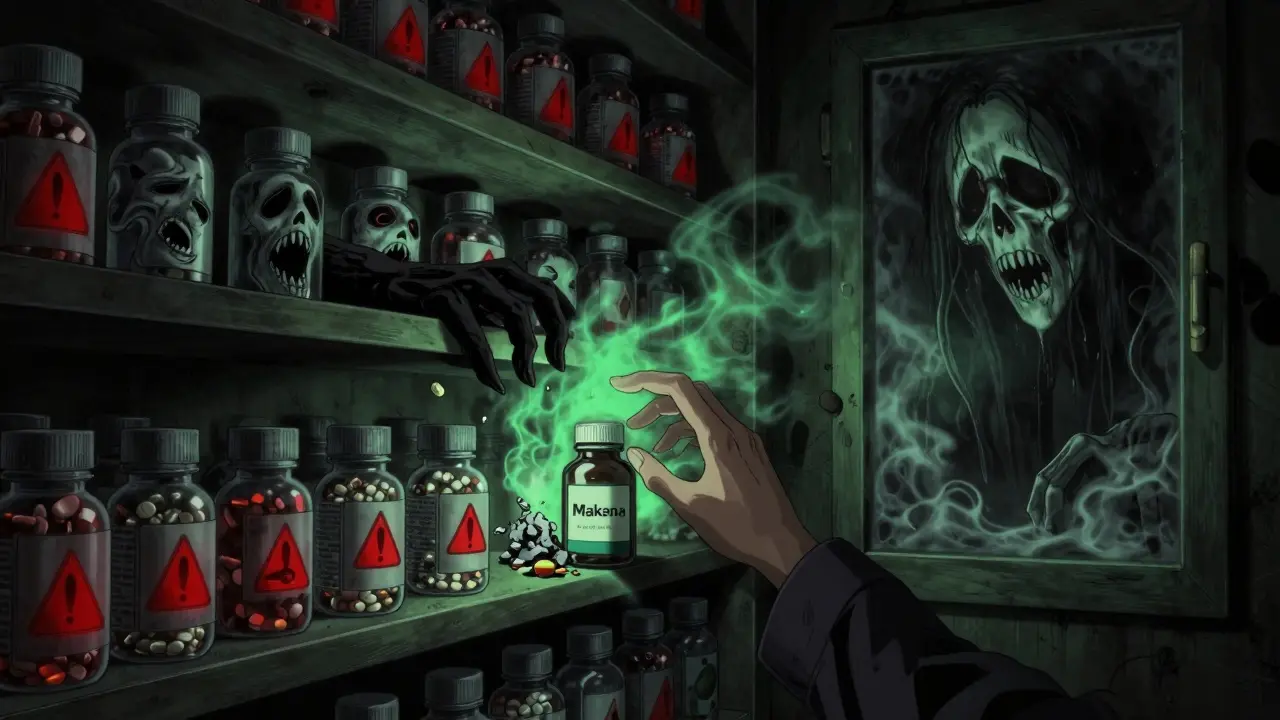
Before 2023, the FDA’s withdrawal process was broken. Take Makena, a drug approved in 2011 to prevent preterm birth. By 2020, a large confirmatory trial showed it didn’t work. But the FDA didn’t pull it until 2022-over two years after the evidence was clear. That’s 1,500 days of patients still being prescribed a drug with no proven benefit.
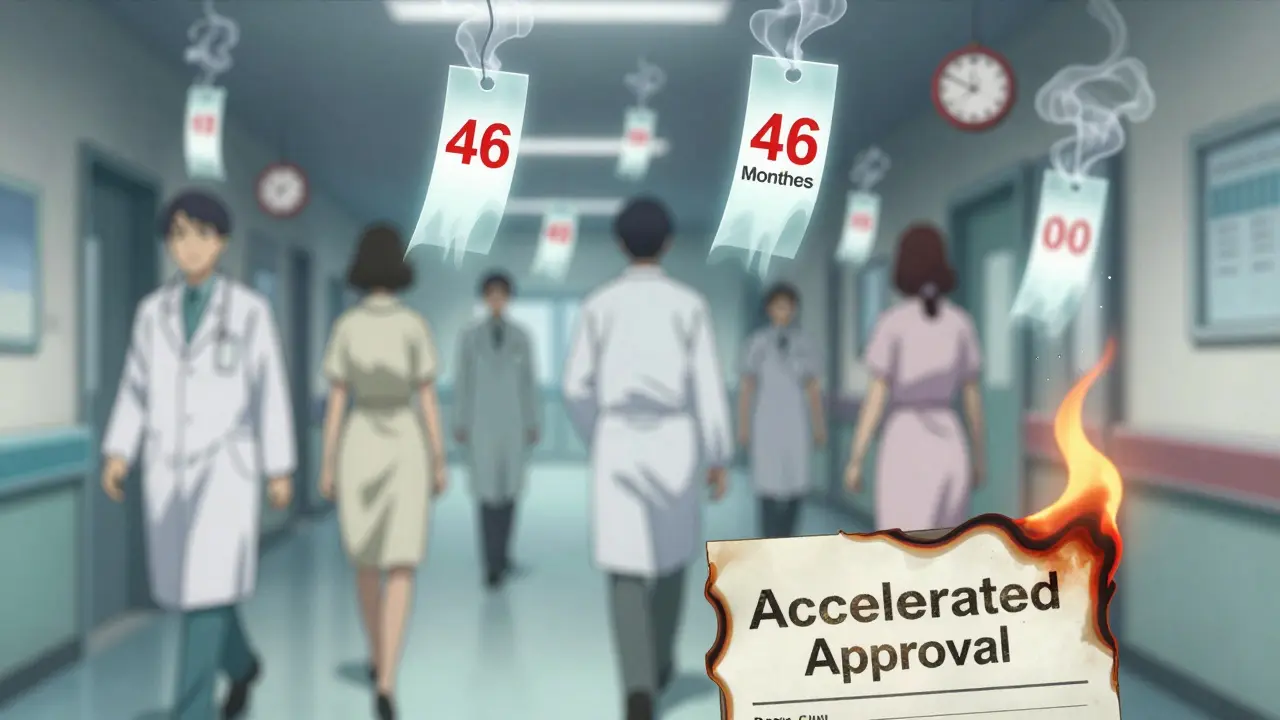
Research from Penn LDI found that, on average, it took the FDA 46 months (almost four years) to withdraw a drug that had been approved under the accelerated pathway. For some cancers, like small cell lung cancer, over 40% of eligible patients received drugs that were later pulled. That’s not just a delay-it’s a public health failure.
Why so slow? The old system had no deadlines. The FDA would notify the manufacturer, wait for feedback, hold meetings, open public comment periods, and then decide. All of this could stretch out for years. Meanwhile, doctors kept prescribing. Patients kept taking the drugs. And the FDA had no real power to speed things up.
The 2023 Reform: What Changed
In December 2023, Congress passed the Consolidated Appropriations Act, and with it, the FDA finally got real authority to act faster. The new law created a streamlined withdrawal process specifically for drugs approved under accelerated approval. Now, the FDA can move quickly if:
- The drug sponsor fails to conduct required post-approval studies on time
- The confirmatory study doesn’t prove the drug works
- Real-world data or independent research shows the drug is unsafe or ineffective
- The company promotes the drug with false or misleading claims
This isn’t just about speed-it’s about structure. Under the new rules, the FDA must give the manufacturer notice within 30 days, offer a meeting within 60 days, and issue a final decision within 180 days. That’s a huge shift from the old, open-ended process.
The first drug pulled under this new system was an ALS treatment in August 2023. It wasn’t the first drug to be withdrawn, but it was the first to be removed under a clear, timed process. The FDA also created a dedicated team of 12 scientists and doctors to handle these cases, with a goal of cutting withdrawal time from 46 months to under 12.
Who Gets Affected-and How
When a drug is pulled, it doesn’t just vanish from shelves. It ripples through the healthcare system.
Doctors have to switch patients to alternatives. Oncology practices report it takes an average of 72 hours to develop new treatment plans once a drug is withdrawn. Pharmacists struggle to keep up: a 2022 survey found 63% still couldn’t reliably interpret the FDA’s Orange Book listings, which track which drugs are approved and which have been withdrawn.
Patients are the ones who pay the biggest price. Many don’t know their drug is under review. One metastatic breast cancer patient shared online: "I was on [withdrawn drug] for 18 months before the confirmatory trial failed. My oncologist said it was standard of care at the time-but now we know it didn’t actually help."
Reddit threads like "How many of you have been on drugs later withdrawn?" have hundreds of responses. Over 85% of commenters said they were worried their current prescriptions could vanish without warning. Patient advocacy groups are pushing for better communication-like mandatory letters to patients or alerts in electronic health records.
Why Oncology Is Ground Zero
More than 40% of all accelerated approvals are for cancer drugs. That’s why the oncology sector has seen the highest number of withdrawals. Between 2010 and 2020, about 12.7% of accelerated approvals were eventually pulled. That’s one in eight drugs.
Why? Because cancer is complex. Drugs that shrink tumors don’t always extend life. The FDA used to approve based on tumor response rates-quick, measurable outcomes. But survival, quality of life, and side effects matter more. When follow-up trials showed no survival benefit, the drugs had to go. And patients had already been exposed for years.
One drug, approved for small cell lung cancer, was given to 41% of eligible patients before being withdrawn. That’s thousands of people who endured toxic side effects for no benefit. The new 2023 rules are designed to stop this from happening again.
Global Differences: How Other Countries Handle It
The U.S. wasn’t alone in struggling with this problem-but it was one of the slowest. The European Medicines Agency (EMA) and Health Canada have long used "conditional approval," where drugs are approved with strict requirements to prove benefit within a set time. If the sponsor doesn’t deliver, the drug is pulled automatically.
The FDA didn’t have that power until 2023. Its main tool was Postmarketing Required studies (PMRs), which could only be forced in limited cases. The new law borrows from this international model, giving the FDA clearer authority to tie approval to performance.
That’s not just a legal change-it’s a cultural one. The U.S. is moving from a "approve first, ask questions later" mindset to one that demands accountability. It’s not perfect, but it’s progress.
What’s Next: Real-World Evidence and the Future
The FDA is now testing a pilot program using real-world data from Flatiron Health, a company that collects treatment outcomes from thousands of cancer clinics. Instead of waiting for slow, expensive clinical trials, regulators may soon use actual patient data to spot drugs that aren’t working.
By 2027, Evaluate Pharma predicts a 25% increase in drug withdrawals as the new system kicks in. That could mean $8.2 billion in lost annual sales-but also fewer patients harmed.
Pharmaceutical companies are adapting too. Nearly 80% of major oncology drugmakers now include withdrawal scenarios in their risk management plans. They’re building contingency strategies, not just hoping they won’t get caught.
Still, concerns remain. Industry groups warn that too-fast withdrawals could scare off innovation in high-risk areas like rare diseases. But patient advocates say the bigger risk is doing nothing. "The true test," says the National Organization for Rare Disorders, "is how quickly the FDA acts when the evidence is clear."
The Makena case exposed a system that valued speed over safety. The 2023 reforms are the first real step toward fixing that. It’s not about taking drugs away-it’s about making sure patients only get medicines that actually help.
What’s the difference between a drug recall and a withdrawal?
A recall happens when a specific batch of a drug is pulled due to contamination, labeling errors, or manufacturing defects-but the drug itself is still considered safe and effective. A withdrawal means the entire drug is removed from the market because it’s unsafe or ineffective, regardless of the batch. Recalls are about quality; withdrawals are about safety or performance.
Can a drug be withdrawn even if it’s still being sold by other companies?
Yes. If a brand-name drug is withdrawn, any generic versions approved under it are also affected. The FDA updates the Orange Book monthly to show which drugs are no longer approved as reference products. Even if another company still sells the same drug, it can’t legally be marketed if the original sponsor’s approval was withdrawn for safety or effectiveness reasons.
How do I know if my medication has been withdrawn?
Your pharmacist should be notified by the FDA and your doctor’s office. You can also check the FDA’s Orange Book online or look for Federal Register notices. But the best way is to ask your doctor or pharmacist directly if your drug has been under review. Don’t rely on online searches-many sites don’t update in real time.
Why do some drugs get approved if they might later be pulled?
For serious conditions like cancer or rare diseases, patients often need options fast. Accelerated approval lets life-saving drugs reach people while confirmatory studies are still ongoing. The problem wasn’t the approval-it was the delay in pulling drugs that failed those later tests. The 2023 reforms fix that gap.
Are withdrawn drugs ever brought back to market?
Rarely. Once a drug is withdrawn for safety or effectiveness reasons, it’s extremely difficult to get reinstated. The FDA requires new, strong evidence that addresses the original concerns. In very few cases, like certain HIV drugs, companies have reapplied after fixing manufacturing or dosing issues-but never after a confirmed lack of benefit.
What You Should Do Now
If you’re taking a drug that was approved under accelerated approval-especially for cancer, rare diseases, or chronic conditions-ask your doctor if it’s been reviewed for withdrawal. Don’t assume it’s safe just because you’ve been on it for years. Ask if there’s a confirmatory study underway, and whether results are available.
Pharmacists can help you check the FDA’s Orange Book for updates. If your drug is pulled, don’t stop taking it suddenly-work with your provider to switch safely. And if you’ve been on a drug later withdrawn, your experience matters. Share it with patient advocacy groups. Your voice helps push for faster change.
The system isn’t perfect yet. But it’s moving. And for patients who’ve waited too long for answers, that’s the first real sign of progress.




15 Comments
Vikrant Sura
December 22, 2025 AT 07:07 AMSo let me get this straight - we approve drugs based on tumor shrinkage, then wait years to see if people actually live longer? That’s not science, that’s casino betting with human lives.
Cara Hritz
December 23, 2025 AT 03:38 AMWait so Makena got pulled? I was on that for my preterm thing lol. My doc said it was ‘standard’ but now I’m scared to even look at my med list. 😳
Aliyu Sani
December 25, 2025 AT 03:03 AMIt’s not just the FDA’s fault - it’s the entire ecosystem. Pharma funds the trials, the journals publish the hype, docs prescribe based on reps’ slides, and patients? They’re just hoping the next pill doesn’t kill them before the disease does. We built a machine that rewards speed over truth. Now we’re surprised it’s broken?
Accelerated approval wasn’t the flaw. The flaw was letting companies off the hook for proof. It’s like giving someone a driver’s license after they parallel park in a parking lot… then waiting five years to check if they can actually drive on a highway.
And don’t get me started on how we treat cancer like a video game - kill the boss (tumor), win the level. But if the boss respawns and you’re still dead in three months? Turns out you didn’t win. You just got lucky with a glitch.
Sai Keerthan Reddy Proddatoori
December 26, 2025 AT 06:46 AMThis is why America is weak. In my country, we don’t wait for studies. If a drug works even a little, we give it to the people. Why let bureaucracy kill hope? You think the rich in US get this treatment delay? No. They get the new stuff first. The poor get the leftovers and the waiting.
Herman Rousseau
December 27, 2025 AT 14:30 PMBig win for patients. 🙌 The 180-day rule? That’s a game-changer. I’ve seen too many folks on drugs that didn’t work - and the silence from docs was deafening. Now there’s at least a timeline. Still, we need better patient alerts. Not everyone checks the Orange Book. Text alerts? Email from EHRs? That’s the next step.
Also - shoutout to the 12-person FDA team. Y’all are the unsung heroes. No medals, no press, just quietly saving lives one withdrawn drug at a time.
Jamison Kissh
December 27, 2025 AT 23:03 PMWhat’s the philosophical cost here? We’ve turned medicine into a race - fastest approval wins, not best outcome. But life isn’t a sprint. It’s a slow accumulation of trust. When we break that trust - by approving drugs we know might fail - we don’t just lose a medication. We lose faith in the system itself.
And yet… isn’t accelerated approval born from desperation? When you’re dying and your only hope is a drug in Phase 2, you don’t care about the stats. You care about the chance. So maybe the real question isn’t ‘Why did they approve it?’ but ‘Why did we let them have no other options?’
Jeremy Hendriks
December 28, 2025 AT 13:00 PMLet’s be real - this whole system is a corporate shell game. Big Pharma gets tax breaks, patents, and PR wins for ‘innovating’ - then when the drug flops, they quietly bury the data and move on to the next miracle cure. The FDA? Just the janitor cleaning up the mess after the party
And don’t tell me about ‘patient access’ - if a drug doesn’t work, access is just a fancy word for exploitation
Meanwhile, the CEOs get bonuses for ‘launching breakthrough therapies’ - even if those therapies are just expensive placebos with side effects
They’re not pulling drugs because they care - they’re pulling them because the math finally caught up
Tarun Sharma
December 30, 2025 AT 09:04 AMThe new timeline is a positive development. However, implementation will depend on regulatory capacity and industry cooperation. It is recommended that stakeholders maintain transparent communication channels to ensure smooth transitions for patients.
Kathryn Weymouth
December 30, 2025 AT 14:15 PMI’m a nurse in oncology. We had a patient on a drug that got pulled six months after she started. She didn’t know. Her oncologist didn’t know either - the chart hadn’t been updated. She got a rash, thought it was ‘normal,’ and kept taking it. We only found out when the pharmacy flagged it. This isn’t just policy - it’s a daily failure in communication.
Patients deserve to know. Not just ‘check the Orange Book’ - that’s a joke. Send a letter. Update the portal. Call them. Do something human.
Art Van Gelder
December 31, 2025 AT 12:00 PMLet me paint you a picture: A woman in Ohio, 54, metastatic breast cancer, on a drug approved under accelerated path. She’s got two kids, a dog named Biscuit, and a garden she tends every Sunday. She’s been on this drug for 22 months. She thinks it’s working. She’s hopeful. She posts on Reddit: ‘I’m still here, thanks to science!’
Meanwhile, in a lab in Maryland, a statistician is staring at a graph that says: ‘No survival benefit.’ The FDA gets the data. They sit on it for 14 months. The woman keeps taking it. Her hair falls out. Her appetite vanishes. Her dog licks her hand when she cries.
Then - one day - her oncologist says, ‘We’re switching you.’ She asks why. He says, ‘It’s not working.’ She says, ‘But I feel better.’ He says, ‘That’s the placebo.’ She doesn’t say anything. She just looks out the window.
That’s not medicine. That’s betrayal dressed in white coats. And the 2023 reform? It’s the first time I’ve felt like someone in the system finally got it.
We don’t need more studies. We need more empathy. And timelines that match the heartbeat of a human being, not the quarterly report of a corporation.
Candy Cotton
December 31, 2025 AT 18:04 PMEurope and Canada have had conditional approval for decades. Of course they’re faster. America is always last because we think we’re first. We don’t learn from others - we lecture them. Now we’re copying their system like we just discovered fire. Pathetic.
Sam Black
January 1, 2026 AT 05:07 AMReal-world data is the future. Imagine if we could track every patient on every drug - not just in trials, but in real clinics, in real time. No more waiting five years to find out a drug doesn’t work. We’d know in six months. That’s not sci-fi - it’s already happening in places like Flatiron. The question isn’t ‘Can we?’ It’s ‘Will we let the data speak?’
And if we do? We might finally stop treating patients like lab rats and start treating them like people.
Tony Du bled
January 1, 2026 AT 12:11 PMMy uncle was on one of those withdrawn cancer drugs. Took it for 18 months. Lost his hair, his appetite, his dignity. Then they told him it didn’t work. He just laughed and said, ‘Well, at least I didn’t die from the cancer.’ I still don’t know if that’s brave or broken.
Jim Brown
January 2, 2026 AT 20:10 PMThe moral architecture of pharmaceutical regulation has been inverted: efficacy is deferred, profit is immediate, and patient autonomy is treated as an afterthought. The accelerated approval paradigm, while ostensibly benevolent, functions as a Faustian bargain - trading the integrity of clinical evidence for the illusion of therapeutic urgency.
What we are witnessing is not merely bureaucratic reform, but a seismic epistemological shift - from deference to corporate discretion toward accountability grounded in empirical fidelity.
The 2023 legislation, though imperfect, represents a reclamation of the Hippocratic imperative: first, do no harm - even if it means withdrawing the very tools we once hailed as miracles.
Nader Bsyouni
January 3, 2026 AT 18:44 PMSo now we’re going to pull drugs faster because the FDA finally got a deadline? Wow. What a revelation. Meanwhile, the same agencies that approved these drugs in the first place are still in charge. The system didn’t change - it just added a timer to the same broken machine
And don’t pretend this is about patients. It’s about lawsuits. It’s about bad press. It’s about stock prices. The moment a drug stops making money? That’s when they pull it. Not when it stops working. When it stops being profitable.
Don’t cheer the reform. Watch what happens next. They’ll find a loophole. They always do