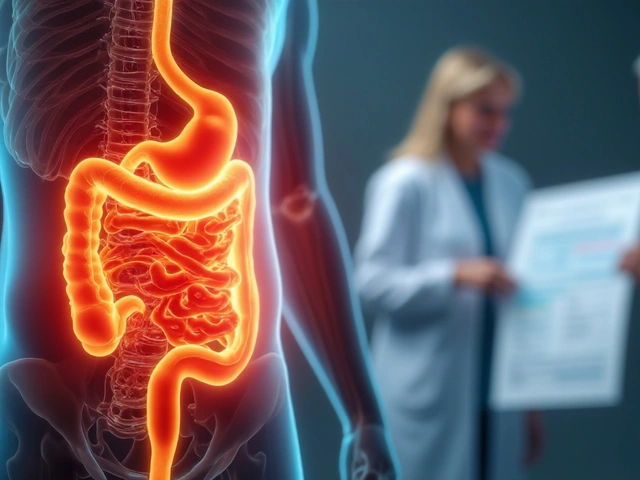
Imagine taking a life-saving pill on an empty stomach versus right after a heavy meal. In one scenario, the drug might hit your bloodstream quickly and effectively. In the other, it could sit in your stomach for hours, barely absorbing at all. This isn't just a theoretical worry; it’s the core reason why pharmaceutical companies must conduct fasted vs fed state testing. These dual-condition assessments are not optional extras-they are mandatory pillars of modern drug development that ensure medications work safely regardless of when you eat.
The difference between these two states is stark. A fasted state typically means no caloric intake for 8 to 12 hours, usually overnight. A fed state involves consuming a standardized high-fat, high-calorie meal shortly before dosing. While this sounds like simple logistics, the physiological changes inside your gastrointestinal tract during these periods dramatically alter how drugs dissolve, travel, and enter your system. Understanding why both conditions matter reveals the intricate dance between human biology and pharmaceutical chemistry.
The Physiology Behind the Test
To understand why testing differs, we have to look at what happens inside your body. Your stomach and intestines are not static pipes; they are dynamic organs that change behavior based on nutritional status. When you are fasting, your body enters a conservation mode. Gastric emptying-the process by which food leaves the stomach and moves into the small intestine-behaves differently than when you are full.
Research using SmartPill capsule technology has provided precise data on these differences. Studies show that gastric residence time averages just 13.7 minutes in a fasted state. In contrast, after eating a standard test meal, this time jumps to an average of 78.3 minutes. That’s nearly six times longer. During this extended period, the environment also shifts. The intragastric pH drops significantly, reaching a median minimum of 1.5 in the fed state compared to 2.5 in the fasted state. This increased acidity can degrade certain drugs or enhance the solubility of others.
Furthermore, pressure variations within the stomach play a crucial role. In a fasted state, pressure fluctuates widely, ranging from 30 to 304 mbar. However, in a fed state, pressures consistently exceed 240 mbar. These mechanical forces help mix the drug with digestive fluids. If a drug relies on this mixing to dissolve properly, the fed state becomes critical for its absorption. Without testing both scenarios, manufacturers might miss how these physical changes impact drug delivery.
FDA Standards and Regulatory Requirements
The regulatory landscape for drug approval is built on consistency and safety. The U.S. Food and Drug Administration (FDA) established clear guidelines in the late 1990s, specifically through the 1997 Guidance for Industry regarding Food-Effect Bioavailability and Fed Bioequivalence Studies. These rules were tightened further in 2002, defining exactly what constitutes a "fed" condition for testing purposes.
For a study to qualify as a fed-state test under FDA guidelines, participants must consume a high-fat, high-calorie meal. This meal must contain approximately 800 to 1,000 calories. Crucially, about 50% of those calories must come from fat, totaling 500 to 600 calories from fat alone. The remaining calories come from protein and carbohydrates. This specific composition is designed to delay gastric emptying maximally, creating a worst-case scenario for drug absorption timing.
Why such a strict definition? Because variability in real-world meals can skew results. By standardizing the meal, regulators ensure that any observed differences in drug performance are due to the physiological effects of food, not because one participant ate a salad while another ate a burger. As of recent years, dual-condition testing has become mandatory for most new oral drug applications. The European Medicines Agency (EMA) follows similar protocols, requiring fed-state testing for all oral drugs where the food effect is unknown. This harmonization ensures global safety standards.

Impact on Drug Absorption and Bioavailability
The most direct consequence of these physiological changes is altered bioavailability-the proportion of a drug that enters circulation unchanged. Food can act as a double-edged sword here. For some medications, food enhances absorption significantly. For others, it hinders it drastically.
Consider lipophilic compounds, which are fat-soluble. Drugs like fenofibrate often see their bioavailability increase by 200% to 300% when taken with food. The bile acids released during digestion help emulsify these fats, allowing the drug to dissolve more easily and cross intestinal walls. If a patient takes this medication fasted, they might receive only a fraction of the intended dose, leading to treatment failure.
Conversely, some drugs suffer in the presence of food. Griseofulvin, an antifungal medication, can experience a 50% to 70% decrease in absorption when taken with a meal. The delayed gastric emptying keeps the drug in the acidic stomach environment longer, potentially degrading it before it reaches the small intestine where most absorption occurs. In these cases, labeling instructions explicitly tell patients to take the drug on an empty stomach.
| Parameter | Fasted State | Fed State |
|---|---|---|
| Gastric Residence Time | Average 13.7 minutes | Average 78.3 minutes |
| Intragastric pH | Median min 2.5 | Median min 1.5 |
| Bile Acid Secretion | Low | High (enhances fat-soluble drug absorption) |
| Gastric Pressure | Variable (30-304 mbar) | Consistently >240 mbar |
| Typical Impact on Lipophilic Drugs | Lower absorption | Increased absorption (up to 300%) |

Real-World Implications for Patients
These scientific tests translate directly into the instructions printed on your prescription label. When you see "take with food" or "take on an empty stomach," that advice stems directly from fasted vs fed state testing data. Ignoring these instructions can lead to subtherapeutic levels or toxic overdoses.
For drugs with a narrow therapeutic index-where the difference between a helpful dose and a harmful one is small-food effects are particularly dangerous. If a medication’s bioavailability swings by more than 20% depending on food intake, regulators demand rigorous testing. Pharmacologists emphasize that fed-state testing is non-negotiable for these drugs. Imagine a blood thinner that works well when fasted but becomes dangerously potent after a meal. Without proper testing, patients could face unpredictable bleeding risks.
Diversity also plays a role. Recent FDA draft guidance highlights the need to include diverse ethnic populations in these trials. Research indicates that Asian subjects may exhibit 18% to 22% slower gastric emptying times in fed conditions compared to Caucasian subjects. This demographic variation means that a drug tested only on one population might behave differently in another. Ensuring broad representation helps create safer dosing guidelines for everyone.
Challenges in Standardization
While the protocols are strict, executing them perfectly is challenging. One major hurdle is simulating "real-world" feeding conditions. People don’t eat standardized 800-calorie high-fat meals every day. They eat varied diets at different times. Yet, the test meal must be consistent across all participants to yield valid data. Deviations of more than ±10% in calorie or macronutrient values can invalidate a trial.
Another challenge lies in patient compliance. Maintaining a true fasted state requires abstaining from food for 8 to 12 hours. For many participants, especially those with diabetes or metabolic conditions, this can be difficult. Even small sips of juice or coffee can trigger metabolic responses that technically break the fast. Researchers must monitor hydration status and pre-test activity carefully, ensuring participants remain sedentary for 24 hours prior to testing to avoid exercise-induced changes in gut motility.
Despite these challenges, the value of dual-condition testing remains unquestioned. It provides the comprehensive data needed to write accurate prescribing information. It protects patients from adverse events caused by unexpected food-drug interactions. And it ensures that generic drugs perform equivalently to brand-name counterparts under all common usage conditions.
What is the difference between fasted and fed state testing?
Fasted state testing measures drug absorption after 8-12 hours without food, while fed state testing measures absorption after consuming a standardized high-fat, high-calorie meal. The key difference lies in how long the drug stays in the stomach and how much it dissolves, which affects how much medicine enters your bloodstream.
Why do some drugs need to be taken with food?
Some drugs, particularly fat-soluble ones, absorb better with food because bile acids help dissolve them. Food also delays gastric emptying, giving the drug more time to interact with digestive enzymes. Taking these drugs on an empty stomach might result in poor absorption and reduced effectiveness.
How does food affect drug bioavailability?
Food can increase or decrease bioavailability. For lipophilic drugs, it can boost absorption by up to 300%. For others, it can reduce absorption by 50-70% by keeping the drug in the acidic stomach longer or binding to the medication. This variability is why dual testing is required.
What is the standard meal used in fed-state studies?
The FDA standard meal contains 800-1,000 calories, with about 50% of calories from fat (500-600 calories). This high-fat content maximizes the delay in gastric emptying, providing a rigorous test of how food impacts drug absorption.
Is fasted vs fed state testing mandatory for all drugs?
It is mandatory for most new oral drug applications. The FDA and EMA require it to determine if food significantly affects bioavailability. If the food effect exceeds 20%, specific labeling instructions are added to guide patients on whether to take the drug with or without food.