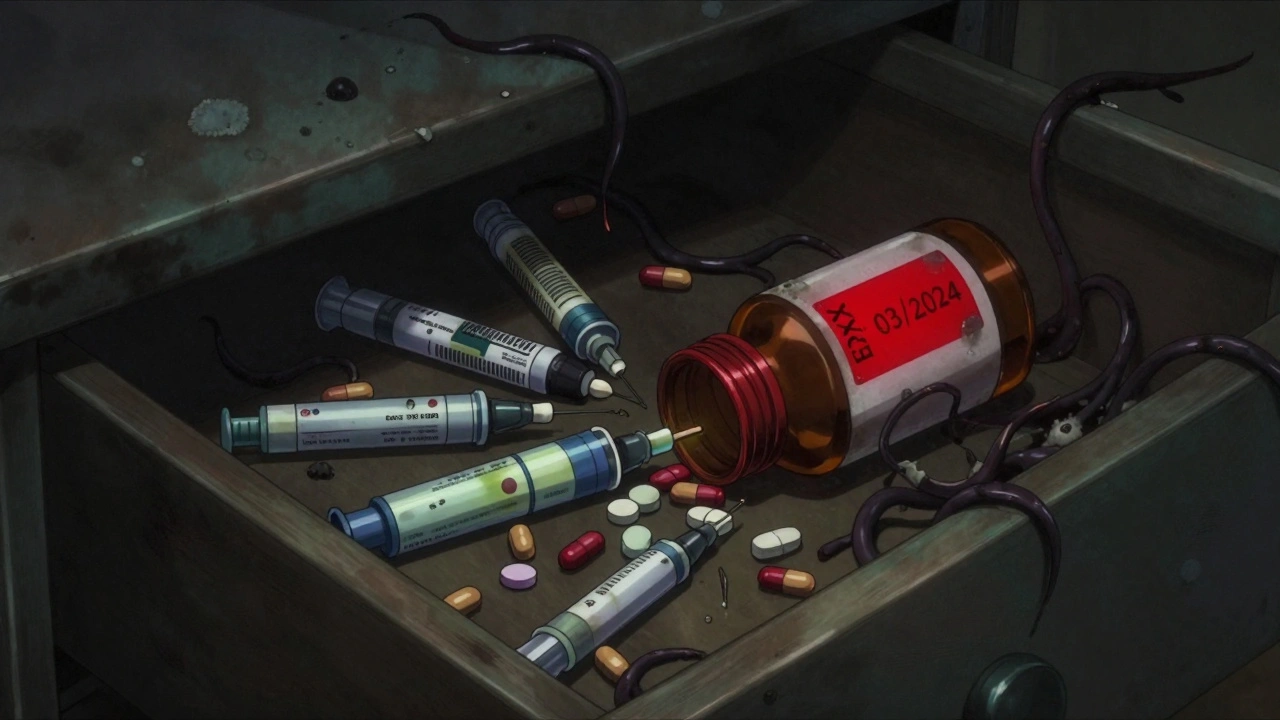
Every year, Americans throw away billions of pills, patches, and inhalers because they’re past their expiration date. But here’s the catch: many of those medications are still perfectly safe and effective. The problem isn’t always the drug-it’s the lack of a clear system to track what’s good, what’s risky, and what should be tossed. If you or someone you care for takes multiple medications, a simple expiration review schedule isn’t just smart-it’s lifesaving.
Why You Need a Medication Expiration Review Schedule
Expiration dates aren’t arbitrary. The FDA requires them based on stability testing. That means a drug is guaranteed to work as labeled up to that date-if stored correctly. But after that? It’s a gray zone. Some meds, like insulin or liquid antibiotics, lose potency fast. Others, like aspirin or acetaminophen, can stay strong for years. The real danger isn’t just ineffective pills-it’s the risk of taking something that’s degraded. A 2020 NIH study found that expired nitroglycerin can fail during a heart attack. Expired epinephrine auto-injectors may not stop anaphylaxis. And if your birth control pill is past its date, you’re not protected.Meanwhile, 68% of adults admit to using expired meds at least once. Why? They look fine. They smell fine. They cost too much to replace. But appearance doesn’t equal safety. A 2023 Pharmacy Times survey showed that 43% of people who took expired meds did so because they looked normal. That’s a dangerous assumption.
What Medications Are Most at Risk?
Not all meds age the same. Some degrade quickly. Others last longer. Know the difference.- High-risk (replace immediately after expiration): Insulin, nitroglycerin, liquid antibiotics, epinephrine auto-injectors, eye drops, and oral suspensions. These can become ineffective or even harmful.
- Medium-risk (check with pharmacist): Birth control pills, thyroid meds, seizure medications, and antidepressants. Potency loss can lead to serious health consequences.
- Lower-risk (often still effective): Solid tablets like ibuprofen, acetaminophen, antihistamines, and most antibiotics in pill form. A 2015 Mayo Clinic study found 90% of these retained potency 15+ years past expiration-when stored properly.
Storage matters as much as the date. Heat, light, and moisture kill meds faster. Keep them in a cool, dry place-not the bathroom or the dashboard of your car. Refrigeration helps for some, but never freeze unless the label says so.
Step-by-Step: Building Your Review Schedule
Creating a system doesn’t require an app or a fancy device. Just consistency.- Collect everything. Pull out every prescription, OTC pill, vitamin, and topical cream from your medicine cabinet, purse, and nightstand. Include pet meds if you give them.
- Sort by expiration date. Lay them out in order-from soonest to latest. Use a notepad or spreadsheet. Write down: name, strength, NDC (if visible), expiration date, and where it’s stored.
- Label clearly. Use bright stickers or a marker to highlight meds expiring in the next 30 days. Put a red dot on insulin pens and epinephrine auto-injectors. If the label is faded, call your pharmacy. They can reprint it.
- Set your review rhythm.
- Monthly: Refrigerated meds, insulin, liquid antibiotics.
- Quarterly: All other prescriptions and OTCs stored at room temperature.
- Every 6 months: Emergency meds like epinephrine or asthma inhalers (if not used regularly).
- Use the FEFO method. First Expired, First Out. When refilling, put new bottles at the back. Use the oldest ones first.
- Document changes. Every time you take a med, add it to your log. Did you use the last pill? Did you refill? Did you toss one? Keep a simple paper log or use a free app like Medisafe or Medisafe.
Tools That Actually Work
You don’t need expensive gadgets. But some tools make it easier.- Free templates: The National Council on Aging offers a printable Medication Expiration Log. Download it. Tape it to your fridge.
- Smartphone apps: Medisafe (free) sends reminders for doses and expiration dates. It syncs with your pharmacy. No subscription needed for basic alerts.
- Pill organizers: Hero Health’s dispenser costs $499 but auto-orders refills and tracks expiration. For most, a simple $10 weekly pill box with date labels works fine.
- Pharmacy services: CVS, Walgreens, and other chains offer free expiration tracking through their apps. Some even send text alerts when your meds are due to expire.
One study found that patients using these tools had 37% fewer expired meds in their homes after a year. That’s not magic-it’s consistency.
What to Do When a Med Expires
Don’t flush it. Don’t toss it in the trash. Don’t give it to a friend.Use a take-back program. Since 2021, over 8,300 locations across the U.S. accept expired or unwanted meds-pharmacies, police stations, and hospitals. The DEA’s National Prescription Drug Take Back Day happens twice a year, but many sites accept drops year-round. Find your nearest drop-off at DEA.gov/takeback.
If no drop-off is nearby, mix pills with kitty litter or coffee grounds in a sealed bag before throwing them away. Remove personal info from bottles. This reduces risk of misuse and environmental harm.
Common Mistakes and How to Avoid Them
People mess up in predictable ways.
- Mistake: Confusing manufacture date with expiration date. The expiration date is what matters. Look for “EXP” or “Expires.”
- Mistake: Keeping meds in the bathroom. Humidity kills them. Store in a bedroom drawer instead.
- Mistake: Assuming “expired” means “dangerous.” Most pills aren’t toxic after expiration-they’re just weaker. But for critical meds, weakness = risk.
- Mistake: Waiting until you run out to refill. Set a reminder 10 days before expiration to call your pharmacy. That way, you’re never without.
Seniors are especially vulnerable. A 2023 AARP survey found nearly half of older adults struggle to read small print on expiration labels. If this is you, ask your pharmacist to re-label bottles with big, bold text.

When to Call Your Pharmacist
You don’t have to guess. Pharmacists are trained to help.- If you’re unsure if a med is still good-call.
- If you’ve been using a med past its date and feel it’s not working-call.
- If you’re worried about cost and want to know if you can safely extend use-call.
Pharmacists can often extend the use of non-critical meds if stored properly. They can also help you get cheaper refills or patient assistance programs. Don’t let fear or confusion stop you from asking.
The Bigger Picture: Waste vs. Safety
Americans throw away $7.2 billion in unused meds every year. A big chunk of that is because people don’t know what’s still good. The FDA’s Shelf Life Extension Program found that military stockpiles of drugs remained effective for up to 9 years past expiration-under perfect storage. But your bathroom cabinet isn’t a military warehouse.So what’s the answer? Not blind trust in expiration dates. Not reckless use of old pills. It’s a middle path: a simple, regular review system that gives you confidence. You’re not just saving money. You’re preventing accidents. You’re making sure your meds work when you need them most.
Can I still use a medication after its expiration date?
It depends. Solid pills like ibuprofen or aspirin often remain effective for years past expiration if stored properly. But insulin, epinephrine, liquid antibiotics, and nitroglycerin should never be used past their date-they can fail when you need them most. When in doubt, consult your pharmacist. Never guess with critical meds.
How often should I check my medications?
Check refrigerated meds and insulin monthly. Review all other prescriptions and OTCs every three months. Emergency meds like epinephrine auto-injectors should be checked every six months-even if you haven’t used them. Set calendar reminders so you don’t forget.
Where should I store my medications?
Store all meds in a cool, dry place away from sunlight and moisture. A bedroom drawer is ideal. Avoid the bathroom, kitchen, or car. Refrigeration is only needed if the label says so. Never freeze unless instructed.
What’s the best way to dispose of expired meds?
Use a drug take-back program. Find a drop-off location at DEA.gov/takeback. Pharmacies, hospitals, and police stations often accept expired meds year-round. If no drop-off is available, mix pills with coffee grounds or kitty litter in a sealed bag before throwing them away. Remove personal info from bottles first.
Are there apps that help track expiration dates?
Yes. Medisafe (free) and MedWise (premium) track doses and expiration dates. CVS and Walgreens apps also send alerts when your prescriptions are due to expire. Even a simple calendar reminder on your phone works if you set it to check every quarter.
Why do expiration dates exist if many drugs last longer?
Expiration dates are based on manufacturer testing under ideal conditions. They’re conservative by design to ensure safety and avoid liability. The FDA and military studies show many drugs remain potent longer, but home storage is rarely ideal. Heat, humidity, and light shorten shelf life. The date protects you from unknown variables.
Can I extend the life of my meds by storing them in the fridge?
Only if the label says to. Refrigeration helps some meds like insulin and certain antibiotics. But for most pills, it adds unnecessary moisture. Keep them at room temperature unless instructed otherwise. Storing non-refrigerated meds in the fridge can actually damage them.
What should I do if I accidentally took an expired medication?
If it’s a non-critical med like ibuprofen or a vitamin, you’re likely fine. If it’s insulin, epinephrine, antibiotics, or a heart medication, call your doctor or poison control immediately. Don’t wait for symptoms. Even if you feel okay, potency loss can cause serious issues over time.
Next Steps: Start Today
You don’t need to overhaul your life. Just set aside 20 minutes this week. Pull out your meds. Write down the expiration dates. Put a red sticker on the high-risk ones. Set a calendar reminder for next month. That’s it.Every time you skip a review, you’re gambling. Not with money-with health. With safety. With peace of mind. A simple schedule doesn’t just prevent waste. It prevents panic. It keeps your meds working when you need them most.

8 Comments
Elizabeth Grace
December 3, 2025 AT 07:59 AMI used to just toss meds when they expired without a second thought-until my grandma had a seizure because her anti-seizure pills were six months past date and she swore they "looked fine." Now I have a sticky note on my fridge with the monthly check. It’s dumb simple, but it saved her life. 🥲
Steve Enck
December 4, 2025 AT 23:55 PMWhile the article presents a pragmatic framework, it fundamentally misconstrues the epistemological basis of pharmaceutical expiration dating. The FDA’s regulatory framework is not a heuristic, but a probabilistic safety boundary derived from accelerated stability studies under controlled conditions. To equate "looks fine" with "functionally intact" is to commit the naturalistic fallacy. The degradation kinetics of active pharmaceutical ingredients are non-linear, context-dependent, and often asymptomatic until catastrophic failure occurs. To advocate for discretionary use based on visual inspection is not merely negligent-it is ontologically reckless.
Roger Leiton
December 5, 2025 AT 04:22 AMThis is so helpful!! 🙌 I just started using Medisafe last month and it actually sent me a notification last week that my mom’s blood pressure med was expiring in 10 days. I didn’t even know we still had it! Now I’ve got a little folder in my drawer with all the red-stickered meds. Also-yes, the bathroom is a death trap for pills. I used to keep mine there because "convenient." Big mistake. 😅
Laura Baur
December 6, 2025 AT 22:40 PMIt is profoundly disturbing that the cultural norm has devolved into the casual, almost cavalier, acceptance of expired pharmaceuticals as acceptable substitutes for their unexpired counterparts. The notion that aspirin or ibuprofen remains "effective" after 15 years is not only misleading-it is dangerously reductive. Potency is not the sole criterion for safety; chemical degradation products, such as salicylic acid in aspirin, can induce gastric irritation, hepatotoxicity, or allergic responses absent in the original compound. The FDA’s expiration date is not arbitrary; it is the culmination of rigorous, peer-reviewed, statistically validated data. To dismiss it as "conservative" is to misunderstand the very purpose of pharmacovigilance. This is not about saving money. It is about preventing iatrogenic harm under the guise of frugality.
dave nevogt
December 8, 2025 AT 14:42 PMI’ve been doing something similar for years, but I never thought to write it down. I just started keeping my meds in a shoebox under my bed-cool, dry, out of the way. Every time I refill something, I move the old bottle to the back. It’s not fancy, but it works. I also started asking my pharmacist if a med "still has juice" after it’s expired. They always give me straight answers. Sometimes they even say, "Yeah, it’s fine." Other times, they say, "Nope, toss it." That’s the kind of human advice you can’t get from an app. Just… talk to someone who knows.
Arun kumar
December 8, 2025 AT 19:34 PMbro this is lit 😎 i live in india and here everyone just uses expired meds cause its too expensive to replace. i started using a old notebook to write down exp dates and now my mom says i’m her personal pharmacy assistant. also, i use the free app "MedTracker"-it’s in hindi too! no ads, no bullshit. just reminders. if you can’t afford fancy stuff, paper and a pen still works. 🙏
Zed theMartian
December 10, 2025 AT 15:04 PMOh, so now we’re romanticizing the idea of "simple schedules"? How quaint. You’re not saving lives-you’re enabling a society that refuses to invest in proper healthcare infrastructure. People are taking expired meds because insurance won’t cover refills, because pharmacies charge $400 for a 30-day supply of metformin, because the system is broken. Your little red stickers and calendar reminders are Band-Aids on a hemorrhage. The real problem isn’t that people don’t track expiration dates-it’s that they can’t afford new ones. So go ahead. Stick your stickers. I’ll be here, watching the system burn.
Ella van Rij
December 11, 2025 AT 19:27 PMWow. A whole 20-minute "ritual" to avoid throwing away pills that might not even work. How… *thrilling*. Next you’ll be organizing your toothpaste by expiration date. I mean, I’m sure your grandma’s seizure was tragic, but now I’m supposed to feel guilty for not having a color-coded pill log? 🤡 I just keep my meds in the drawer and use them until they’re gone. If I feel weird? I call my doctor. Shocking, I know.