
When you’re pregnant, even a simple headache or stuffy nose can feel like a crisis. You want relief-but you also don’t want to risk your baby’s health. The truth is, acetaminophen is still the go-to for pain relief during pregnancy, but it’s not the whole story. Many medications are safe, but only if you know which ones, when to use them, and how much. And just because something is labeled “natural” or “over-the-counter” doesn’t mean it’s safe. This list isn’t just a checklist-it’s a practical, evidence-backed guide to what you can actually take, when, and why.
What’s Actually Safe for Allergies and Colds?
Allergies and colds are common during pregnancy, and you don’t have to suffer. The most consistently recommended antihistamines are cetirizine (Zyrtec), loratadine (Claritin), and fexofenadine (Allegra). All three are non-drowsy and have been tracked in over 35 years of pregnancy exposure data by MotherToBaby, with no increased risk of birth defects. Stick to the standard doses: 10mg for Zyrtec and Claritin, 180mg for Allegra. Avoid anything with “-D” in the name-like Claritin-D-because that means it contains pseudoephedrine, which isn’t safe in the first trimester. For nasal congestion, saline sprays are your best friend. They’re drug-free, effective, and safe at any stage. If you need something stronger, guaifenesin (Mucinex) is okay for mucus relief, but only if it’s the plain version. Stay away from multi-symptom cold medicines-they often hide decongestants like phenylephrine or pseudoephedrine. If you’re tempted to use Sudafed (pseudoephedrine), know this: it’s only considered after the first trimester, and even then, only if you don’t have high blood pressure. Some pharmacies require you to ask behind the counter, and that’s by design-for your safety.Pain Relief: Acetaminophen Is Your Friend
Acetaminophen (Tylenol) is the only pain reliever consistently recommended throughout pregnancy. It’s in nine out of ten major guidelines, from the University of Michigan to the Cleveland Clinic. But here’s the catch: you can’t just take it freely. The maximum daily dose is 3,000mg. That’s six 500mg tablets. Tylenol PM? That’s 500mg acetaminophen plus diphenhydramine (an antihistamine that causes drowsiness). Don’t take more than six of those in 24 hours. Exceeding the limit-even by a few pills-can harm your liver and, in rare cases, affect fetal development. Avoid ibuprofen (Advil), naproxen (Aleve), and aspirin completely after 20 weeks. These are NSAIDs, and they can cause serious problems for your baby’s kidneys and heart. Even before 20 weeks, many doctors advise against them unless absolutely necessary. If you’re used to popping Advil for headaches, switch to acetaminophen now. Keep a small bottle on your nightstand. It’s that important.Heartburn and Constipation: Simple Fixes, Big Relief
Heartburn affects up to 80% of pregnant women. Calcium carbonate (Tums) is not only safe-it’s one of the most recommended options. You can take it as needed, but don’t overdo it. Too much calcium can cause constipation or kidney stones. Stick to the label: usually 2-4 tablets per day. If Tums isn’t enough, famotidine (Pepcid) is a safe alternative. Use no more than 20mg twice daily. It works by reducing stomach acid, not just coating it. Constipation is another common issue. Miralax (polyethylene glycol) is the top-recommended laxative. It’s not absorbed into your bloodstream, so it doesn’t reach the baby. Take 17 grams (one capful) mixed in water once a day. Don’t use stimulant laxatives like senna or bisacodyl-they can cause cramping and aren’t recommended. Increase fiber, drink more water, and move your body. If Miralax isn’t enough, talk to your provider. There are other safe options.Nausea and Morning Sickness: A Proven Combo
If you’re dealing with severe nausea, you’re not alone. The most effective treatment isn’t a magic pill-it’s a combination: vitamin B6 (25mg) plus doxylamine succinate (Unisom). This is exactly what’s in Diclegis, the only FDA-approved medication for morning sickness. You don’t need a prescription to use them separately. Take 25mg of B6 three times a day, and 25mg of Unisom at bedtime. If that’s not enough, you can take Unisom up to three times daily, but space them out. Many women report a dramatic drop in vomiting-from 10 times a day to just one or two. Avoid ginger supplements unless you’ve talked to your doctor. While ginger tea is generally fine, concentrated pills can interfere with blood clotting. And skip herbal remedies like peppermint or chamomile pills-they’re not regulated, and their safety isn’t proven.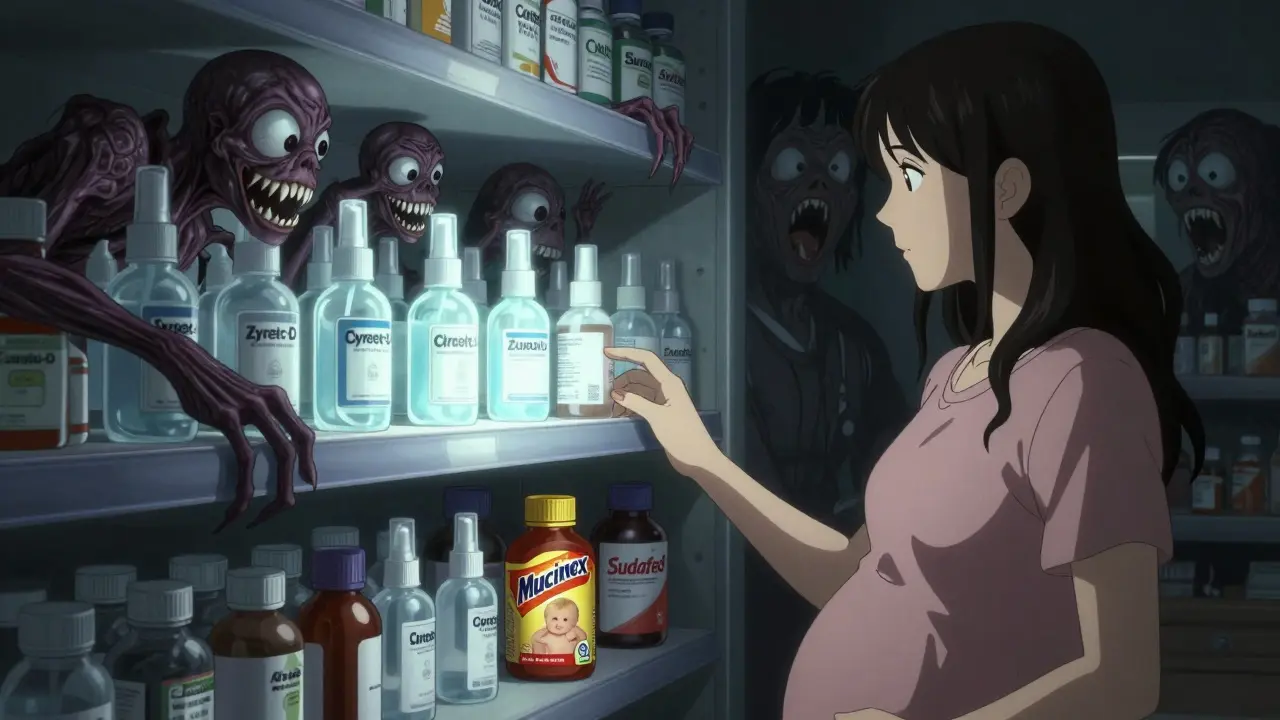
What to Avoid: The Hidden Risks
There are a lot of “safe” meds that aren’t. Here’s what to skip:- Aspirin-except in very low doses for specific medical conditions (like preeclampsia prevention), avoid it entirely.
- NSAIDs after 20 weeks-ibuprofen, naproxen, celecoxib. They can cause fetal kidney problems and low amniotic fluid.
- Decongestant nasal sprays like Afrin-use for no more than three days. After that, you get rebound congestion.
- Herbal supplements-even ones labeled “natural.” Many have unknown effects on pregnancy. St. John’s Wort, black cohosh, and echinacea are all risky.
- Codeine and hydrocodone-opioids can cause neonatal withdrawal and breathing problems in newborns.
Prescription Meds: Antidepressants and More
If you’re on antidepressants, don’t stop without talking to your doctor. Stopping SSRIs like sertraline (Zoloft) can increase your risk of depression relapse, which is more dangerous than the medication for most women. ACOG and the CDC both say: if you’re stable on an SSRI, continue it. Sertraline has the most data supporting its safety in pregnancy. Fluoxetine (Prozac) is also considered low-risk. But new warnings came out in October 2023: sertraline used late in pregnancy may cause temporary neonatal adaptation syndrome-jitteriness, feeding issues, or breathing trouble in the first few days after birth. These usually resolve on their own. Antibiotics like penicillin, amoxicillin, and cephalexin are safe. Avoid tetracycline and doxycycline-they can stain your baby’s teeth and affect bone growth. For UTIs, nitrofurantoin and cephalexin are preferred. Avoid Bactrim (sulfamethoxazole/trimethoprim) in the first trimester and near delivery-it can increase the risk of birth defects and jaundice.Why This List Changes
Medication safety isn’t set in stone. The FDA replaced the old A, B, C, D, X categories in 2015 because they were too simple. Now, labels give detailed summaries of risks, benefits, and data. But here’s the problem: for 73% of drugs approved between 2000 and 2010, there’s still not enough human data on pregnancy safety. That means your doctor might be making a best guess. That’s why the MotherToBaby registry, which has tracked over 100,000 pregnancies since 1985, is so important. It’s real-world data from real people. And new research is emerging. In 2023, the NIH started looking at whether long-term, high-dose acetaminophen use might affect fetal brain development. The evidence isn’t clear yet-but it’s why you should use the lowest effective dose for the shortest time.
Real Stories, Real Choices
On Reddit, a woman wrote: “I took Zyrtec all through my pregnancy. My son is two now, and he’s healthy.” Another said: “I stopped my antidepressant because I was scared. I had a panic attack every day. I wish I’d talked to my doctor.” A mom on BabyCenter shared: “The B6 and Unisom combo saved me. I went from vomiting 12 times a day to just a few. I cried the first time I ate breakfast without throwing up.” But access is a problem. One woman in Texas said her pharmacist refused to sell her Sudafed without extra paperwork-even though her OB said it was okay after the first trimester. That’s the gap between guidelines and reality.What to Do Next
1. Make a list of every medication you take-prescription, OTC, supplements, and herbal products. 2. Check each one against this guide. If it’s not here, ask your provider. 3. Don’t self-diagnose. A headache could be a sign of preeclampsia. A fever could mean an infection. Don’t just reach for Tylenol-get checked. 4. Keep a medication journal. Write down what you took, when, and why. Bring it to every appointment. 5. Talk to your provider before starting or stopping anything-even if you think it’s “safe.” The goal isn’t to avoid all meds. It’s to use the right ones, the right way, at the right time. Your health matters. Your baby’s health matters. And you deserve clear, honest guidance.Is Tylenol safe during pregnancy?
Yes, acetaminophen (Tylenol) is the safest pain reliever during pregnancy. Stick to no more than 3,000mg per day. Avoid Tylenol PM unless approved by your doctor, because it contains diphenhydramine. Never exceed the recommended dose-even a few extra pills can be harmful.
Can I take Zyrtec or Claritin while pregnant?
Yes, both cetirizine (Zyrtec) and loratadine (Claritin) are considered safe during all trimesters. Use the standard 10mg daily dose. Avoid Claritin-D, Zyrtec-D, or any product with pseudoephedrine, especially in the first trimester. These antihistamines have been studied in over 35 years of pregnancy data with no increased risk of birth defects.
Is ibuprofen safe in early pregnancy?
While ibuprofen is sometimes used in the first trimester, most doctors recommend avoiding it entirely. After 20 weeks, it’s strictly not safe-it can cause serious kidney problems in the baby and reduce amniotic fluid. Use acetaminophen instead, even for early pregnancy headaches.
What’s safe for heartburn during pregnancy?
Calcium carbonate (Tums) is the most recommended option. Take as needed, but don’t exceed 4 tablets daily unless directed. If Tums isn’t enough, famotidine (Pepcid) is a safe alternative. Avoid antacids with aluminum or magnesium in high doses, and never use sodium bicarbonate (baking soda)-it can cause fluid retention.
Can I take melatonin for sleep while pregnant?
Melatonin is now considered conditionally acceptable at low doses (1-3mg) for occasional sleep issues, according to updated ACOG guidance from November 2023. However, long-term safety data is still limited. Avoid high doses and synthetic forms. Talk to your provider before using it regularly.
Are herbal supplements safe during pregnancy?
No, most herbal supplements are not proven safe. Products like black cohosh, dong quai, and St. John’s Wort can interfere with hormones or cause contractions. Even ginger supplements should be used cautiously. Stick to ginger tea in moderation. Always tell your provider what herbal products you’re taking-even if you think they’re harmless.
What if I took something unsafe before I knew I was pregnant?
Don’t panic. Most exposures in early pregnancy don’t cause harm. The critical window for major birth defects is between weeks 3 and 8. If you took something risky during that time, contact your provider or call MotherToBaby (1-866-626-6847). They’ll help you assess the risk based on timing, dose, and medication. Most women who took OTC meds unknowingly go on to have healthy babies.
Can I take antibiotics during pregnancy?
Yes, many antibiotics are safe. Penicillin, amoxicillin, cephalexin, and erythromycin are all well-studied and low-risk. Avoid tetracycline, doxycycline, and sulfonamides like Bactrim near delivery. Always finish your full course-even if you feel better. Untreated infections are far more dangerous than the antibiotics.




10 Comments
William Liu
December 20, 2025 AT 09:33 AMJust wanted to say this list saved my sanity during both pregnancies. No more guessing games with OTC meds. Acetaminophen and Zyrtec were my daily staples, and I never looked back.
Aadil Munshi
December 20, 2025 AT 14:00 PMLet’s be real - if you’re reading this and still worried about Tylenol, you’re probably the same person who thinks tap water is a government plot. Acetaminophen has been studied in over 100,000 pregnancies. The data isn’t just good - it’s overwhelming. Stop overthinking and start living.
Danielle Stewart
December 22, 2025 AT 11:20 AMI’m a nurse and I hand this out to every pregnant patient. The part about avoiding multi-symptom cold meds? Critical. So many people don’t realize they’re ingesting pseudoephedrine under a different name. This guide is the gold standard.
Adrienne Dagg
December 23, 2025 AT 05:45 AMOMG YES. I took Unisom + B6 and it was like a miracle. I went from puking every meal to eating actual food. I cried. Like, ugly crying. Thank you for mentioning this combo - it’s not talked about enough. 🙏
Chris porto
December 24, 2025 AT 05:34 AMThere’s a quiet dignity in knowing what’s safe and what’s not. Pregnancy isn’t about avoiding all risk - it’s about making informed choices. This list doesn’t preach. It just shows you the facts. That’s rare these days.
Kinnaird Lynsey
December 25, 2025 AT 14:00 PMInteresting that the article mentions melatonin as conditionally acceptable now. I’ve seen two OBs disagree on it - one said ‘avoid,’ the other said ‘1mg is fine.’ That’s the problem with medicine: even the guidelines are still evolving. Maybe we need more transparency about uncertainty.
benchidelle rivera
December 26, 2025 AT 05:14 AMAs a midwife, I can’t stress this enough: if you’re on SSRIs and you’re stable, DO NOT STOP. The risk of postpartum depression or suicide is far greater than any theoretical risk from sertraline. We need to stop shaming people for taking mental health meds during pregnancy. This is medical care, not moral failure.
Andrew Kelly
December 26, 2025 AT 21:15 PMLet’s not pretend this is science. The FDA changed the categories because they couldn’t keep up with lawsuits. And MotherToBaby? Funded by pharma. They track ‘exposures’ - not outcomes. Meanwhile, new studies on acetaminophen and neurodevelopment are quietly piling up. You’re being sold a narrative. Be skeptical.
Frank Drewery
December 27, 2025 AT 09:31 AMI took Sudafed after my first trimester because my OB said it was okay. The pharmacist made me fill out a form like I was buying a gun. I felt like a criminal for wanting to breathe. This system is broken - not the meds.
Chris porto
December 28, 2025 AT 06:00 AMThere’s a difference between being cautious and being afraid. The real danger isn’t Tylenol or Zyrtec - it’s the silence. Women suffering through nausea, congestion, or anxiety because they’re too scared to ask. This guide doesn’t just list drugs - it gives permission to care for yourself. That’s the real gift here.