
Drug Temperature Exposure Calculator
How Temperature Affects Your Medication
Temperature control is critical for most medications. Even slight deviations from recommended storage conditions can reduce potency and compromise treatment effectiveness.
Results
How this works: Most drugs lose potency at a rate of approximately 0.5% per hour above the ideal storage temperature.
Key temperature thresholds: Insulin: 2-8°C, Biologics: 2-8°C, mRNA Vaccines: -60°C, Epinephrine: 2-8°C
Note: This is a simplified model. Actual drug stability depends on specific formulations, packaging, and manufacturer guidelines. Always consult your pharmacist for specific advice about your medication.
When you pick up your prescription, you assume the medicine inside is safe, effective, and exactly what your doctor ordered. But what if that pill was stored in a hot truck for 12 hours? Or if it was made in a factory with no traceability? Or if your hospital ran out of it entirely because a shipment got stuck at a port? These aren’t hypotheticals. They’re happening right now-and patients are paying the price.
What’s at Stake When the Supply Chain Fails
The pharmaceutical supply chain isn’t just about moving boxes from factories to pharmacies. It’s a life-or-death pipeline. One wrong temperature, one fake batch, one delayed shipment-any of these can turn a life-saving drug into a deadly risk. According to Butler University researchers, this system is the "invisible backbone" of healthcare, with no room for error. And when it breaks, patients don’t get a warning. They just get sicker.Take insulin. A diabetic patient needs consistent, reliable access. When supply chain disruptions hit in 2023, hospitals across the U.S. started substituting brands. One patient in Ohio reported her blood sugar spiked unpredictably after switching from Humalog to a generic version she’d never used before. Her doctor didn’t know the switch was due to a shortage. The patient didn’t know either. By the time she ended up in the ER, her HbA1c had jumped from 7.2 to 9.8 in just six weeks.
This isn’t rare. The American Hospital Association found that 68% of U.S. hospitals made medication substitutions due to shortages in 2023. Nearly 30% of those substitutions led to actual harm-rashes, allergic reactions, or treatment failure. And it’s not just insulin. Epinephrine auto-injectors, cancer drugs, antibiotics, even basic IV fluids-all have been in short supply. In one Reddit thread from June 2025, a pharmacist wrote: "We’ve rationed epinephrine for three months straight. Parents are calling in panic because their kids’ EpiPens are gone. We’re cutting doses in half. That’s not medicine. That’s triage."
How Temperature Changes Can Kill
More than 70% of modern drugs-especially biologics like monoclonal antibodies for cancer or autoimmune diseases-require strict temperature control. Most need to stay between 2°C and 8°C. A few, like certain mRNA vaccines, need to be kept below -60°C. If they warm up even slightly during transport, they lose potency. And once that happens, the patient gets a drug that doesn’t work.Real-time monitoring now covers 68% of high-value shipments, and that’s helped cut temperature excursions by 42%. But that still leaves over a third of critical drugs traveling without constant oversight. In rural areas, where last-mile delivery relies on small couriers with unrefrigerated vans, the problem is worse. One study found 32% of rural deliveries had temperature breaches. Imagine a patient in Alabama waiting for a $12,000 infusion therapy. The drug arrives warm. The nurse administers it anyway because there’s no backup. The patient’s tumor keeps growing. The drug didn’t fail them. The system did.
And it’s not just heat. Freezing can be just as damaging. A 2024 incident in Puerto Rico saw a shipment of a critical blood thinner freeze during transit. The vials looked fine. The label was intact. But the active ingredient had crystallized. Patients who received it developed dangerous clots. No one knew until three people had strokes.
Counterfeits and the Black Market Pipeline
Fake drugs are a global crisis. The WHO estimates that 1 in 10 medical products in low- and middle-income countries are substandard or falsified. In wealthier nations, it’s rarer-but not gone. In 2023, the FDA seized over 2.3 million counterfeit pills in a single operation, including fake versions of Ozempic, Xanax, and Adderall. These aren’t harmless imitations. They contain toxic chemicals, incorrect dosages, or nothing at all.How do they get in? Through weak links in the supply chain. A distributor in India ships a batch without proper documentation. A wholesaler in Florida doesn’t verify the serial code. A pharmacy in Ohio accepts it because they’re out of stock. By the time the FDA traces it back, hundreds of patients have already taken it. Blockchain-based track-and-trace systems have cut counterfeiting by 37% since 2020, but adoption is uneven. Only 62% of manufacturers are fully compliant with the FDA’s new electronic tracing rules, and many small distributors still use paper logs.
One patient in Florida told his doctor he felt dizzy after taking his blood pressure pill. He kept the bottle. Lab tests showed it contained no active ingredient-just cornstarch and talc. The bottle had a legitimate-looking barcode. The packaging matched the real product. But the serial number didn’t match the FDA’s database. He was lucky. Others aren’t.

Why Shortages Happen-and Why They Last
Drug shortages aren’t accidents. They’re systemic. The pharmaceutical supply chain operates with 47% less inventory buffer than other industries because drugs expire quickly. That means there’s almost no safety net. When one factory shuts down-because of a fire, a cyberattack, or a regulatory shutdown-the whole system stumbles.Take Baxter’s North Carolina plant. After Hurricane Helene in 2024, it was offline for six weeks. Over 80% of U.S. hospitals reported shortages of IV fluids, anesthetics, and dialysis solutions. Surgeries were canceled. Emergency rooms turned away patients. One mother in Georgia had to drive four hours to find a hospital with saline on hand for her toddler’s dehydration.
And the root cause? Over 78% of the world’s active pharmaceutical ingredients (APIs)-the actual medicine in the pill-are made in just two countries: China and India. A political dispute, a factory inspection, a shipping delay in Shanghai can ripple across the globe. During the first six months of the pandemic, drug shortages jumped 300%. The system wasn’t broken. It was designed to be lean. And that’s exactly why it failed.
Technology Can Help-But Only If It’s Used Right
There’s good news: technology is making the supply chain smarter. Blockchain, real-time sensors, AI-driven demand forecasting-all of these are proving effective. Hospitals that implemented full serialization and track-and-trace systems saw a 42% drop in temperature-related failures. AI models are now predicting shortages 90 days in advance, with 35% accuracy. That’s enough time to reroute shipments or switch suppliers.But adoption is slow. The average hospital spends $450,000 and 8.3 months just to install a new system. Many still rely on legacy software that can’t talk to modern tracking tools. Seventy-six percent of hospitals say integrating old systems with new serialization requirements is their biggest hurdle. And training? Supply chain managers need 120+ hours of specialized education just to understand the FDA’s DSCSA rules. Few have the time or budget.
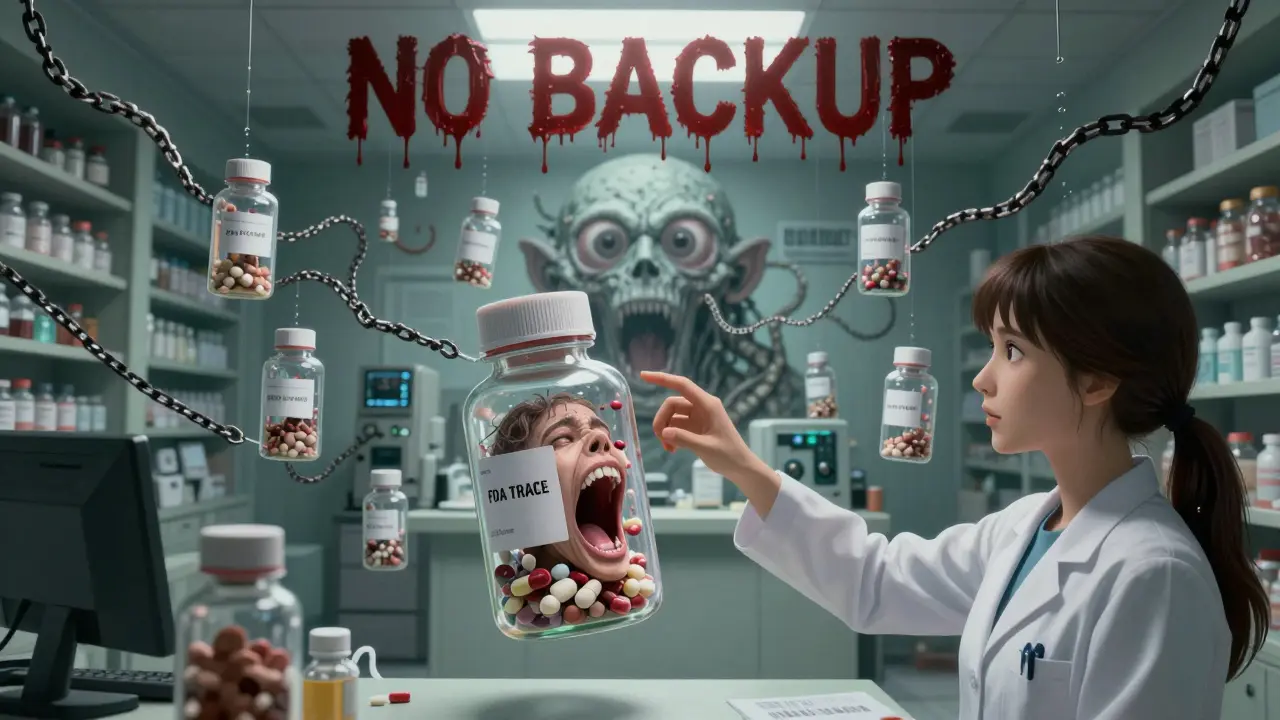
Meanwhile, cybersecurity is a ticking bomb. Censinet found that 74% of healthcare cyberattacks in 2023 came through third-party vendors-suppliers, logistics firms, software providers. One software glitch in 2024 knocked out 759 hospitals’ inventory systems. Nurses couldn’t see what drugs were in stock. Pharmacists couldn’t order replacements. Patients waited. Some died.
What Needs to Change
This isn’t about fixing a few broken trucks. It’s about rebuilding a system that was never meant to handle global crises. Here’s what’s needed:- More manufacturing diversity: Relying on China and India for 78% of APIs is a risk no country should take. Investment in regional production hubs in the U.S., EU, and Southeast Asia is critical.
- Standardized global rules: Right now, there are 217 different regulatory requirements across 50 markets. That’s chaos. Harmonizing standards would cut delays and confusion.
- Minimum inventory buffers: For life-saving drugs, 47% less inventory isn’t efficiency-it’s recklessness. Strategic stockpiles for critical medications should be mandatory.
- Real-time transparency: Patients, doctors, and pharmacists should be able to track their drug’s journey-from factory to pharmacy-with a simple scan. That’s not sci-fi. It’s already possible.
Some companies are leading the way. Pfizer’s supply chain protocols scored 4.7 out of 5 in a 2024 review. Generic manufacturers? Average 3.2. The gap isn’t about money-it’s about priority. If patient safety were truly the top goal, every company would invest like Pfizer does.
What You Can Do
As a patient, you can’t fix the supply chain. But you can protect yourself:- Ask your pharmacist: "Is this the same brand my doctor prescribed?" If it’s different, ask why.
- Keep your medication bottles. If something feels off-dizziness, nausea, no effect-save the packaging. It could help trace a problem.
- Report shortages to your local health department or the FDA’s MedWatch program. Your report might help prevent someone else’s crisis.
- If you’re on a critical drug (like insulin, cancer meds, or seizure meds), talk to your doctor about having a backup plan. Is there an alternative? Can you get a 90-day supply?
The pharmaceutical supply chain isn’t broken. It’s been neglected. And the cost isn’t measured in dollars. It’s measured in missed treatments, preventable hospitalizations, and lives lost. If we want patients to be safe, we have to stop treating medicine like a commodity-and start treating it like the lifeline it is.
Can a drug be unsafe even if it’s from a legitimate pharmacy?
Yes. Even if a drug comes from a licensed pharmacy, it can still be compromised. Temperature excursions during transport, improper storage in the pharmacy’s back room, or even a counterfeit batch that slipped through due to a weak link in the supply chain can make a drug ineffective or dangerous. Always check the packaging for signs of tampering and ask your pharmacist if the medication is the exact brand your doctor prescribed.
Why do drug shortages keep happening even with new technology?
Technology helps, but it’s not universal. Many smaller distributors, hospitals, and pharmacies still use outdated systems that can’t integrate with modern tracking tools. Plus, the root causes-like over-reliance on foreign manufacturing and zero inventory buffers-are structural, not technical. A blockchain can trace a drug, but it can’t create more of it if the factory is closed.
How do I know if my medication has been recalled due to supply chain issues?
Check the FDA’s Drug Shortages page or use the MedWatch app to sign up for recall alerts. You can also ask your pharmacist to confirm the batch number on your medication against the FDA’s recall list. Many recalls due to supply chain problems aren’t widely publicized, so staying proactive is key.
Are generic drugs more likely to have supply chain problems?
Yes. Generic manufacturers often operate on tighter margins and are more likely to source active ingredients from a single supplier, usually overseas. When that supplier has a problem-like a regulatory shutdown or a shipping delay-the entire generic version disappears. Brand-name drugs often have multiple suppliers and better inventory buffers, making them less vulnerable.
What’s being done to fix the global supply chain for medicines?
Governments and organizations are pushing for more regional manufacturing, standardized tracking rules, and mandatory stockpiles for critical drugs. The WHO’s 2025 Global Benchmarking Tool now rates countries on supply chain resilience, which affects their regulatory standing. The U.S. FDA is mandating full electronic tracing by November 2025, and AI tools are being rolled out to predict shortages before they happen. But progress is slow-change requires funding, cooperation, and political will.
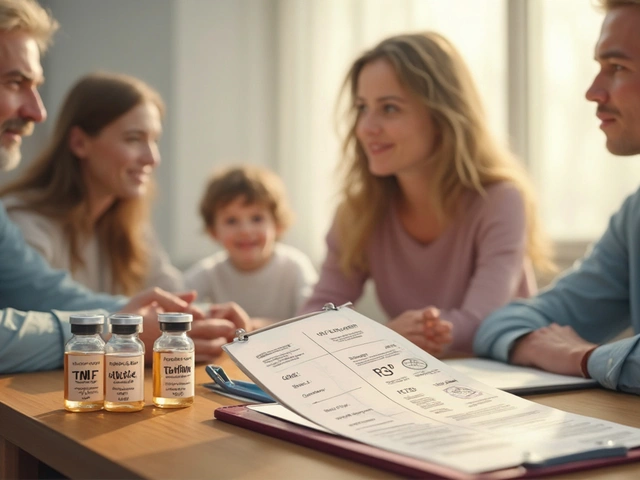
Next steps: If you take a life-sustaining medication, talk to your doctor today about backup options. If you work in healthcare, push for better inventory tracking systems. And if you’ve experienced a shortage or substitution-share your story. These aren’t just logistics problems. They’re patient safety emergencies.



11 Comments
Fabian Riewe
December 28, 2025 AT 15:35 PMMan, I had no idea how fragile this system is. My grandma’s insulin was late last winter and she ended up in the ER. She didn’t even know why she felt off-just thought she was getting older. Turns out the shipment got stuck in a warehouse without AC for two days. Scary stuff.
And honestly? I’m tired of hearing "just buy brand name" like it’s that easy. Generic isn’t the problem-it’s the lack of oversight. We need to fix the pipeline, not just blame the cheapest option.
Amy Cannon
December 30, 2025 AT 08:05 AMWhile I appreciate the earnestness of this exposé, I must respectfully posit that the structural vulnerabilities within the pharmaceutical supply chain are not merely logistical anomalies but rather symptomatic of a deeper neoliberal paradigm that prioritizes capital efficiency over human biosafety. The fact that 78% of APIs originate from two geopolitical entities underscores not just a vulnerability, but a systemic colonial dependency that must be deconstructed through sovereign regional manufacturing initiatives, ideally under WHO-monitored, ISO-certified, and publicly accountable infrastructures. I mean, really-do we want to be dependent on monsoon season in Gujarat for our life-saving biologics? The moral imperative is clear.
Himanshu Singh
December 30, 2025 AT 14:08 PMIndia make 80% of globel generic drug, so when there is problem here, whole world feel it. But we also try hard. Many factory now use blockchain and temp sensor. Yes, some small guy still use paper, but change coming. My cousin work in pharma logis in Hyderabad, he say new rule make big diff. Not perfect, but better then before. We all need to support good practice, not just blame.
Jasmine Yule
December 31, 2025 AT 20:48 PMOMG I’m so angry right now. 🤬 My sister got a fake version of her seizure med last year. She had a seizure at work. The pharmacy said ‘it was from a licensed distributor.’ Like that’s supposed to make it okay??
Stop pretending this is just ‘logistics.’ This is negligence. People are DYING because some middleman didn’t scan a barcode. If your pharmacy can’t track your drug from factory to shelf, they shouldn’t be allowed to sell it. Period.
Greg Quinn
January 1, 2026 AT 18:44 PMIt’s strange how we treat medicine like it’s a commodity when it’s the most intimate thing we give our bodies. We don’t question the source of our coffee or our phone charger, but when it’s a pill that keeps us alive, we act like it’s just another SKU.
Maybe the real failure isn’t the supply chain-it’s our collective amnesia. We forget that behind every vial is someone’s parent, child, partner. We’ve outsourced empathy along with manufacturing. And now we’re paying the price in silent suffering.
Lisa Dore
January 3, 2026 AT 04:47 AMHey everyone, I work in a community pharmacy and I see this every week. A patient comes in asking why their metformin looks different. We explain it’s a generic switch due to shortage. They nod, but you can tell they’re scared.
I started keeping a little handout on the counter: ‘Your Med, Your Rights.’ It lists how to check batch numbers, who to call if something feels off, and where to find FDA alerts. Small thing, but it helps. If you’re a patient, don’t be shy-ask. If you’re a provider, make it easy for them to ask. We’re all in this together. 💪❤️
Sharleen Luciano
January 3, 2026 AT 08:05 AMLet’s be real: most people who complain about drug shortages are just too lazy to pay for the brand name. If you can’t afford your insulin, maybe you shouldn’t have chosen a job that doesn’t offer insurance. The system isn’t broken-it’s working exactly as designed. People who live paycheck to paycheck shouldn’t expect luxury healthcare.
Also, blockchain? Please. That’s tech bro nonsense. Real solutions involve more money, not more apps.
Russell Thomas
January 3, 2026 AT 09:15 AMOh wow, a 10-page essay on how the world is ending because your insulin got warm. Congrats, you’ve discovered that capitalism is bad. Shocking. 🙃
Meanwhile, in the real world, people are living longer than ever. We have more drugs than ever. The fact that you’re alive to read this means the system’s working better than ever. Stop crying about the 0.1% of cases and go fix your own life.
Joe Kwon
January 3, 2026 AT 14:08 PMFrom a supply chain ops perspective: the DSCSA compliance gap is the real bottleneck. 76% of hospitals can’t integrate legacy ERP with serialization APIs because their middleware is stuck in 2012. It’s not about funding-it’s about interoperability standards. We need a unified HL7 FHIR-based data layer across manufacturers, distributors, and pharmacies. Until then, blockchain is just a shiny ledger with no real-time feed.
Also, the 47% inventory buffer stat? That’s misleading. It’s not that they’re lean-it’s that they’re optimized for 30-day demand cycles. We need dynamic buffer algorithms based on regional risk scores, not static %.
Nicole K.
January 4, 2026 AT 16:56 PMThis is why you shouldn’t trust big pharma. They care about profit, not people. I know because my brother died from a bad batch. They knew. They didn’t tell anyone. And now you’re telling me to ‘ask my pharmacist’? Like that’s going to help? They’re just employees. They don’t control anything. It’s all corporate greed. We need to burn it all down.
Henriette Barrows
January 5, 2026 AT 04:32 AMI just got my new prescription and noticed the pill color changed. I didn’t say anything at first-thought maybe I was just tired. But then I remembered the post and checked the batch number online. Turns out it was a recall from last week. I called my doc right away.
So yeah-keep the bottle. Check the number. Don’t assume. I’m so glad I did. My med’s fine now. Thanks for the heads-up, OP. You saved me from a bad day.