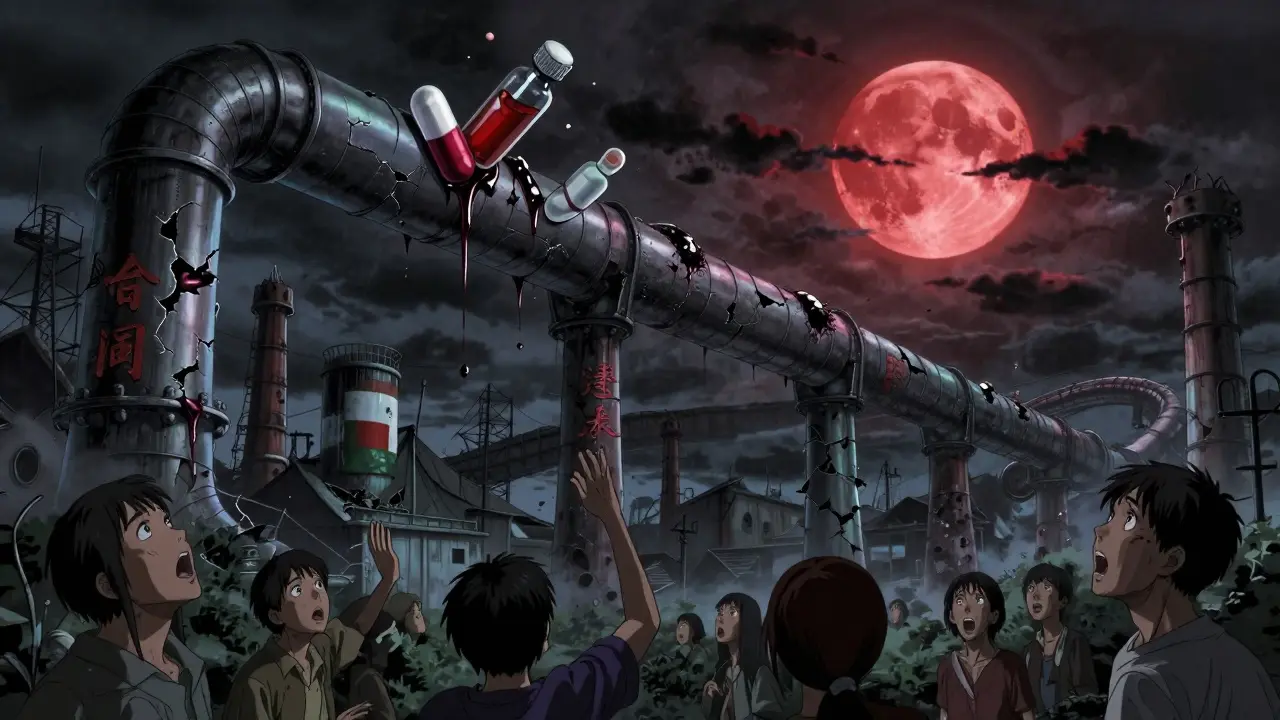
Why drug shortages keep happening-and how to stop them
Every year, millions of Americans face delays or outright shortages of life-saving medications. From antibiotics to insulin, cancer drugs to heart medications, the problem isn’t random. It’s systemic. And it’s preventable. The root cause? Fragile pharmaceutical supply chains that rely too heavily on distant factories, single sources, and outdated manufacturing methods. When a storm hits a factory in India, or a trade policy shifts in China, the ripple effect reaches hospital shelves in Texas, pharmacies in Ohio, and homes across the country. The good news? We know how to fix this. The question is: are we willing to act before the next crisis hits?
The hidden backbone of your medicine: Active Pharmaceutical Ingredients (APIs)
Most people don’t realize that the pill in their hand is built on something invisible: active pharmaceutical ingredients, or APIs. These are the molecules that actually treat your condition. And here’s the reality: about 80% of all APIs used in the U.S. are made overseas. China and India together produce nearly 70% of them. That means if a single facility in Shanghai shuts down for regulatory reasons-or a shipping lane gets blocked-dozens of medications can vanish from shelves overnight.
It’s not just about quantity. It’s about quality control. Many APIs are made in facilities that haven’t been upgraded in decades. Batch manufacturing-the traditional method-takes weeks, uses massive amounts of energy, and generates tons of waste. One small error in a batch can mean thousands of pills are ruined. And when you’re relying on one supplier for a critical API, there’s no backup.
Resilience isn’t a buzzword-it’s a survival strategy
Resilient supply chains don’t mean going fully domestic. That’s unrealistic and expensive. Instead, resilience means building redundancy, flexibility, and foresight into every step. The U.S. Department of Health and Human Services defines it clearly: the ability to anticipate, prepare for, respond to, and recover from disruptions while keeping critical medicines flowing.
Companies that have embraced this approach see 23% higher operational continuity during crises. That’s not luck. It’s strategy. These companies don’t just react-they plan. They map out 12 to 15 layers of suppliers. They track where every chemical comes from, down to the raw material. They know exactly which factories are single points of failure-and they fix them before they break.
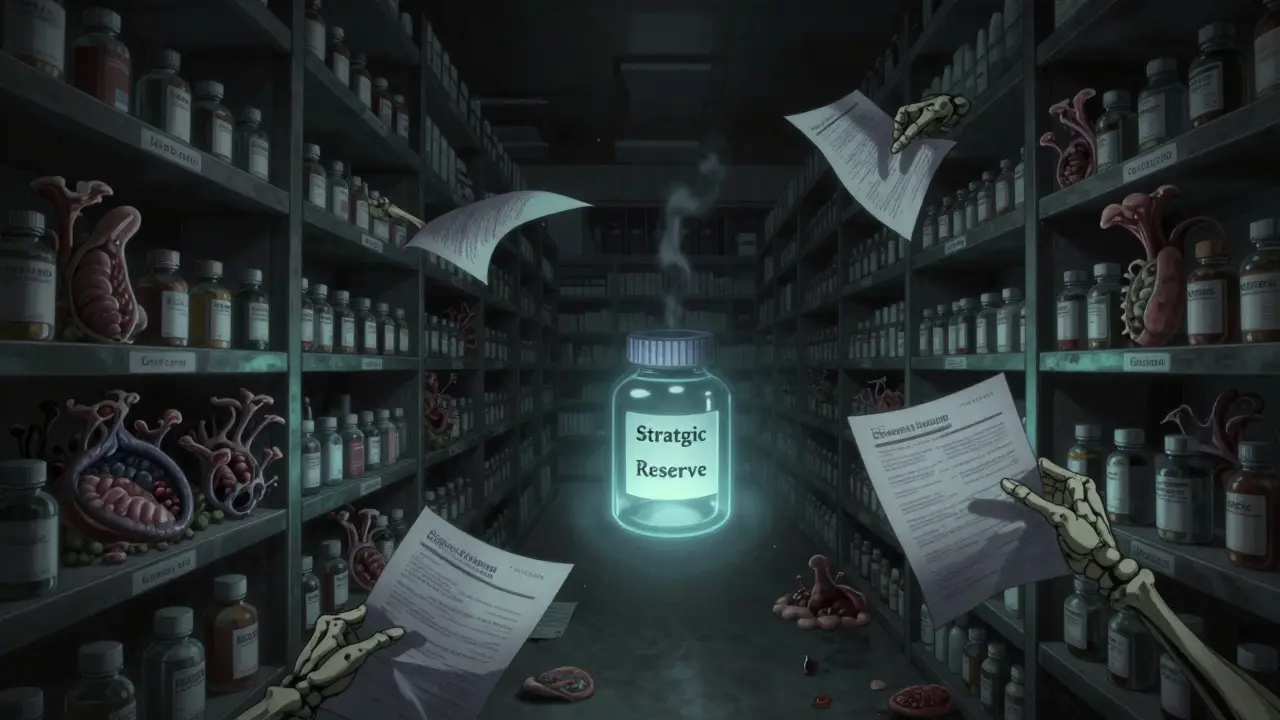
Three proven ways to build resilience right now
- Buffer stock for critical drugs: Keep 60 to 90 days of inventory for essential medicines like antibiotics, insulin, and injectables. This isn’t hoarding-it’s insurance. The Strategic Active Pharmaceutical Ingredients Reserve, launched in 2025, aims to do exactly this for 150 key drugs by 2027. But private companies can-and should-start now.
- Dual-sourcing critical components: Don’t rely on one supplier for anything vital. If you get 80% of your API from India, find a second source in Europe, Canada, or even within the U.S. Dual sourcing cuts disruption risk by more than half. Leading firms now target 70-80% of their critical inputs being dual-sourced.
- Regional manufacturing networks: Instead of shipping everything across the globe, build smaller, agile production hubs in North America, Europe, and Asia. Modular, container-based facilities can be set up in 12-18 months-compared to 3-5 years for traditional plants. They scale from 50kg to 2,000kg of API production and can be moved if needed.
Technology is changing the game-but adoption is slow
Continuous manufacturing is the biggest leap forward in pharmaceutical production since the 1950s. Unlike batch processing, it runs 24/7 in a closed system. It cuts facility size by 30-40%, reduces energy use by 20-25%, and slashes waste by 15-20%. AI tools integrated into these systems improve yield rates by 18-22% and cut quality errors by 25-30%.
So why isn’t everyone using it? Cost. Building one continuous manufacturing line costs $50-150 million-three to five times more than a traditional batch facility. And regulatory approval? Only 12 such facilities have been approved by the FDA as of mid-2025, out of over 10,000 batch facilities. The FDA has started speeding up approvals for qualified sites, cutting review time from 3 years to under 18 months. But change moves slowly when safety is on the line.
Who’s doing it right-and who’s falling behind
Large pharmaceutical companies with over $10 billion in revenue have a 85% adoption rate for comprehensive resilience programs. Mid-sized firms? Only 42%. Small companies? Just 18%. The gap isn’t about ethics-it’s about resources. But resilience doesn’t require a billion-dollar budget. It requires prioritization.
Successful companies spend 5-7% of their supply chain budget on resilience. Top performers spend 8-10%. That money goes into data platforms that connect suppliers, risk modeling tools, and scenario training for teams. One medtech firm cut decision-making time during a disruption by 60% just by aligning procurement, quality, and logistics teams under one digital dashboard.
Meanwhile, companies still relying on spreadsheets and phone calls to track suppliers are one natural disaster away from a major shortage.

The cost of doing nothing
Building resilience adds 8-12% to the cost of goods sold. That sounds steep. But the cost of a single drug shortage? Up to $14.7 million in lost revenue for a large company-and worse for patients. Hospitals pay more for emergency substitutes. Patients skip doses. Death rates rise.
And it’s not just money. The Department of Defense calls pharmaceutical supply chain gaps a “critical national security risk.” Imagine a military deployment where antibiotics aren’t available. Or a pandemic where ventilator sedatives run out. These aren’t hypotheticals-they’ve already happened.
What’s next? The roadmap to 2030
By 2030, experts predict 65-70% of U.S. pharmaceutical needs will come from regional networks-not just China or India. Domestic production will rise from 28% to 35-40%. Continuous manufacturing will power 45-50% of new facilities. AI will predict disruptions 60-90 days in advance with 85-90% accuracy. Blockchain will cut counterfeit drugs by 70-75%.
But none of this happens without leadership. It needs executives who fund resilience, regulators who adapt quickly, and manufacturers who embrace innovation-not just cost-cutting.
What you can do today
If you’re a patient, ask your pharmacist: “Is this drug made in the U.S.?” or “Do you have a backup if this runs out?” Your questions push the system to be more transparent.
If you’re in healthcare, advocate for buffer stock policies at your hospital. Push for supplier mapping in your procurement department.
If you’re in business, start small: map your top three critical APIs. Find a second source. Talk to your supplier about their risk plan. Don’t wait for a crisis to force your hand.
What causes most drug shortages in the U.S.?
Most drug shortages stem from disruptions in the supply of active pharmaceutical ingredients (APIs), which are primarily manufactured overseas-68% from China and India. Factory shutdowns, regulatory delays, natural disasters, and shipping bottlenecks can cut off supply lines. Single-sourcing and outdated batch manufacturing make these disruptions far more damaging than they need to be.
Is making drugs in the U.S. the solution?
Not alone. While increasing domestic production helps-U.S. output rose from 22% to 28% between 2022 and 2025-it’s not enough to bring everything home. The cost would spike 20-30%, and it creates new risks if you rely on just one domestic supplier. The real solution is a balanced mix: strategic domestic capacity for critical drugs, plus diversified global sourcing and regional manufacturing hubs.
What’s the Strategic Active Pharmaceutical Ingredients Reserve?
Launched in August 2025 by executive order, this federal program aims to stockpile 90 days’ worth of 150 essential medicines by 2027. It targets drugs most vulnerable to shortages-like antibiotics, insulin, and sterile injectables. The goal is to create a national safety net so hospitals don’t run out during emergencies.
How does continuous manufacturing improve supply chain resilience?
Continuous manufacturing runs 24/7 in a closed, automated system, reducing production time from weeks to days. It cuts facility size by 30-40%, lowers energy use by 20-25%, and reduces waste by 15-20%. It also makes quality control more consistent, reducing batch failures. This means faster responses to demand spikes and less vulnerability to single-point failures.
Can AI really predict drug shortages before they happen?
Yes. Early AI systems now forecast supply disruptions with 85-90% accuracy up to 90 days in advance. They analyze data from weather patterns, shipping delays, regulatory inspections, geopolitical events, and supplier performance. Companies using these tools have reduced emergency orders by 40% and avoided 60% of predicted shortages.




8 Comments
Ryan Pagan
January 29, 2026 AT 09:54 AMLet’s be real-this isn’t about pharma being evil. It’s about capitalism optimizing for quarterly profits, not patient survival. We’ve outsourced the backbone of our healthcare to factories that don’t even have proper air filtration. And now we’re shocked when a monsoon in Gujarat knocks out half the world’s metformin? We built a house of cards and called it ‘efficiency.’ Time to rebuild with concrete.
Laia Freeman
January 31, 2026 AT 04:33 AMI just got my insulin delayed AGAIN because ‘supply chain issue’ 😭 why does it feel like we’re all just one bad shipping container away from dying? Someone please fix this before my kid needs a refill next month!!!
Megan Brooks
January 31, 2026 AT 05:29 AMThere’s a quiet dignity in preparing for failure before it happens. Resilience isn’t flashy-it’s the quiet accountant who insists on dual sourcing, the pharmacist who keeps backup stock, the engineer who refuses to cut corners on QA. These aren’t heroics. They’re responsibility. And yet, we reward the cheapest bid, not the safest one. Maybe the real crisis isn’t the shortage-it’s our collective amnesia about what care actually means.
Andy Steenberge
January 31, 2026 AT 17:42 PMThe FDA’s approval timeline for continuous manufacturing has improved-but the real bottleneck isn’t regulation. It’s culture. Pharmaceutical execs still measure success in cost-per-unit, not system resilience. You can’t innovate if your KPIs punish you for spending on redundancy. We need new metrics: ‘weeks of buffer stock,’ ‘supplier diversity index,’ ‘disruption recovery time.’ Until then, we’re just rearranging deck chairs on the Titanic.
rajaneesh s rajan
February 1, 2026 AT 14:16 PMIndia makes 50% of the world’s generic drugs. We’re the backbone. But when you treat us like a cheap spare part-ignore our workers’ rights, demand impossible deadlines, then blame us when something breaks-you’re not building a supply chain. You’re building a powder keg. We’re not the problem. You’re the problem.
Paul Adler
February 3, 2026 AT 13:27 PMI’ve worked in hospital pharmacy for 18 years. I’ve seen shortages come and go. What’s changed? Nothing. We still scramble. We still ration. We still tell patients to wait. The difference now is we have the tools to fix it-dual sourcing, AI forecasting, modular plants. But we lack the will. And that’s the true tragedy. Not the lack of API. The lack of moral courage.
LOUIS YOUANES
February 3, 2026 AT 19:04 PMOh wow. Another 3000-word essay on how we’re all doomed. Can we please just admit that Big Pharma doesn’t care? They don’t care if you die. They care if their stock ticker goes up. The ‘resilience’ talk? Just PR spin. The real solution? Nationalize API production. Or break up the giants. Or stop pretending this is a logistics problem instead of a corruption problem.
Kristie Horst
February 4, 2026 AT 12:08 PMAh yes, the classic ‘we know how to fix it’ narrative-delivered by people who’ve never held a vial of insulin in their hands while a child waits. You list solutions like they’re bullet points on a PowerPoint slide. But tell me, Kristie: when was the last time your procurement team got fired for choosing the cheapest supplier? When did your board vote to reduce margins to save lives? The gap between your elegant framework and the reality of hospital floors? That’s where the real work begins. And it’s not pretty.