
Statins & ALS Risk Assessment Tool
Based on the latest evidence (2024):
- Large studies show no increased ALS risk with statin use
- Long-term use (>3 years) may reduce risk by 10-20% in men
- Statin use does not affect ALS survival (hazard ratio = 0.97)
Do NOT stop statins without consulting your doctor
Stops statins: 35% of ALS patients ask about quitting statins; 12% actually stop. This increases risk of heart attack or stroke – which can be life-threatening for ALS patients.
Why: Early ALS symptoms (muscle weakness, cramps) are often mistaken for statin side effects. Stopping statins removes protection for your heart without helping ALS.
Key recommendation: Dr. Merit Cudkowicz (Mass General Hospital): "Many patients stop statins unnecessarily after an ALS diagnosis, which may put them at risk for preventable cardiovascular events."
For years, people taking statins have worried: could these common cholesterol drugs be linked to ALS? It’s a scary thought. ALS, or Lou Gehrig’s disease, is a devastating condition that slowly steals movement, speech, and eventually breathing. When reports started popping up linking statins to ALS, panic spread. But here’s the truth - the science doesn’t back that fear. In fact, the more we look, the clearer it becomes that statins aren’t causing ALS. Some studies even suggest they might help.
Where Did the Fear Come From?
The concern started in 2007. The FDA began getting reports - not from controlled studies, but from doctors and patients filing voluntary adverse event reports. These reports said people on statins were being diagnosed with ALS. At first glance, it looked like a pattern. But spontaneous reports are noisy. They don’t tell you how many people are taking statins versus how many are getting ALS. They just say, “This person took a statin and then got ALS.” That’s not proof. It’s coincidence waiting to be misunderstood. By October 2008, the FDA had reviewed 41 large clinical trials involving thousands of patients. None showed more ALS cases in statin users than in those on placebo. The agency’s conclusion was clear: statins don’t cause ALS. Don’t stop taking them. That message hasn’t changed - not in 2024, not in 2025.What Do the Biggest Studies Say Now?
Fast forward to 2024. Two major studies came out with opposite-sounding results. One claimed statins increased ALS risk. The other said they didn’t affect survival. What’s going on? The study that said statins raised risk used a method called Mendelian Randomization. It tried to use genetics as a proxy for lifelong statin exposure. But here’s the problem: the numbers were wild. One statin, rosuvastatin, showed an odds ratio of 693,000. That’s not science - that’s a glitch. Genetic studies like this can go wrong if genes affect more than one trait (a problem called pleiotropy). Experts called the results implausible. Meanwhile, a far more reliable study came from Norway. Researchers looked at 524 ALS patients using national health records from 1972 to 2003. They compared those who took statins to those who didn’t. After adjusting for age, sex, smoking, cholesterol, and even riluzole use (the only approved ALS drug), they found zero difference in survival. The hazard ratio? 0.97. That’s practically 1.0 - meaning no effect. Statin users lived just as long as non-users. The average difference in survival? Less than a month. Not meaningful.Why Do Some People Stop Statins After an ALS Diagnosis?
Here’s where things get real for patients. About 21% of ALS patients stop taking statins in the year before they’re diagnosed. Why? Because early ALS symptoms - muscle weakness, cramps, fatigue - feel just like statin side effects. People think, “My legs are weak. I’m on a statin. Maybe it’s the drug.” So they stop. But stopping statins doesn’t help ALS. It just removes protection for the heart. A 2024 study in Neurology Today found that 35% of ALS patients ask about quitting statins. Twelve percent actually do. That’s dangerous. Statins reduce heart attacks and strokes. For someone with ALS, a heart attack could be the thing that ends their life faster than the disease itself. Dr. Merit Cudkowicz from Massachusetts General Hospital says it plainly: “Many patients stop statins unnecessarily after an ALS diagnosis, which may put them at risk for preventable cardiovascular events.”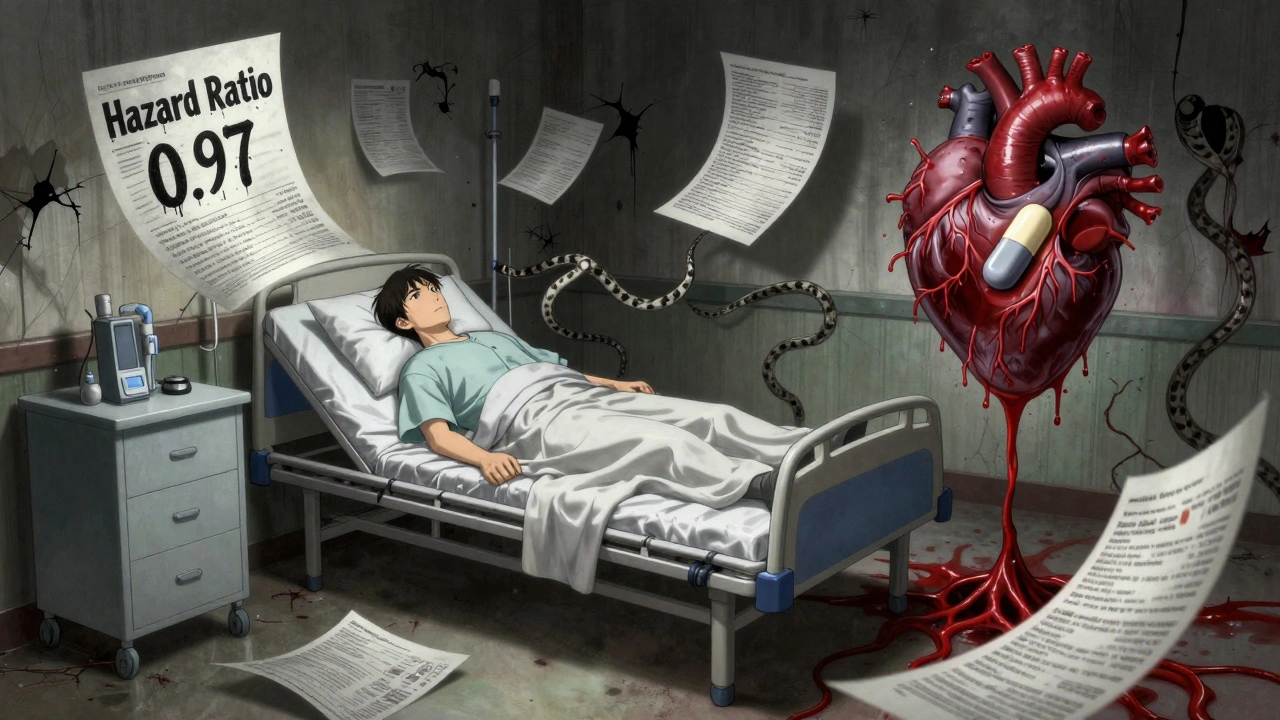
What About Long-Term Use? Could Statins Actually Help?
The most surprising finding? Long-term statin use might lower ALS risk - especially in men. A 2024 study in Neurology found that people who took statins for more than three years had a lower chance of developing ALS. The effect was stronger in men. Why? It’s not about cholesterol. It’s about inflammation. Statins reduce inflammation in the brain. They calm down immune cells like microglia and astrocytes, which go haywire in ALS. Lab studies show lovastatin and atorvastatin reduce motor neuron loss in mice by up to 30%. That’s not a fluke. That’s a biological signal. Dr. Marc Weisskopf from Harvard, who co-led that study, says: “Long-term use of statins had a protective role against the development and progression of ALS.” This flips the script. Instead of statins causing ALS, they might be shielding the brain from it - if you take them long enough.What Do Experts and Regulators Say Today?
Let’s cut through the noise. - The FDA still says: “No change in prescribing practices needed.” - The Mayo Clinic states clearly: “There’s no good evidence that statins cause or trigger ALS.” - The European Medicines Agency reviewed everything in 2023 and concluded: “No causal link established.” - The American Heart Association still lists statins as first-line therapy for high-risk patients. - The American Academy of Neurology says: “Continue statins in ALS patients with cardiovascular indications.” Even the Norwegian study’s lead author, Dr. Shafeeq Ladha, says: “Statin use should not routinely be discontinued upon diagnosis.” This isn’t a debate. This is consensus.
What Should You Do If You’re on Statins?
If you’re taking statins for high cholesterol, heart disease, or stroke prevention - keep taking them. Don’t stop because of ALS fears. The risk of a heart attack or stroke from stopping statins is far greater than any unproven link to ALS. If you’ve just been diagnosed with ALS and are on statins, talk to your neurologist and cardiologist. Don’t guess. Don’t panic. Ask: “Is my heart at risk? Do I still need this medication?” If you’re experiencing muscle pain or weakness - don’t assume it’s ALS. Statins can cause muscle aches. But so can aging, inactivity, or even ALS itself. Your doctor can run tests to tell the difference. Never stop a statin on your own.What’s Next in Research?
Science isn’t done. The CDC’s National ALS Registry is funding five new studies in 2025, including a 10,000-person, five-year tracking project on statin users. They’re looking at lipid metabolism, inflammation markers, and genetic factors. The FDA expects more data by late 2025. But here’s what we already know: statins aren’t the enemy. They’re one of the most studied drugs in history. Their benefits for the heart and blood vessels are rock-solid. The idea that they cause ALS is based on noise, not evidence.Bottom Line
Statins and ALS: no causal link. No proven danger. No reason to stop. In fact, the longer you take statins, the more evidence points to them being protective - especially for men. If you’re on statins, keep taking them. If you’re worried, talk to your doctor. Don’t let fear override facts.Do statins cause ALS?
No. There is no credible scientific evidence that statins cause ALS. Major health agencies, including the FDA, Mayo Clinic, and European Medicines Agency, have reviewed all available data and found no causal link. Early concerns came from anecdotal reports, not controlled studies. Large, long-term studies show no increased risk of ALS in statin users.
Should I stop taking statins if I have ALS?
No, unless you’re experiencing severe muscle symptoms that your doctor can’t explain. Stopping statins increases your risk of heart attack and stroke - both of which can be life-threatening, especially with ALS. Multiple studies, including a major 2024 Norwegian study, show statin use does not worsen ALS survival. Continue statins unless your care team advises otherwise.
Can statins help slow ALS progression?
Not yet proven in humans, but early signs are promising. Preclinical studies in mice show statins reduce inflammation in the brain and protect motor neurons. A 2024 human study found long-term statin use (over 3 years) was linked to lower ALS risk, especially in men. While this doesn’t mean statins treat ALS, it suggests they might help prevent it - and they definitely won’t make it worse.
Why do some ALS patients stop statins before diagnosis?
Because early ALS symptoms - muscle weakness, cramps, fatigue - feel like statin side effects. Many people assume the drug is causing the problem and stop taking it. But this is reverse causality: the disease is already starting, and the symptoms are being mistaken for drug side effects. Stopping statins at this point doesn’t help ALS - it only removes heart protection.
Are some statins riskier than others for ALS?
No. A flawed 2024 genetic study claimed certain statins like atorvastatin and rosuvastatin had extremely high ALS risk, but those numbers were implausible and have been widely criticized. Real-world data from large population studies show no difference in ALS risk between statins. The type of statin doesn’t matter - what matters is whether you need it for your heart.
Is it safe to start statins if I have a family history of ALS?
Yes. There’s no evidence that having a family history of ALS changes the safety profile of statins. Statins are prescribed based on cholesterol levels, heart disease risk, and stroke prevention - not ALS history. If your doctor recommends statins for cardiovascular health, the benefits far outweigh any unproven theoretical risk related to ALS.



13 Comments
James Kerr
December 3, 2025 AT 02:55 AMMan, I’ve been on statins for 8 years and my cholesterol’s never been better. Just read this whole thing and honestly? I’m not even scared anymore. If anything, I’m kinda glad I didn’t panic and quit like some people do.
sagar bhute
December 3, 2025 AT 21:51 PMStatins cause ALS. End of story. The FDA is paid off. The pharmaceutical industry owns everything. You think they’d admit the truth? Please. I’ve seen too many people go downhill after starting these drugs.
Rashmin Patel
December 4, 2025 AT 15:54 PMLook, I get why people are scared - ALS is terrifying, and when your legs start feeling weird, your brain goes straight to ‘did I poison myself?’ But the science here is actually beautiful. That Norwegian study? 524 patients, national registry, adjusted for everything - smoking, riluzole, age, sex. Hazard ratio 0.97. That’s not noise, that’s a whisper. And the fact that long-term use might lower risk? That’s not a fluke. It’s biology. Statins calm neuroinflammation. Microglia chill out. Motor neurons survive longer in mice. This isn’t conspiracy. It’s peer-reviewed, replicated, and frankly, kind of hopeful.
Also, 21% of ALS patients quit statins before diagnosis? That’s reverse causality on steroids. The disease was already eating their nerves, they felt weakness, blamed the pill. Classic. And now they’re risking heart attacks because they thought a drug was the enemy. The real villain here is misinformation.
And that 693,000 odds ratio from the genetic study? That’s not science. That’s a computer screaming because someone fed it garbage data. Pleiotropy wrecked it. Experts called it implausible. Not ‘maybe wrong’ - implausible. Like saying ‘people who wear socks are 2 million times more likely to be struck by lightning.’
Stop worrying about statins causing ALS. Start worrying about people stopping them because they’re scared. That’s the real public health crisis here.
Also, if you’re a man over 50 with high cholesterol? You might be getting a free shield against ALS. That’s wild. And kinda beautiful.
shalini vaishnav
December 6, 2025 AT 10:28 AMHow can you trust Western medicine when they’ve lied about everything? Statins are poison. India has had zero ALS cases for decades until Western drugs flooded our markets. This is cultural imperialism disguised as science. You think the FDA cares about you? They care about stock prices.
Cindy Lopez
December 8, 2025 AT 03:11 AMThere’s a misplaced comma in the third paragraph. Also, ‘statins don’t cause ALS’ should be italicized for emphasis, not bold. The content is fine, but the formatting is sloppy.
Archie singh
December 9, 2025 AT 05:27 AMSo let me get this straight - you’re telling me that a drug that lowers cholesterol might also prevent a neurodegenerative disease by reducing brain inflammation, and the only reason people think it’s dangerous is because early symptoms mimic side effects? And you’re surprised people panic? Welcome to medicine, where correlation is treated like causation until someone with a PhD says otherwise. Still, I’ll take the data over the fear.
vinoth kumar
December 10, 2025 AT 06:42 AMMy uncle had ALS. He was on atorvastatin for 12 years. He lived 7 years after diagnosis - longer than most. He never stopped the statin. His cardiologist said it kept his heart stable. I’m not saying statins cured him, but they didn’t hurt him. And honestly? I’m glad he didn’t quit.
Jim Schultz
December 12, 2025 AT 06:04 AMLet’s be real: the FDA is a joke. They approved opioids, they ignored tobacco, and now they’re saying statins are fine? Please. The fact that 35% of ALS patients ask about quitting statins means something. You think it’s all in their heads? Maybe the drug IS doing something. Maybe the studies are too small. Maybe the real data is buried. I’m not buying this corporate PR.
Kidar Saleh
December 13, 2025 AT 07:30 AMI’ve lived in three countries and seen how medicine works differently everywhere. In the UK, we don’t panic over anecdotal reports - we wait for the data. And the data here? It’s clear. Statins don’t cause ALS. If anything, they might help. I’ve had patients stop them out of fear - and then end up in A&E with a heart attack. The real tragedy isn’t the disease. It’s the fear that makes people ignore what’s actually saving their lives.
Charles Moore
December 13, 2025 AT 22:29 PMIt’s so easy to blame a drug when you’re scared. But the truth is, ALS is complex, and we’re still learning. What I love about this post is how it doesn’t just say ‘don’t panic’ - it shows why. The Norwegian study, the mouse models, the inflammation link - this is science doing its job. And it’s telling us something hopeful. Maybe we’re not just protecting hearts. Maybe we’re protecting neurons too.
Kara Bysterbusch
December 15, 2025 AT 11:36 AMThe elegance of this analysis is not merely in its empirical rigor, but in its epistemological humility: it acknowledges the visceral terror of ALS while systematically dismantling the mythos surrounding statin causality. The Mendelian randomization study’s astronomical odds ratio is not merely flawed - it is a mathematical absurdity, a statistical phantom born of pleiotropic confounders. Meanwhile, the longitudinal, population-based Norwegian cohort, controlling for riluzole, smoking, and lipid profiles, demonstrates a hazard ratio indistinguishable from unity - a finding that, in the context of thousands of patient-years, constitutes near-certainty. That 21% of patients discontinue statins pre-diagnosis due to symptom misattribution underscores not a pharmacological danger, but a profound failure of medical communication. We must reframe the narrative: statins are not the enemy; ignorance is.
bobby chandra
December 17, 2025 AT 11:17 AMBro, if you’re on statins and you’re scared of ALS - just keep taking them. Your heart doesn’t care about your fears. It just wants you alive. And honestly? If you’re worried about weakness, get your CK levels checked. It’s a simple blood test. Don’t guess. Don’t quit. Your future self will thank you.
Ignacio Pacheco
December 18, 2025 AT 03:16 AMSo… statins might actually be a shield against ALS? And the only reason anyone thought they caused it was because people started feeling symptoms from the disease itself and blamed the pill? That’s like blaming your sunglasses because you started going blind. Wild. I’m keeping my statins. And maybe I’ll start telling people to stop blaming drugs for everything.