EMA vs FDA: Key Differences in Drug Approval and Regulation
When it comes to approving medicines, the EMA, the European Medicines Agency, evaluates drugs for use across the European Union and the FDA, the U.S. Food and Drug Administration, does the same for the United States. Though both aim to make sure drugs are safe and effective, they don’t work the same way. The FDA often moves faster, especially for life-saving drugs, while the EMA takes a more cautious, collective approach with input from all EU member states. This difference affects when you get access to new meds, how generics enter the market, and even how side effects are tracked after approval.
One big contrast is in how they handle generic drugs. The FDA uses a single review process for every generic application, and once approved, the drug can be sold immediately unless blocked by a patent lawsuit. The EMA, on the other hand, grants one approval valid across all EU countries—but it still has to clear national pricing and reimbursement hurdles, which can delay availability by months or even years. That’s why you might see a generic drug in the U.S. six months before it shows up in Germany or Spain. Also, the FDA is more likely to issue warnings based on real-world data from U.S. patients, while the EMA waits for reports from multiple countries before acting. This means a drug flagged for a rare side effect in the U.S. might still be widely used in Europe until enough cases pile up across the bloc.
These agencies also differ in how they handle off-label use and post-market surveillance. The FDA allows direct-to-consumer ads for prescription drugs, which can shape what patients ask for—and what doctors prescribe. The EMA bans those ads, so decisions are based more on doctor expertise than patient demand. When it comes to safety, the FDA relies heavily on its MedWatch system, where doctors and patients report problems. The EMA uses EudraVigilance, a centralized database that pulls reports from all 27 EU nations. That makes EMA’s data broader but slower to analyze. If you’re on a drug that just got approved, knowing which agency approved it tells you a lot about how much data they had, how quickly they acted, and how likely you are to see updates if something goes wrong.
What you’ll find below are real stories and clear explanations about how these differences impact everyday medicine—from why your generic pill looks different than last month, to why a drug you need isn’t available in your country yet, to how side effects like seizures or liver issues get tracked on opposite sides of the Atlantic. These aren’t just regulatory details. They’re the hidden rules behind your prescriptions, your safety, and your access to treatment.
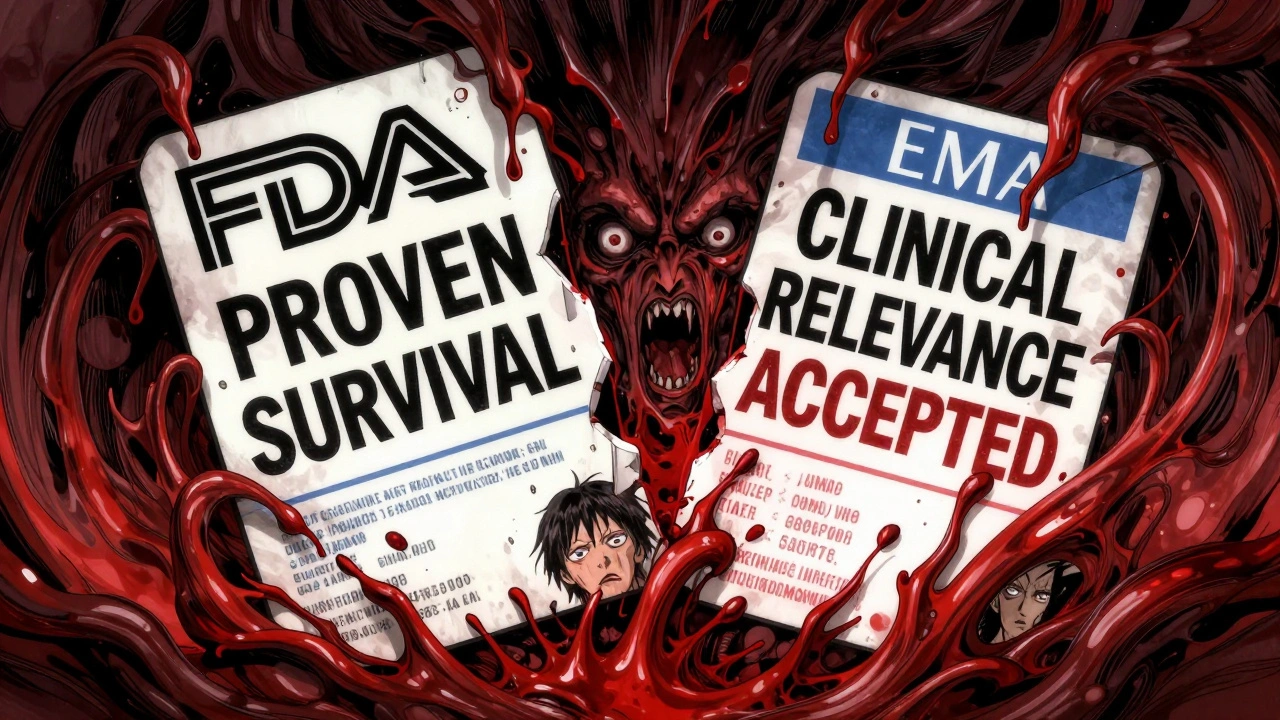
EMA vs FDA Drug Labeling: Key Differences That Impact Global Drug Access
The FDA and EMA often approve the same drugs with different labels due to differing standards for evidence, risk communication, and patient-reported outcomes. These differences impact global access, prescribing practices, and drug development costs.