
That sharp pain in your Achilles or just below your kneecap when you push off to run? It’s likely not an acute injury, but a chronic degeneration known as Tendinopathy, which is a degenerative condition of tendons characterized by pain, swelling, and impaired performance due to failed healing responses rather than active inflammation. For decades, doctors treated this with rest and anti-inflammatories, only to watch patients return with worse symptoms. Today, the landscape has shifted dramatically. The gold standard for treatment is no longer passive rest, but active loading-specifically Eccentric Training, which involves controlled lengthening of the muscle under tension to stimulate tendon remodeling and collagen realignment. But what about those quick-fix injections you see advertised? Do they help, or do they hurt your long-term recovery?
If you are dealing with persistent tendon pain, you have two main paths ahead: the hard work of structured exercise or the medical intervention of injections. Understanding the difference between these approaches-and why one builds tissue while the other often masks symptoms-is critical to getting back to your sport without recurring injuries.
The Science Behind Tendon Degeneration
To understand why Tendinopathy is often misdiagnosed as tendonitis because it lacks significant inflammatory cells but features disorganized collagen fibers and increased ground substance, we need to look at what actually happens inside the tendon. Unlike muscles, tendons have poor blood supply. When they are overloaded, they don’t heal quickly; they degenerate. This process, first systematically described in medical literature in the late 20th century, involves the breakdown of collagen structure.
According to the American College of Sports Medicine's 2022 position statement, approximately 30% of all sports medicine consultations involve some form of tendinopathy. The patellar tendon (jumper’s knee) and the Achilles tendon are the most common victims. The key insight from modern research is that tendons adapt to load. If you stop loading them completely, they weaken further. If you overload them incorrectly, they break down. The goal of treatment is to find the "sweet spot" of mechanical stress that triggers repair without causing further damage.
Eccentric Training: The Gold Standard
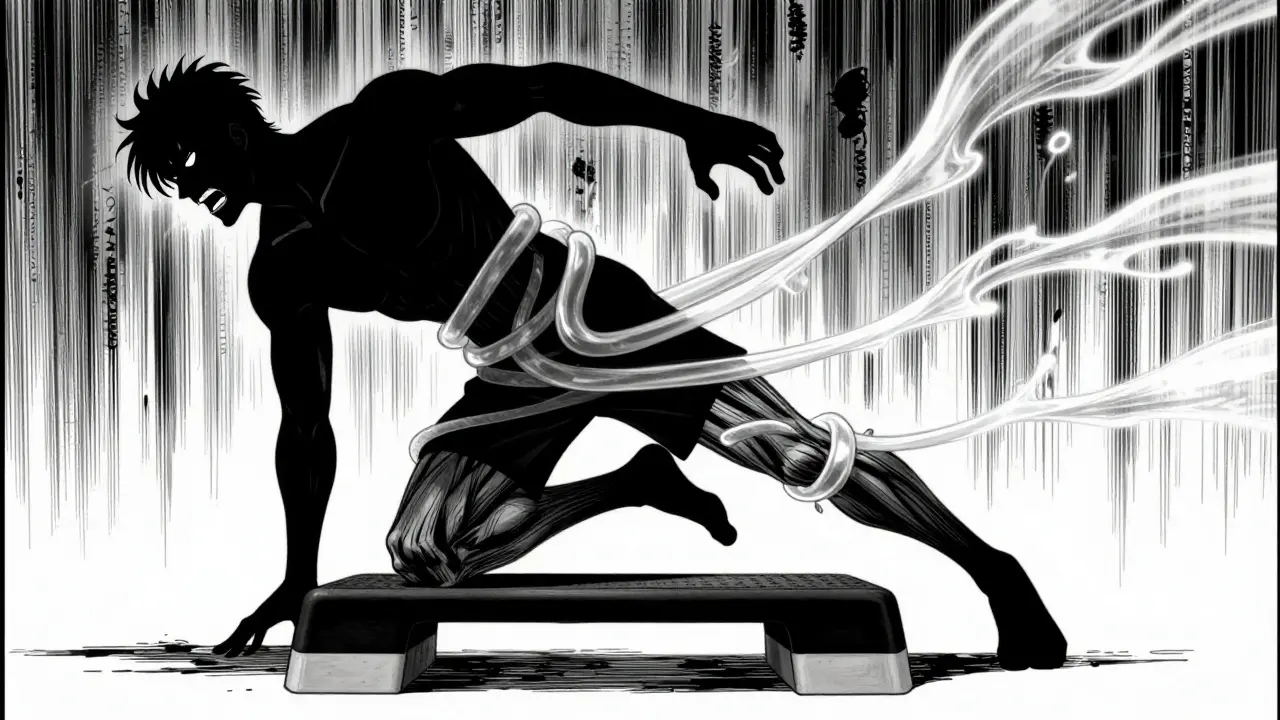
Eccentric Training is an exercise protocol focusing on the lowering phase of movement, generating high force with low metabolic cost to stimulate tenocyte activity. This approach was revolutionized by Dr. Hakan Alfredson, whose 1998 study published in the *Scandinavian Journal of Medicine & Science in Sports* introduced the heel-drop protocol for Achilles tendinopathy. Since then, it has become the cornerstone of conservative treatment.
Here is how it works mechanically. During the eccentric phase, your muscle lengthens while contracting. This creates significant tension within the tendon. Research using ultrasound tissue characterization shows that effective eccentric training increases tendon stiffness by 15-20% and improves collagen alignment. These structural changes are measurable after 8-12 weeks of consistent training.
For Achilles Tendinopathy, which affects the midportion or insertion of the Achilles tendon, commonly causing morning stiffness and activity-related pain, the classic Alfredson protocol involves:
- 3 sets of 15 repetitions twice daily.
- Lowering slowly over 3-5 seconds.
- Performing exercises with the knee straight (targeting gastrocnemius) and bent (targeting soleus).
- Resting 60-90 seconds between sets.
For Patellar Tendinopathy, which causes pain directly below the kneecap, particularly during jumping, landing, or squatting activities, the protocol typically uses single-leg decline squats on a 25-degree board. You lower yourself slowly for 3-5 seconds, completing 3 sets of 15 reps daily. Studies show VISA (Victorian Institute of Sports Assessment) scores improve by 40-50% with this method.
Heavy Slow Resistance: A Strong Alternative
While eccentric training is famous, it isn't the only game in town. Heavy Slow Resistance (HSR) training is a rehabilitation method using high loads at slow speeds for both concentric and eccentric phases to increase tendon load tolerance. A pivotal 2015 trial by Beyer et al. in the *Journal of Orthopaedic & Sports Physical Therapy* compared HSR against eccentric training for Achilles issues. The results? Equivalent outcomes. Both groups saw 60-65% improvement in VISA-A scores after 12 weeks.
So why choose one over the other? Adherence. The HSR group had an 87% adherence rate compared to 72% for eccentric training. Why? Because HSR starts with less initial pain. If the thought of doing painful heel drops makes you want to quit, HSR might be your better entry point. It involves lifting weights at 70% of your 1-repetition maximum, moving slowly (3 seconds up, 3 seconds down), three times a week.
The Injection Dilemma: Corticosteroids and PRP
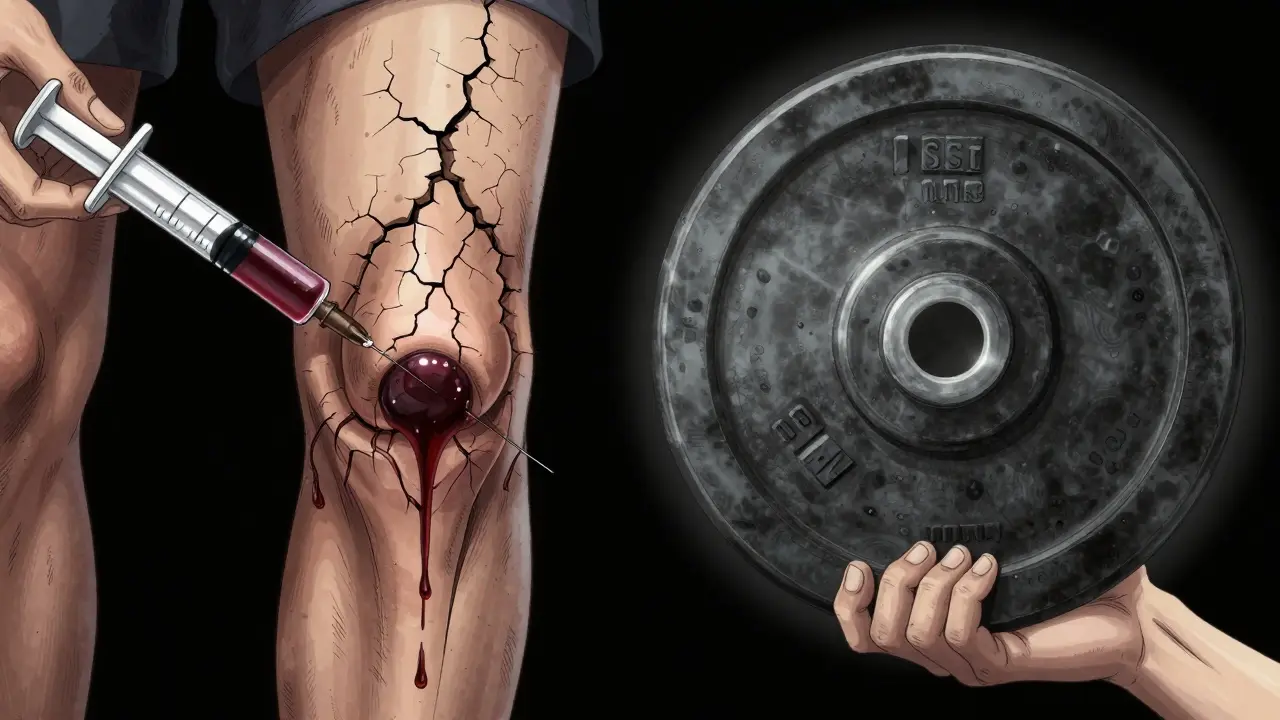
When pain becomes unbearable, many patients ask their doctor for an injection. Here is where things get tricky. We have two main types: Corticosteroid Injections, which deliver potent anti-inflammatory drugs like triamcinolone to reduce pain and swelling temporarily, and Platelet-Rich Plasma (PRP), which involves injecting concentrated platelets from the patient's own blood to release growth factors that may promote healing.
Corticosteroids provide rapid relief. You might feel 30-50% less pain within four weeks. However, this is a double-edged sword. A landmark 2013 study in the *BMJ* by Coombes et al. found that while steroids helped short-term, they were inferior long-term. At six months, 65% of patients who received steroids needed additional interventions, compared to only 35% in the exercise group. Worse, steroids can actually degrade tendon structure, increasing the risk of rupture if you return to sport too quickly.
What about PRP? It sounds futuristic and regenerative. Yet, a 2020 systematic review in the *American Journal of Sports Medicine* found only a 15-20% greater improvement over placebo at six months. That marginal gain rarely justifies the high cost and invasive nature of the procedure for routine cases. PRP remains controversial, with mixed results across different tendon sites.
| Treatment | Mechanism | Short-Term Pain Relief | Long-Term Structural Benefit | Risk Profile |
|---|---|---|---|---|
| Eccentric Training | Mechanical loading stimulates collagen realignment | Moderate (takes 2-4 weeks) | High (proven structural changes) | Low (requires proper progression) |
| Heavy Slow Resistance | High-load tension increases tissue capacity | Moderate (less initial pain than eccentric) | High (equivalent to eccentric) | Low |
| Corticosteroid Injection | Anti-inflammatory chemical suppression | High (immediate to 4 weeks) | Low/Negative (risk of degeneration) | High (rupture risk, recurrence) |
| PRP Injection | Growth factor release from autologous blood | Variable | Mixed (minimal benefit over placebo) | Low (invasive procedure risks) |
Pain Management: Isometric Exercises as a Bridge
One of the biggest hurdles in starting eccentric training is the pain. About 68% of patients report high pain levels in the first two weeks. This is where Isometric Exercises, which involve static muscle contractions without joint movement, providing immediate analgesic effects through neural mechanisms, come into play. Research by Rio et al. in 2015 showed that isometrics can reduce pain by 50% within 45 minutes. Eccentric exercises only reduce pain by 20% initially.
Think of isometrics as a pre-game warm-up for your rehab. Before doing your painful heel drops or decline squats, hold a static contraction for 45 seconds. This "analgesic window" allows you to perform your eccentric work with less discomfort. It doesn't fix the tendon structure, but it makes the journey bearable.
Implementation Tips for Success
Knowing the science is one thing; doing the work is another. Here is how to maximize your chances of success based on current clinical data:
- Get Professional Guidance Initially: A 2023 *Journal of Athletic Training* study found a 92% success rate for patients working with a physical therapist versus 68% for self-managed patients. Proper form prevents compensatory movements that can injure other areas.
- Use Technology for Adherence: Smartphone apps like Tendon Rehab App, which provides digital tracking and feedback tools to monitor exercise compliance and pain levels during rehabilitation, version 3.2, demonstrated 85% adherence over 12 weeks compared to 65% with paper protocols. Consistency is key.
- Understand Pain Thresholds: Not all pain is bad. Acceptable pain is 2-5/10 on the Visual Analog Scale (VAS) during exercise. Harmful pain is >7/10 or lasts more than 24 hours. Only 38% of self-managed patients correctly identify these thresholds, leading to either overloading or underloading.
- Be Patient: Structural changes take time. You won't see results in two weeks. The minimum duration for significant change is 12 weeks. Don't quit because it hurts in week three; that is often part of the remodeling process.
The Future of Tendon Care
We are moving toward "precision rehabilitation." Dr. Jill Cook, a leading expert at Monash University, notes that while eccentric principles remain foundational, they must be individualized. New trials are exploring molecular approaches, such as tenocyte-activating peptides, scheduled for phase II trials in 2024. Meanwhile, biomarkers are being studied to match patients with optimal loading protocols, potentially improving efficacy by 40% compared to one-size-fits-all approaches.
For now, the evidence is clear. If you want a lasting solution, you need to load the tendon. Injections might buy you comfort today, but they often steal your strength tomorrow. Embrace the eccentric work, manage the pain with isometrics, and give your body the 12 weeks it needs to rebuild.
How long does it take for eccentric training to work for tendinopathy?
Significant structural improvements and pain reduction typically require a minimum of 12 weeks of consistent training. While some pain relief may occur earlier, measurable changes in tendon stiffness and collagen alignment via ultrasound are usually visible after 8-12 weeks.
Are corticosteroid injections safe for Achilles tendinopathy?
Corticosteroid injections carry significant risks for Achilles tendinopathy, including tendon rupture and long-term degeneration. Studies show 65% of patients requiring further intervention at 6 months post-injection, making them generally inferior to exercise-based treatments for long-term management.
What is the difference between eccentric training and heavy slow resistance?
What is the difference between eccentric training and heavy slow resistance?
Eccentric training focuses solely on the lowering phase of movement, while Heavy Slow Resistance (HSR) includes both lifting and lowering phases at slow speeds with heavy loads. Both produce equivalent structural benefits, but HSR often has higher patient adherence due to lower initial pain levels.
Can I do eccentric exercises if they cause pain?
Yes, mild to moderate pain (2-5/10) during exercise is acceptable and expected. However, pain should not exceed 7/10 or last more than 24 hours after exercise. Using isometric holds before eccentric work can help reduce immediate pain levels.
Is Platelet-Rich Plasma (PRP) effective for tendinopathy?
Current evidence suggests PRP offers only minimal benefit (15-20%) over placebo at 6 months. Due to its high cost and invasive nature, it is not routinely recommended as a first-line treatment compared to proven exercise protocols.





8 Comments
Dez Johnston
June 15, 2026 AT 08:39 AMI really appreciate how this post breaks down the science without being overly dense. It’s easy to feel overwhelmed when dealing with chronic tendon pain, but seeing the clear distinction between structural healing and just masking symptoms is reassuring. I’ve been struggling with patellar tendinopathy for months, and knowing that the initial pain during eccentric exercises is part of the remodeling process helps me push through the mental block. It’s not about ignoring pain, but understanding it. Thank you for sharing these protocols; it feels like having a roadmap instead of just guessing what works.
Ashley Jacelyn
June 16, 2026 AT 23:44 PMThis is such a helpful summary! I was terrified of starting any exercise because I thought pain meant I was making it worse. The tip about using isometrics as a bridge to reduce that immediate sharpness is a game-changer. I’m going to try holding those static contractions before my heel drops. It gives me hope that I can get back to running without rushing into something that will set me back further. You have to be patient with your body, but at least now I know *how* to be patient effectively.
Amy Bogdahn
June 18, 2026 AT 13:46 PMStop whining about the pain and just do the work. Injections are for people who lack discipline. If you can’t handle 15 reps of slow lowering, you don’t deserve to run. Simple as that. Most people fail because they quit too early or seek easy fixes. No shortcuts. Just suffer and heal.
Sonam Norbu
June 18, 2026 AT 17:21 PMTypical Western medicine trying to sell you expensive procedures while ignoring basic mechanical principles. We need to stop relying on these invasive injections that weaken our tissues. Real strength comes from consistent, hard work, not some quick chemical fix. This article proves that the old-school method of loading the tendon is superior. We should be proud of our ability to endure and rebuild through effort rather than hiding behind medical interventions. Support local physical therapists who actually teach you how to move correctly instead of just prescribing drugs.
Koushiki Behera
June 19, 2026 AT 06:17 AMThe concept of finding the 'sweet spot' of mechanical stress resonates deeply with me 🧘♀️. It reminds me of the philosophical balance between action and stillness. Tendons, like us, need tension to grow but also rest to integrate. The idea that degeneration happens from both overload AND underload is profound. It suggests that health is not a static state but a dynamic equilibrium. I’m curious if anyone has tried combining mindfulness practices with these eccentric protocols? Perhaps the mental focus enhances the neural connection to the tenocytes? 🌱✨
KESHAV KUMAR
June 21, 2026 AT 05:35 AMSure, great advice for everyone except the actual athletes who have competitions next week. But hey, good luck telling a pro runner to wait 12 weeks for collagen realignment when their sponsor demands results yesterday. Meanwhile, the rest of us can sit here and debate heel drops vs squats while our knees click ominously. Thanks for the info, I guess. At least it’s cheaper than PRP.
Hafiz Omeiza
June 22, 2026 AT 18:45 PMIt is imperative to note that adherence is the single most critical factor in rehabilitation outcomes. While the scientific literature supports eccentric training, the variable success rates often stem from patient non-compliance due to fear-avoidance behaviors. One must strictly adhere to the prescribed volume and intensity. Deviating from the protocol by reducing repetitions or speed compromises the mechanical stimulus required for collagen synthesis. Furthermore, the notion that pain is merely a signal to be managed rather than avoided requires a significant shift in mindset. Those who approach this with a rigorous, disciplined attitude will see the structural benefits described. It is not a suggestion; it is a physiological necessity.
Alex Johnston
June 23, 2026 AT 10:41 AMThey want you to believe in the 'gold standard' so you stay dependent on their protocols. Have you considered that the pharmaceutical industry funds much of this research to keep you away from natural healing methods? Or perhaps the 'degeneration' is a result of modern lifestyle toxins that no amount of heel drops can fix. The system is designed to make you weak so you buy more treatments. Wake up. Your body knows how to heal; we just suppress it with all this 'science'. :) Keep doing your little exercises, sheep.