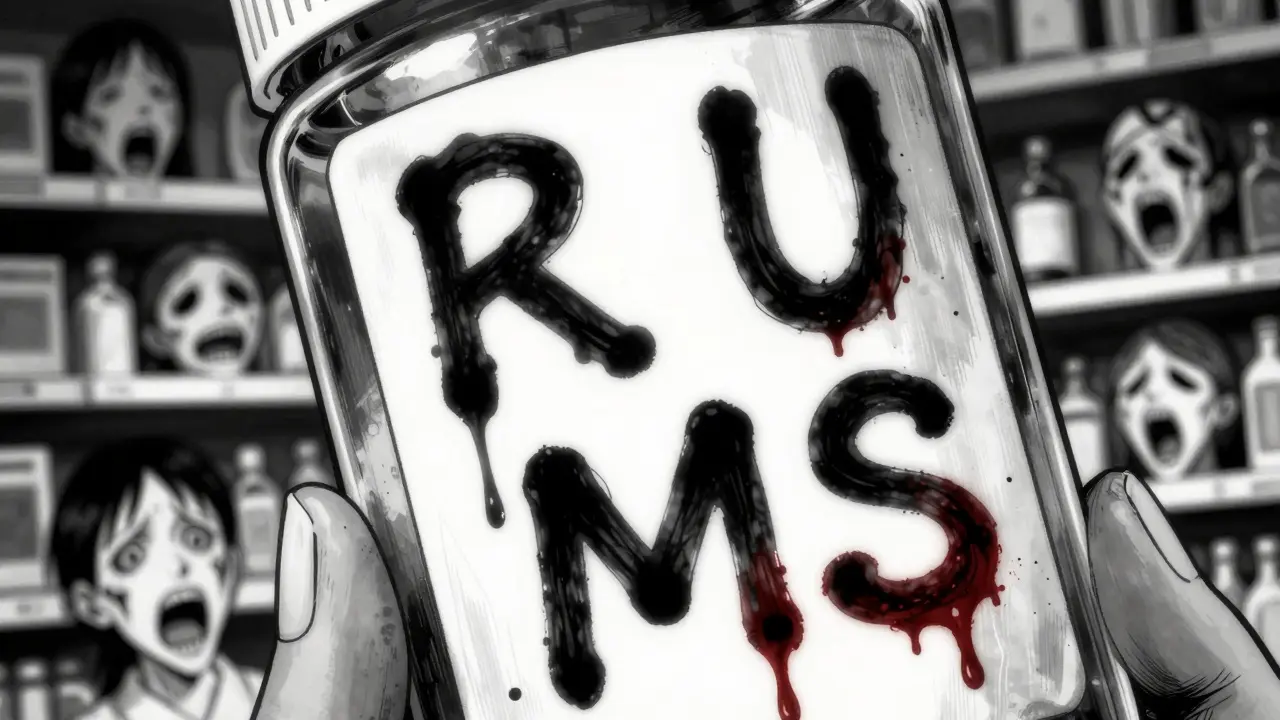
Every time you pick up a prescription, you’re looking at a tiny code that could mean the difference between getting better and ending up in the hospital. Those little letters and symbols on your label - Rx, b.i.d., o.d., SC - aren’t random. They’re shorthand. But if you don’t know what they mean, they’re also a hidden risk.
Here’s the truth: thousands of people are hurt every year because someone misread a prescription label. A nurse thought QD meant four times a day. A pharmacist saw MS and wasn’t sure if it was morphine sulfate or magnesium sulfate. A patient took 1.0 mg thinking it was 10 mg. These aren’t rare mistakes. They’re common. And they’re preventable.
What Does Rx Actually Mean?
You’ve seen it a thousand times: Rx at the top of your prescription. It’s not a brand. It’s not a code. It’s Latin. Recipe means "take" or "receive." Doctors started writing it in the 1500s to tell pharmacists what to prepare. Today, it’s just tradition - but it’s still everywhere. Even in digital prescriptions. The symbol hasn’t changed, but how we use it has.
Here’s what matters: Rx is the only Latin abbreviation that’s still widely accepted. Everything else? That’s where the danger starts.
The Most Dangerous Abbreviations You’ve Probably Seen
Not all abbreviations are created equal. Some are harmless. Others are deadly. The Institute for Safe Medication Practices (ISMP) keeps a list of the worst offenders - the ones that cause the most mistakes. Here are the top five you need to know:
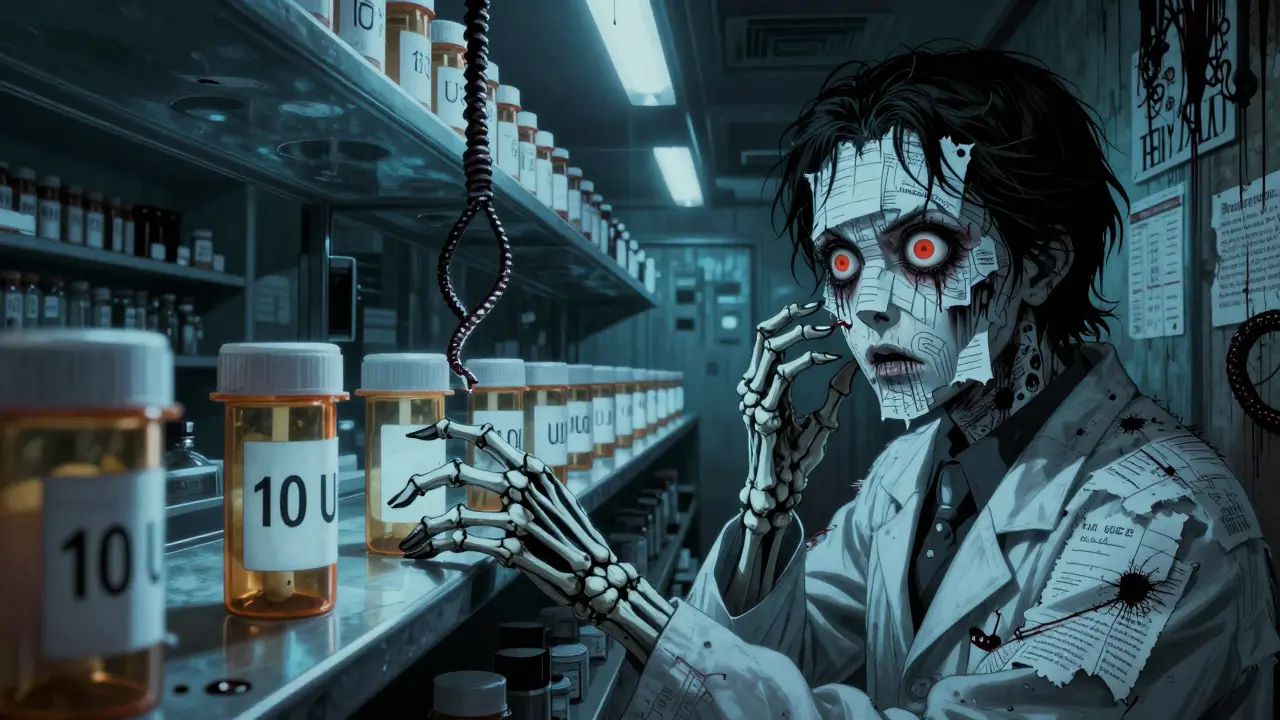
- U for units - This one kills. People have mistaken U for 0 or 4. A patient was given 100 units of insulin instead of 10. They went into a coma. That’s why U is banned in most hospitals.
- QD for daily - Sounds simple, right? But it looks like QID (four times a day). In 2021, QD was involved in over 21% of all dosing errors. Now, hospitals require you to write "daily" - no shortcuts.
- MS for morphine sulfate - Sounds harmless. But MS could also mean magnesium sulfate. One is for pain. The other is for seizures. Mix them up, and you risk a fatal overdose. Many pharmacies now require full spelling: "morphine sulfate" or "magnesium sulfate."
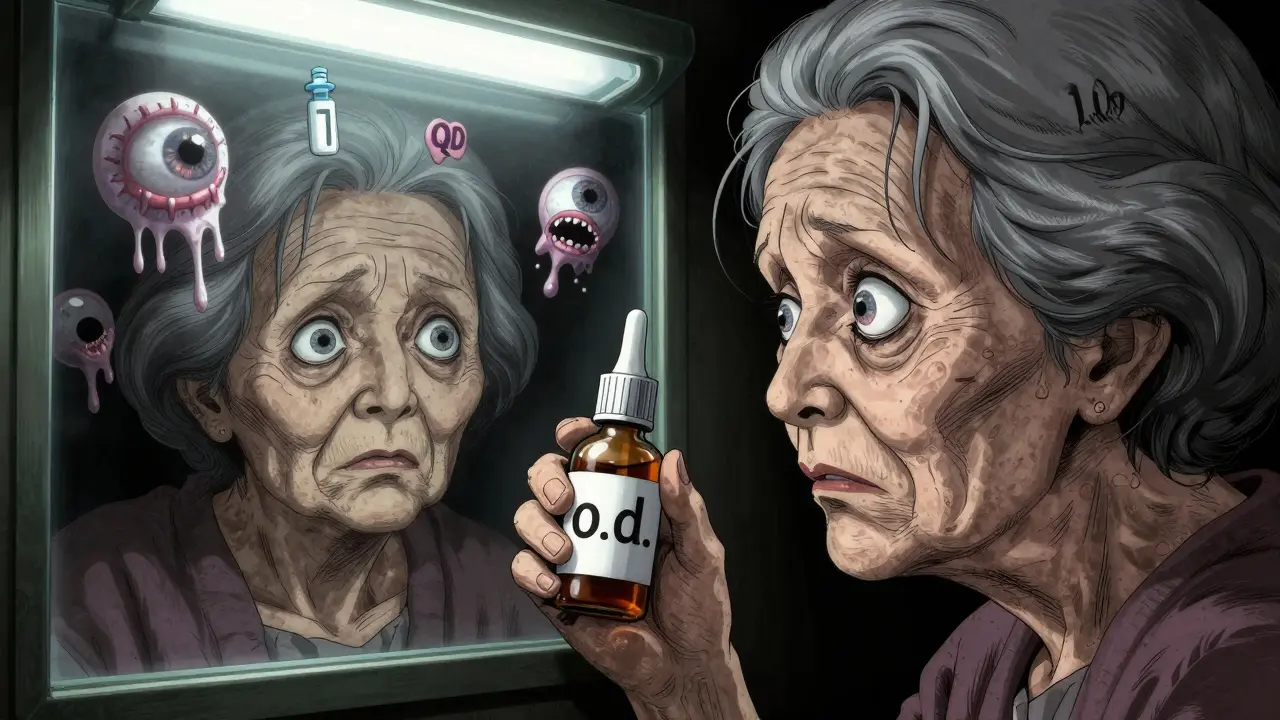
- o.d. and o.s. - These stand for right eye and left eye. But patients and even some staff read o.d. as "overdose." In 2023, over 2,100 cases were reported where eye drops were given to the wrong eye - or not given at all - because of this confusion.
- 1.0 mg - That trailing zero. It looks like 10 mg. The Joint Commission banned trailing zeros in 2004. The rule? Always write 0.5 mg, never 1.0 mg.
These aren’t "maybe" dangers. They’re confirmed killers. And they’re still showing up on prescriptions today.
How Prescription Labels Are Changing - Fast
The old way of writing prescriptions is dying. And it’s not because doctors are lazy. It’s because people are dying.
Since 2023, over 80% of U.S. hospitals use electronic prescribing systems. These systems don’t allow QD, U, or MS. They force you to type "daily," "units," "morphine sulfate." And guess what? Error rates dropped by 43%.
But here’s the catch: not every prescriber uses these systems. Some still write on paper. Some use old templates. Some mix paper and digital. That’s where the errors creep in.
Community pharmacies - the ones you walk into - still see about 19% of their errors tied to confusing abbreviations. Especially o.d. vs. a.d. (right eye vs. right ear). One patient got ear drops instead of eye drops. They went blind in one eye.
The new standard? Plain English. No Latin. No shortcuts. If it’s "twice a day," write "twice a day." If it’s "as needed," write "as needed."
What You Should See on Your Prescription Label
You have a right to understand your medication. Here’s what a safe, clear label looks like:
- Take 5 mg by mouth twice daily. (Not "5 mg p.o. b.i.d.")
- Apply one drop to the right eye every night. (Not "1 drop o.d. h.s.")
- Inject 10 units under the skin. (Not "10 U SC")
- Take as needed for pain. (Not "PRN pain")
Walmart, CVS, and Walgreens now print all prescriptions like this. They automatically convert any abbreviations into plain language. If your pharmacy still shows b.i.d. or q.i.d., ask them to explain it. If they can’t, ask for a printed version with full words.
Why This Matters - Real Stories
Reddit user u/MedSafetyFirst posted in January 2024: "Just had a near-miss with 'MSO4.' Could be morphine sulfate or magnesium sulfate. We now require full spelling. No exceptions."
Another case: a 72-year-old woman was given 10 units of insulin labeled as "10 U." The pharmacist thought it was 100 units. She nearly died.
And then there’s the woman who got eye drops labeled "o.d." She thought it meant "overdose" and refused to take them. Her glaucoma worsened. She lost vision.
These aren’t outliers. They’re predictable. And they’re avoidable.
What You Can Do Right Now
You don’t need to memorize every abbreviation. But you do need to be your own safety net.
- Ask for plain language. If your label says "t.i.d." or "q.i.d.," ask the pharmacist: "What does that mean in plain English?"
- Check the dose. If it says "1.0 mg," ask if it’s supposed to be 0.1 mg or 10 mg. That decimal point matters.
- Know your meds. If you’re on insulin, eye drops, or seizure meds - know the exact name and dose. Don’t rely on abbreviations.
- Use the pharmacy app. Most pharmacies now let you view your prescription online. Look for the "Explanation" button. It’ll translate abbreviations for you.
- Report confusing labels. If you see U, MS, or QD on your label, tell the pharmacy. They need to know these are still happening.
The system is changing. But until it’s fully fixed, you’re the last line of defense.
The Future Is Already Here
By 2027, 95% of prescriptions in the U.S. will be fully automated - no abbreviations, no guesswork. AI systems like IBM Watson’s MedSafety AI are already converting "q.d." to "daily" with 99.2% accuracy.
But until then? Don’t trust the symbols. Ask. Double-check. Speak up. Your life might depend on it.


16 Comments
cara s
March 19, 2026 AT 22:43 PMSo let me get this straight - we’re still using Latin shorthand in 2025 because tradition > safety? I get that Rx is kinda iconic, like the McDonald’s arches, but when your life’s on the line, aesthetics shouldn’t matter. I work in a clinic, and we had a near-miss last month because someone wrote ‘QID’ instead of ‘four times a day.’ The nurse was new. The patient was diabetic. The insulin vial was labeled with a trailing zero. We’re lucky she didn’t end up in the ICU. It’s not just about education - it’s about system design. If the tech can auto-convert abbreviations, why are we still letting humans type ‘U’? That’s like letting someone drive a car with a ‘gas’ and ‘brake’ pedal swapped. The system’s broken. Fix it. Not with posters. Not with pamphlets. With code.
Robin Hall
March 21, 2026 AT 09:30 AMLet me ask you something - who really benefits from this ‘plain language’ push? Big Pharma? The EHR vendors? The hospitals that charge $1200 for a 5-minute visit? This isn’t about safety. It’s about control. You think they’re removing abbreviations so you don’t die? No. They’re removing them so you can’t second-guess the prescription. No more ‘b.i.d.’ means no more questions. No more ‘MS’ means no more knowing what you’re actually getting. They want you passive. They want you trusting. And if you start asking, ‘Wait, why does this say ‘twice daily’ instead of ‘b.i.d.’?’ - they’ll label you ‘difficult.’ This isn’t progress. It’s consolidation. And the next step? Mandatory digital IDs on every pill bottle. You’ll be tracked. Monitored. Controlled. And you won’t even know why.
Michelle Jackson
March 21, 2026 AT 20:16 PMUgh. I hate when people act like this is some groundbreaking revelation. I’ve been working in pharmacy for 17 years. I’ve seen every single one of these mistakes. The ‘U’ thing? I’ve had patients almost die because someone wrote ‘10U’ and the tech read it as ‘100.’ We had to retrain the whole staff. The ‘o.d.’ vs ‘overdose’ confusion? I had a 70-year-old man refuse his glaucoma drops because he thought it said ‘overdose’ - he actually called 911. We’re not talking about ‘rare’ cases. We’re talking about ‘daily.’ And yet - here we are in 2025, still arguing about whether we should just say ‘right eye’ instead of ‘o.d.’ It’s not rocket science. It’s basic human decency. Why does this even need to be a blog post? Because we’ve let laziness become policy. And now people are dying. And I’m tired of pretending it’s not our fault.
Suchi G.
March 22, 2026 AT 06:49 AMIn India, we don’t even use Latin abbreviations anymore. We use English - simple, direct, clear. ‘Take once daily.’ ‘Apply on left eye.’ ‘Inject under skin.’ No ‘QD,’ no ‘SC,’ no ‘MS.’ Why? Because our patients - farmers, housewives, laborers - they don’t know Latin. They don’t care about tradition. They care about living. And when a grandmother takes her grandson’s insulin because she thought ‘1.0 mg’ meant ‘10 mg,’ she doesn’t care that it’s ‘standard practice.’ She just dies. We fixed this in our rural clinics 10 years ago. We didn’t wait for a journal article. We didn’t wait for a government mandate. We just changed the language. Because people matter more than symbols. Maybe America needs to remember that. We’re not behind. We’re ahead. And we didn’t need AI to do it. We just needed compassion.
becca roberts
March 24, 2026 AT 01:54 AMWow. So the solution to medical errors is… writing in plain English? Groundbreaking. I’m sure the FDA will award you a Nobel Prize for this. I mean, who knew that ‘twice a day’ is clearer than ‘b.i.d.’? Next you’ll tell us that ‘10 mg’ is better than ‘10mg’ - oh wait, they already did that. And yet, here we are, still having this conversation like it’s 1999. I work in a hospital. We use AI. We use barcodes. We use double-check protocols. We have pharmacists reviewing every script. And yet - somehow - people still get the wrong meds. So let me guess - the real problem isn’t ‘QD’ or ‘U’… it’s that we don’t have enough staff. Or training. Or oversight. But nooo, let’s blame the abbreviations. That’s easier. And way more clickbaity. 😒
Andrew Muchmore
March 24, 2026 AT 07:21 AMPlain language works. Period. No Latin. No symbols. No guessing. If your label says ‘o.d.’ you’re doing it wrong. I’ve been in ERs. Seen the charts. The mistakes are avoidable. Stop making excuses. Change the system. Now. No more ‘MS.’ No more ‘U.’ No more trailing zeros. Just words. Simple. Clear. Safe. That’s it.
Paul Ratliff
March 26, 2026 AT 01:19 AMMy grandma got her insulin wrong because the label said ‘1.0’ and she thought it was 10. She ended up in the hospital for 3 days. I called the pharmacy. They said ‘it’s standard.’ I said ‘well, it’s not safe.’ They didn’t change a thing. Now I print out the full instructions and tape them to the bottle. No more abbreviations. Ever. Just words. Like ‘take 5 mg.’ Simple. Done.
SNEHA GUPTA
March 27, 2026 AT 09:54 AMThere’s a deeper philosophical layer here. The use of Latin in medical notation is not merely practical - it’s a relic of epistemic authority. It’s a language barrier erected between healer and healed, designed to preserve the mystique of the profession. To replace ‘b.i.d.’ with ‘twice daily’ is not just a safety measure - it’s a democratization of knowledge. It dismantles the gatekeeping of medical literacy. We are not just preventing errors - we are restoring agency. The patient is no longer a passive recipient of coded commands, but an active participant in their own care. This shift, however small, is revolutionary. It is not merely about clarity - it is about dignity.
Gaurav Kumar
March 28, 2026 AT 16:24 PMHAHAHAHA. America is so backwards. In India, we’ve been using clear language since the 1980s. Why? Because we don’t worship dead languages. We don’t need ‘Rx’ to feel professional. We write: ‘Take 1 tablet twice a day.’ Simple. Clear. Safe. You guys are stuck in a 15th-century Latin fantasy while your people die from ‘U’ and ‘MS.’ We don’t need AI to fix this. We just need common sense. And you? You need to stop pretending Latin makes you smarter. It doesn’t. It just makes you dangerous.
David Robinson
March 30, 2026 AT 03:00 AMYou think this is about safety? Nah. This is about liability. Hospitals don’t care if you live or die. They care if they get sued. That’s why they’re forcing plain language - not because it’s better for you, but because it’s harder to argue ‘I didn’t know what QD meant’ in court. They’re not saving lives. They’re covering their asses. And the fact that you’re celebrating this as ‘progress’ proves how easily you’re manipulated. The system didn’t change for you. It changed because lawyers told them to. Wake up.
Jeremy Van Veelen
March 30, 2026 AT 22:09 PMLet me tell you something - I’ve seen what happens when a nurse misreads ‘MS’ as magnesium sulfate instead of morphine. I was there. I watched a perfectly healthy man go into cardiac arrest because someone thought ‘MS’ meant ‘magnesium.’ He was 34. He had two kids. He didn’t die instantly. He suffered. For 47 minutes. And then he was gone. That’s not a statistic. That’s a funeral. And now? Now we have AI that can auto-correct ‘QD’ to ‘daily’? That’s not innovation. That’s a bandage on a hemorrhage. We need to burn the old systems. We need to rebuild. We need to stop pretending that tradition is safe. It’s not. It’s a graveyard.
Laura Gabel
April 1, 2026 AT 07:39 AMUgh. Another one of these ‘you’re not reading your labels’ posts. Newsflash: most people can’t read medical jargon. That’s why we have pharmacists. Stop blaming patients. Stop acting like we’re all supposed to be doctors. Just fix the damn system. If the label says ‘1.0 mg’ - change it. If it says ‘U’ - change it. Don’t make me google ‘what does b.i.d. mean’ while I’m holding my sick kid’s hand. This isn’t a puzzle. It’s a prescription. Just make it clear.
jerome Reverdy
April 2, 2026 AT 04:47 AMLook - I get it. Abbreviations are a relic. But here’s the thing: they’re not the root problem. The root problem is that pharmacists are understaffed. Nurses are overworked. Prescribers are rushed. And patients are left to decode a language they never learned. The ‘plain language’ fix is great - but it’s a symptom cure. We need to fix the workflow. We need to reduce prescription volume per provider. We need to hire more pharmacy techs. We need to stop treating medication safety like an afterthought. The abbreviations are the symptom. The system is the disease. Don’t just change the label - change the culture.
Andrew Mamone
April 3, 2026 AT 19:42 PMThis is why I love tech. 🤖💉 My pharmacy app now auto-translates every abbreviation. ‘b.i.d.’ → ‘twice daily.’ ‘o.d.’ → ‘right eye.’ ‘SC’ → ‘subcutaneous.’ I get a pop-up with a simple explanation. No guesswork. No stress. And I can share it with my mom. She’s 78. She doesn’t know Latin. But she knows ‘twice a day.’ That’s all she needs. Technology isn’t the enemy. Ignorance is. And this? This is progress. 🙌
MALYN RICABLANCA
April 4, 2026 AT 11:31 AMOH MY GOD. I JUST HAD A PANIC ATTACK. I saw ‘MS’ on my mom’s label last week. I thought it was morphine sulfate - but what if it was magnesium sulfate?! I called the pharmacy at 2 a.m. I screamed. I cried. I demanded a new label. They said ‘it’s fine.’ I said ‘NO IT’S NOT.’ I drove to the pharmacy in my pajamas. They changed it. They apologized. But now I’m obsessed. I’ve started a petition. I’ve emailed every senator. I’ve posted on TikTok. I’ve made a YouTube video. I’ve written a poem. I’ve drawn a comic. I’ve created a meme. I’ve started a support group. I’ve hired a lawyer. I’ve written a book. I’ve started a nonprofit. I’ve convinced my entire neighborhood to boycott pharmacies that use abbreviations. I’ve become an activist. I’ve changed my life. And I’ve saved lives. Because I refused to accept ‘it’s just tradition.’ I refused to be silent. And if you’re still reading this… you’re next. The revolution is here. And it’s spelled out in plain English.
cara s
April 5, 2026 AT 14:16 PMActually, I just got off the phone with my pharmacist. They said Walmart and CVS now have a ‘Plain Language Guarantee’ - if your label has any abbreviation, they’ll print you a new one with full words. No questions. No hassle. Just ask. I didn’t even know that was a thing. Maybe we’re not as far behind as we think. The system’s not perfect - but it’s changing. And if enough people ask - it’ll change faster.