
Millions of people live with migraine headaches-not just bad headaches, but debilitating neurological events that can knock you out for hours or even days. If you’ve ever been trapped in a dark room, wincing at the sound of a ticking clock or the flicker of a lightbulb, you know this isn’t ordinary head pain. Migraines are a real medical condition, not just stress or fatigue. And while there’s no cure, understanding your triggers, knowing what medications can help, and having a clear plan for when an attack hits can change everything.
What Really Causes a Migraine?
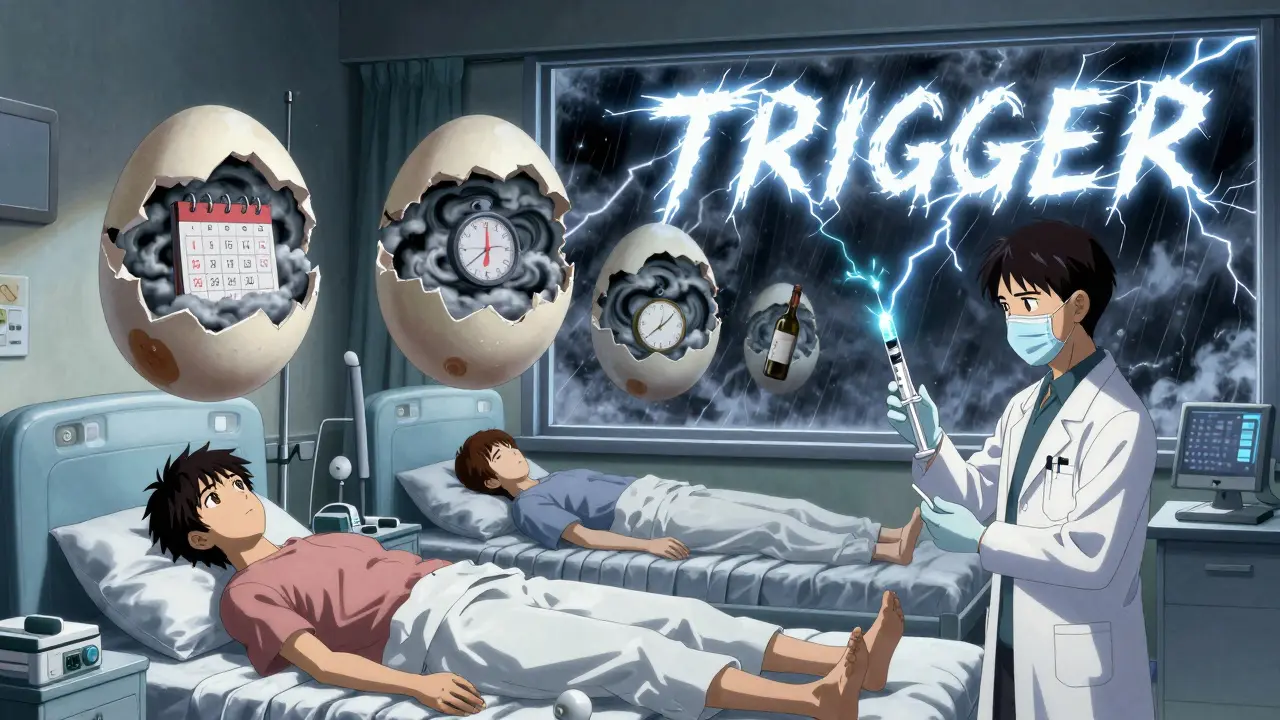
A migraine isn’t just a headache. It’s a neurological storm. Research shows it starts with unusual electrical activity in the brain that spreads across the cortex, then triggers inflammation around the nerves and blood vessels in your head. That’s what causes the pounding pain, nausea, and sensitivity to light and sound. It’s not in your head-it’s in your brain, and it’s real.
One big myth is that migraines are caused by emotional weakness or poor lifestyle choices. That’s not true. While triggers can set off an attack, the root cause is biological. Your brain is wired to react more strongly than others to certain stimuli. That’s why two people can eat the same cheese, sleep the same amount, and one gets a migraine while the other doesn’t.
The Top Triggers (And How They Work Together)
There’s no universal list of migraine triggers. What sets off your migraine might do nothing to someone else’s. But research shows some triggers appear again and again. The most common ones are:
- Stress - It affects up to 80% of people with migraines. Not just being under pressure, but also the crash afterward. Ever notice a migraine hitting right after a big project ends, or on a Sunday morning when you finally relax? That’s a “let-down” migraine. Your body’s stress hormones drop suddenly, and your brain interprets that as a signal to trigger pain.
- Sleep changes - Both too little and too much sleep can trigger attacks. Nearly half of all migraines happen between 4 a.m. and 9 a.m., which suggests your body’s internal clock plays a big role. Skipping sleep, sleeping in on weekends, or even jet lag can be enough to set off an attack.
- Hormonal shifts - For women, this is huge. Fluctuations in estrogen-before your period, during ovulation, or after menopause-are linked to more than 60% of migraine episodes. Many women notice their migraines follow their cycle like clockwork.
- Dietary factors - Not everyone reacts the same way. Common offenders include aged cheeses, processed meats with nitrates, MSG, artificial sweeteners like aspartame, and alcohol (especially red wine). But here’s the twist: caffeine can go both ways. For some, a cup of coffee stops a migraine in its tracks. For others, even a small amount triggers one. The key is consistency. If you drink coffee daily, suddenly skipping it might cause withdrawal headaches. If you rarely drink it, suddenly having two cups might overload your system.
- Weather and environment - Changes in barometric pressure, humidity, or altitude can set off migraines. Flying, storms, or even just a sudden drop in temperature can be enough. Bright lights, flickering screens, fluorescent bulbs, and loud noises are also major triggers. Even smells-perfume, cigarette smoke, strong cooking odors-can be enough to push you over the edge.
Here’s the thing most people miss: it’s rarely just one trigger. It’s the combination. Maybe you slept poorly, had a stressful day, and ate a slice of pizza with extra cheese. Individually, none of those might have done much. Together? They cross your personal threshold. Think of it like filling a glass. One drop at a time doesn’t spill it. But when the glass is already half-full, one more drop-your favorite scent, a loud noise, a skipped meal-and it overflows.
Preventive Medications: Stopping Attacks Before They Start
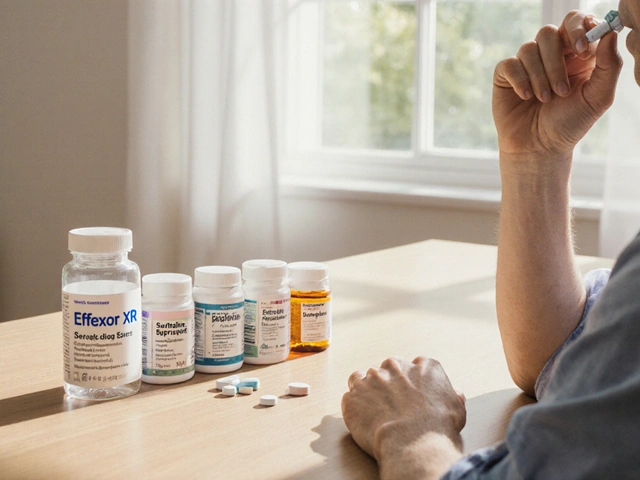
If you’re having more than four migraines a month, or if your attacks are so bad they disrupt your life for days, preventive medication might be worth considering. These aren’t painkillers. They’re taken daily to reduce how often and how badly migraines hit.
There are several classes of drugs used for prevention:
- Beta-blockers - Drugs like propranolol and timolol were originally developed for high blood pressure, but they’re now commonly prescribed for migraines. They work by calming overactive nerve signals in the brain.
- Anticonvulsants - Topiramate and valproate were made for seizures, but they also stabilize brain activity in people prone to migraines. Topiramate can cause side effects like tingling in fingers or weight loss, which some people actually welcome.
- Antidepressants - Amitriptyline, a tricyclic, is often used even if you’re not depressed. It helps regulate pain signals and improve sleep, both of which reduce migraine frequency.
- CGRP inhibitors - These are the newest class, designed specifically for migraines. Drugs like erenumab and fremanezumab block a protein called CGRP that’s involved in pain signaling. They’re given as monthly injections and have fewer side effects than older meds. Many people report cutting their migraine days in half.
Choosing the right one isn’t a guessing game. Your doctor will consider your overall health, other conditions you have, side effect risks, and how often you get migraines. For example, if you have asthma, beta-blockers might not be safe. If you’re trying to get pregnant, some anticonvulsants are off the table. It’s a personalized decision.
Acute Treatment: What to Do When a Migraine Hits
When the pain starts, you need fast relief-not just to feel better, but to stop the attack from getting worse. Delaying treatment often makes migraines harder to control.
Here’s what works:
- NSAIDs - Over-the-counter pain relievers like ibuprofen or naproxen can help, especially if taken early. They’re good for mild to moderate attacks.
- Triptans - These are the gold standard for moderate to severe migraines. Sumatriptan, rizatriptan, and others work by narrowing blood vessels and blocking pain pathways. They come as pills, nasal sprays, or injections. If one doesn’t work, try another-each has a slightly different effect.
- Gepants - Newer drugs like ubrogepant and rimegepant are taken as pills and don’t constrict blood vessels. That makes them safer for people with heart disease or high blood pressure. They’re also effective for nausea and can be used more than once a month.
- Anti-nausea meds - If vomiting is part of your attack, drugs like metoclopramide or prochlorperazine can help. They don’t just treat nausea-they also help with head pain.
Some people find that caffeine helps. If you normally drink coffee, having a small amount at the first sign of pain might stop the attack. But don’t start drinking caffeine just to treat migraines-it can backfire if you become dependent.
Important: Never take painkillers more than 10 days a month. Overuse can lead to rebound headaches, which are harder to treat than the original migraines.
Tracking Your Triggers: The Most Powerful Tool You Have
No medication works unless you know what’s triggering your attacks. That’s why keeping a migraine diary is the single most effective thing you can do.
Write down every day:
- What time the headache started
- How bad it was (1-10 scale)
- What you ate and drank
- How much sleep you got
- Stress levels (high, medium, low)
- Weather changes or travel
- Any medications taken
Use a simple notebook or a free app. Look for patterns over time. Maybe every time you skip breakfast, you get a headache by noon. Or maybe your migraines always happen after a bad night’s sleep during your period. Once you see the pattern, you can adjust.
Consistency matters more than perfection. You don’t need to track every single thing forever. Just for a few months. Then you’ll start seeing what’s really behind your attacks.

When to See a Doctor
You don’t need to suffer in silence. See a doctor if:
- Your migraines are getting worse or more frequent
- Over-the-counter meds don’t help anymore
- You have new symptoms like vision loss, confusion, or weakness on one side
- You’re using painkillers more than 10 days a month
A neurologist who specializes in headaches can help you find the right combo of lifestyle changes and medication. Don’t wait until it’s unbearable. Migraines are treatable. You just need the right plan.
What Doesn’t Work (And Why)
There’s a lot of noise out there. Don’t waste time on things that won’t help:
- Just avoiding “trigger foods” - Cutting out chocolate or cheese won’t help if stress and sleep are your real triggers.
- Only using painkillers - They mask the pain, but don’t stop the brain activity causing the migraine.
- Waiting until it’s too late - If you wait until the pain is at a 9/10, it’s harder to stop. Treat early.
- Believing it’s “all in your head” - Migraines are a biological condition. You’re not weak. You’re not imagining it.
Can migraines be cured?
No, there’s no cure for migraines yet. But they can be managed very effectively. Many people reduce their attacks by 70% or more with the right combination of triggers tracking, lifestyle changes, and medication. The goal isn’t to eliminate them entirely-it’s to make them rare and mild enough that they don’t control your life.
Do I need to take preventive meds forever?
Not necessarily. Many people take preventive medications for 6-12 months, then gradually stop if their attacks have improved. If they return, they can restart. Some people, especially those with chronic migraines, may need long-term treatment. It’s not permanent unless you and your doctor decide it’s the best option.
Can stress management really prevent migraines?
Yes, absolutely. Stress is the #1 trigger for most people. Techniques like mindfulness, regular exercise, therapy, or even just setting boundaries at work can cut your migraine frequency in half. You don’t need to be zen all the time-just consistent. Even 10 minutes of deep breathing daily can make a difference.
Is it safe to take migraine meds while pregnant?
Some are, some aren’t. Acetaminophen (paracetamol) is generally considered safe. Triptans and CGRP inhibitors are not recommended during pregnancy. Always talk to your doctor before continuing or starting any medication if you’re pregnant or planning to be. Lifestyle changes and trigger avoidance become even more important during this time.
Why do my migraines happen at the same time every month?
If you’re a woman, it’s likely tied to your menstrual cycle. Estrogen drops sharply right before your period, and that drop is a powerful trigger for many. This is called menstrual migraine. Tracking your cycle alongside your headache diary will show the pattern clearly. Some women benefit from short-term preventive meds just in the days before their period.
Living with migraines doesn’t mean living in fear. You have more control than you think. Start by tracking your patterns. Talk to your doctor about options. And remember-this isn’t something you have to endure. With the right approach, you can take back your days.



15 Comments
Lyle Whyatt
February 8, 2026 AT 23:21 PMMan, I never realized how much my migraines were tied to the ‘let-down’ effect until I started tracking. I’d crush a project at work, then collapse on Sunday with a full-blown migraine. Turns out, my cortisol was crashing like a dropped phone. Now I ease into downtime-coffee, walk, no screens. It’s not perfect, but my attack frequency dropped by like 60%. If you’re only treating the pain, you’re fighting the symptom, not the storm.
Also, caffeine? Wild card. I used to swear off coffee during flare-ups. Then I tried having a tiny cup at the first twinge-and boom-attack stopped. Now I keep a travel mug of cold brew in my bag. It’s not magic, but it’s my little neural hack.
MANI V
February 10, 2026 AT 03:51 AMPeople really think migraines are ‘biological’? How convenient. You’re just avoiding responsibility. I’ve seen folks with way worse stress levels-no migraines. You’re choosing to be sensitive. Sleep? Diet? Stress? All controllable. Maybe if you stopped being a victim and started being disciplined, you wouldn’t be stuck in a dark room.
Susan Kwan
February 10, 2026 AT 20:53 PMWow. A medical article that doesn’t blame women for ‘being emotional.’ Revolutionary. I almost cried. Also, yes-estrogen drops are a nightmare. I track my cycle like a NASA mission. If I don’t take topiramate the week before, I’m basically a zombie for three days. And no, I don’t ‘just need to relax.’ Try living in a world that thinks your pain is a mood disorder.
Random Guy
February 12, 2026 AT 03:42 AMbro i had a migraine after eating a slice of pizza with extra cheese and i was like ‘wait did i just get hit by a truck’ and then i remembered-oh right, i have this thing. also why is everyone so obsessed with caffeine? i drink 5 espressos a day and still get them. maybe my brain just hates me.
Ryan Vargas
February 13, 2026 AT 03:58 AMThe neurochemical cascade of a migraine is not merely a physiological anomaly-it is a systemic rebellion against homeostasis, orchestrated by the trigeminal-autonomic reflex arc in concert with cortical spreading depression. The myth of ‘trigger foods’ is a distraction manufactured by pharmaceutical interests to monetize dietary fear. The real culprit? Electromagnetic pollution, circadian misalignment, and the epigenetic silencing of CGRP-regulating microRNAs due to chronic low-grade inflammation from processed food matrices. We are not treating symptoms-we are bandaging a ruptured neurovascular dam.
And yet, the medical establishment clings to beta-blockers like a 1980s fax machine. We must reframe migraine as a metabolic immune disorder, not a neurological one. The solution? Ketogenic fasting, infrared sauna therapy, and grounding mats. I’ve reduced my attacks by 89% using only these. The science is clear. The system is corrupt.
Tasha Lake
February 13, 2026 AT 22:18 PMAs someone who’s been on both topiramate and erenumab, I can say the CGRP inhibitors changed my life-but only after I stopped trying to ‘tough it out.’ I used to think preventive meds meant I was ‘failing’ at lifestyle. Nope. My brain just has a faulty circuit breaker. Now I combine the med with sleep hygiene and blue light filters. The combo? Night and day. Also, tracking with the Migraine Buddy app? Life-changing. You can literally see the pattern: poor sleep + skipped lunch + humidity = 9/10 pain. It’s not magic. It’s data.
Sam Dickison
February 15, 2026 AT 04:49 AMYup. I’ve been doing the diary thing for 8 months now. Turns out, my biggest trigger isn’t cheese or wine-it’s not drinking enough water during meetings. I get dehydrated, stress builds, then BAM-migraine by 3 p.m. Now I have a giant water bottle at my desk. Simple. I also nap 20 minutes after lunch. No guilt. It’s not laziness. It’s neurology.
Brett Pouser
February 16, 2026 AT 06:12 AMI’m from Nigeria originally, and here, migraines are often dismissed as ‘spiritual’ or ‘overthinking.’ But I’ve seen how it affects people here too. My cousin, a nurse, had daily attacks-no one believed her until she tracked her cycle and stress levels. Now she’s on amitriptyline and says she feels like herself again. The real tragedy isn’t the pain-it’s how few people take it seriously. We need more of this kind of info out there.
Karianne Jackson
February 16, 2026 AT 10:03 AMmy migraines are triggered by my ex’s voice. just kidding. kinda. but seriously, i had one after a family dinner where everyone yelled about politics. i think my brain just said ‘nope, i’m out.’
Andy Cortez
February 18, 2026 AT 04:28 AMthey say ‘stress triggers migraines’ but what if stress is just the symptom? what if your brain is screaming because your job is soul-crushing, your rent is insane, and your doctor won’t listen? maybe the real trigger is capitalism. maybe the real cure is a living wage and paid sick leave. but nah, let’s just give you another pill.
Jacob den Hollander
February 19, 2026 AT 13:34 PMHey, I just wanted to say-this article gave me hope. I’ve been suffering for 12 years. Tried everything. Last month, I started taking rimegepant at the first sign of aura. No vomiting. No blackout. Just… relief. I cried. I didn’t think it was possible to feel like myself again. Thank you for writing this. You’re not alone. I’m here. We’re here.
Jessica Klaar
February 21, 2026 AT 11:49 AMI’ve been tracking for 10 months. My pattern? If I skip breakfast and get less than 6 hours of sleep AND have fluorescent lights on, I’m doomed. But if I eat protein, nap 30 minutes, and wear blue blockers? I’m golden. I don’t need meds. I just need consistency. And yes, it’s boring. But boring beats bedridden any day.
PAUL MCQUEEN
February 23, 2026 AT 07:31 AMSo you’re saying I need to track my coffee intake? I’ve been having migraines since I was 16. I don’t have time for this. Also, why is this article so long? Can’t you just give me a pill?
glenn mendoza
February 23, 2026 AT 15:29 PMIt is my sincere belief that the collective medical community has, for far too long, underestimated the profound neurobiological complexity of migraine pathology. The integration of CGRP inhibition with circadian rhythm optimization represents not merely a therapeutic advancement, but a paradigmatic shift in our understanding of neurological homeostasis. I commend the author for presenting evidence-based, nuanced, and clinically grounded insights. This is the standard to which all patient education should aspire.
Randy Harkins
February 25, 2026 AT 11:47 AMthank you for this. 🙏 i’ve been on erenumab for 6 months. i had 18 migraines last year. this year? 3. i still get them, but they’re like mild headaches now. i didn’t think it was possible. you’re not broken. you’re just wired differently. and that’s okay. 💙