Waking up with a stuffy nose and watery eyes is more than just an annoyance; it’s a sign that your immune system is overreacting to something harmless. For millions of people dealing with allergic rhinitis, the search for relief often leads to a cabinet full of pills that don’t quite cut it. Enter Nasal steroid sprays, the unsung heroes of allergy management. These aren't the quick-fix decongestants that leave you jittery or rebound-congested. They are targeted anti-inflammatory agents designed to tackle the root cause of your symptoms right where they start.
What Exactly Are Nasal Steroid Sprays?
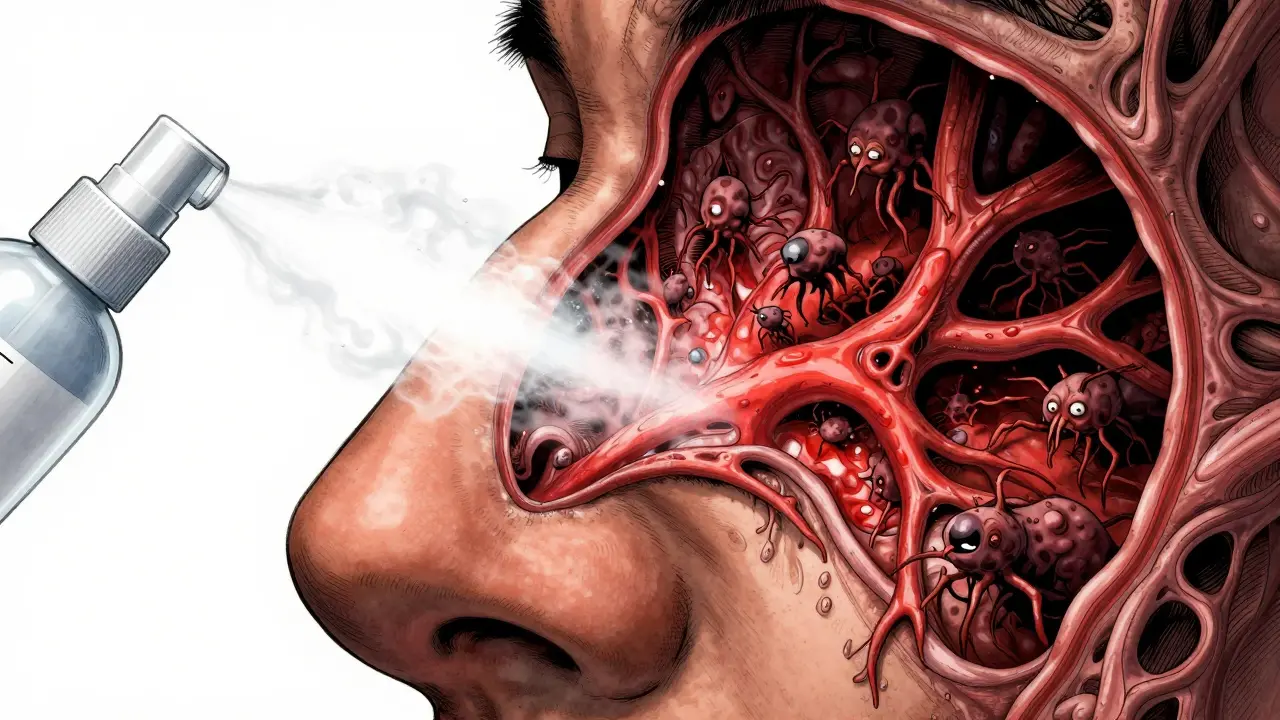
When you hear the word "steroid," you might think of bodybuilders or systemic side effects like weight gain. That’s a common misconception. Intranasal corticosteroids (INSs) are local treatments. They stay in your nose. Unlike oral steroids that circulate through your entire bloodstream, these sprays deliver medication directly to the inflamed tissue in your nasal passages. This localized approach means you get the benefits without the heavy toll on your rest of your body.
These medications have been around since the late 20th century and have evolved into the gold standard for treating both seasonal (hay fever) and perennial (year-round) allergies. Whether you’re battling pollen in spring or dust mites all year, INSs work by blocking the chemical messengers that trigger inflammation. Think of them as putting out a fire before it spreads, rather than just mopping up the water afterwards.
How They Tackle Allergic Inflammation
To understand why these sprays work so well, we need to look at what happens during an allergic reaction. When you inhale an allergen, your body releases a cascade of inflammatory mediators. Histamine causes itching and sneezing. Leukotrienes and prostaglandins lead to swelling and mucus production. It’s a chaotic chain reaction.
Nasal steroid sprays intervene at multiple points in this process. They don’t just block histamine; they suppress the entire inflammatory response. By reducing the number of inflammatory cells-like eosinophils and basophils-in the nasal mucosa, they calm down the tissue itself. This is why they are effective against all four major symptoms of allergic rhinitis:
- Nasal congestion: Reducing swelling opens up the airways.
- Sneezing: Calming the nerve endings reduces the reflex.
- Rhinorrhea (runny nose): Decreasing mucus gland activity.
- Itching: Lowering the sensitivity of the nasal lining.
This broad-spectrum action is their superpower. While antihistamines primarily target histamine, nasal steroids address the underlying inflammation that drives the whole event. Research indicates that they are more effective than leukotriene antagonists and even combination therapies involving antihistamines for comprehensive symptom control.
The Golden Rule: Consistency Over Speed
If there is one thing you must know about nasal steroid sprays, it is this: they are not instant fixes. If you wait until you can’t breathe to use them, you’ll be disappointed. Their onset of action is delayed. Therapeutic effects typically require several days to weeks of consistent use.
Most healthcare providers recommend daily use for at least two to four weeks to achieve full benefit. Using them "as needed" often yields subpar results because the inflammation hasn’t been fully suppressed yet. Think of it like brushing your teeth-you do it every day to prevent problems, not just when you feel plaque building up. For severe seasonal allergies, starting the spray a few weeks before the season begins can give you a head start.
Top Options in the Market
You’ll find several brands on the shelf, many available over-the-counter (OTC). While they share the same mechanism, they differ slightly in molecular structure and delivery systems. Here is how some of the most common options stack up:
| Brand Name | Active Ingredient | Dosing Frequency | Key Feature |
|---|---|---|---|
| Flonase | Fluticasone propionate | Once daily | Most widely used OTC option |
| Nasacort | Triamcinolone acetonide | Once daily | Fast onset among steroids |
| Rhinocort | Budesonide | Once or twice daily | Often preferred for children |
| Veramyst | Fluticasone furoate | Once daily | Newer generation, lower dose |
| Nasonex | Mometasone furoate | Once daily | Prescription strength, highly effective |
All of these are FDA-approved for individuals aged two years and older. The choice often comes down to personal tolerance, cost, and insurance coverage. Flonase holds the largest market share, but many patients find better success with others if one doesn’t work for them.
Mastering the Technique to Avoid Side Effects
Side effects like dryness, burning, or nosebleeds are common complaints, but they are often caused by improper technique rather than the drug itself. The goal is to coat the outer walls of the nasal cavity, not the delicate septum (the wall dividing your nostrils).
Here is the step-by-step method to maximize effectiveness and minimize irritation:
- Clear your nose: If you are congested, blow your nose gently first.
- Shake the bottle: Ensure the medication is mixed properly.
- Tilt your head: Lean slightly forward. Do not tilt back.
- Aim away from the center: Insert the nozzle into one nostril and aim it toward the eye on that same side. This directs the spray to the lateral wall, avoiding the septum.
- Spray and breathe: Spray once while breathing in gently through your nose. Do not sniff hard.
- Repeat: Switch sides and repeat for the other nostril.
If you experience dryness, try using the spray after a shower or placing your head over a steamy sink for five minutes beforehand. The moisture helps soothe the mucosa. Rarely, incorrect use over long periods can lead to septal perforation, which is why aiming correctly is non-negotiable.

Why Doctors Prefer Them Over Other Treatments
In the hierarchy of allergy treatments, nasal steroid sprays sit at the top for moderate to severe cases. Why? Because they offer the most complete relief. Oral antihistamines like loratadine or cetirizine are great for itching and sneezing but often fail to relieve nasal congestion. Decongestant sprays like oxymetazoline provide immediate relief but carry a high risk of rebound congestion if used for more than three days.
Nasal steroids bridge this gap. They handle congestion effectively and address the other symptoms too. Furthermore, their safety profile is excellent for long-term use. Studies show that systemic absorption is minimal, meaning the risk of side effects affecting bone density or growth in children is extremely low when used at recommended doses. Board-certified allergists recommend them as first-line therapy in 85% of cases for good reason.
When to See a Specialist
While nasal steroid sprays are powerful, they aren’t a cure-all. If you’ve been using them consistently for a month and still struggle with symptoms, it might be time to see an allergist. You may have non-allergic rhinitis, structural issues like a deviated septum, or sinus infections that require different treatments. Additionally, if you experience frequent nosebleeds despite proper technique, a doctor can check for underlying issues.
For some severe cases, newer biologic therapies are emerging, but for the vast majority of patients, intranasal corticosteroids remain the cornerstone of care due to their balance of efficacy, safety, and accessibility.
Do nasal steroid sprays cause addiction?
No. Nasal steroid sprays are not addictive. However, decongestant sprays (like Afrin) can cause rebound congestion and dependency if used for more than three days. Steroid sprays are safe for long-term daily use as directed by a physician.
How long does it take for nasal steroids to work?
You may notice some improvement within a few hours, but full therapeutic effects typically take 3 to 7 days of consistent daily use. For best results, use them regularly throughout the allergy season.
Can I use nasal steroid sprays if I have a cold?
They are primarily designed for allergies, not viral infections like the common cold. While they might reduce some inflammation associated with a cold, they are not a treatment for the virus itself. Consult your doctor for guidance.
Are nasal steroid sprays safe for children?
Yes, most formulations are approved for children aged 2 years and older. Always follow age-specific dosing instructions. Studies indicate minimal systemic absorption, making them safe for pediatric use under medical supervision.
What should I do if I miss a dose?
If you remember shortly after your scheduled time, use it then. If it’s close to your next dose, skip the missed one and continue with your regular schedule. Do not double the dose to catch up.