Palliative Care Medication Balance Calculator
Medication Balance Tool
This tool helps balance symptom relief with potential side effects based on clinical guidelines. Use the inputs to calculate the appropriate dose adjustment for palliative medications.
Recommended Dose Adjustment
Guidance
When someone is living with a serious illness, the goal shifts from curing to comfort. That’s the heart of palliative and hospice care. It’s not about giving up. It’s about making sure every day counts - free from unrelenting pain, breathlessness, nausea, or confusion. But here’s the hard truth: the very medicines that bring relief can also cause new problems. Too much morphine? Sedation. Too little? Suffering. Finding that balance isn’t guesswork. It’s a science - one that requires precision, patience, and deep understanding.
What’s the Difference Between Palliative and Hospice Care?
Palliative care is for anyone with a serious illness - whether they’re still chasing a cure or not. It can start the day after diagnosis. You can have chemotherapy, surgery, or dialysis while also getting palliative care. Its job is to manage symptoms like pain, nausea, fatigue, anxiety, or trouble breathing - and to help patients and families understand what’s happening, what options exist, and what matters most to them. Hospice care is a type of palliative care. It’s for people with a prognosis of six months or less, who have decided to stop treatments meant to cure or slow the disease. Hospice focuses entirely on comfort, dignity, and quality of life in the final stages. It’s often provided at home, in a nursing facility, or in a dedicated hospice center. The team includes doctors, nurses, social workers, chaplains, and volunteers - all trained to handle the physical, emotional, and spiritual needs that come with end-of-life. The key difference? Palliative care can happen alongside curative treatment. Hospice care means curative treatment has ended. But both share the same goal: to reduce suffering, not prolong it.How Do Doctors Know What Symptoms to Treat?
You can’t treat what you don’t measure. That’s why every good palliative care team starts with a detailed assessment. Pain isn’t just “bad.” It’s rated on a scale from 0 to 10. Is it sharp or dull? Does it spread to the back or leg? Does it get worse when moving or better when lying still? Is it affecting sleep, eating, or talking? For breathing trouble, doctors look at how often the person gets winded, whether they need extra oxygen, and if they’re anxious about it. Anxiety isn’t just “feeling nervous.” It’s measured with tools like the Richmond Agitation-Sedation Scale (RASS), which rates agitation from +4 (combative) to -5 (unresponsive). Delirium - sudden confusion, hallucinations, or agitation - is common in advanced illness. It’s tracked with the Confusion Assessment Method (CAM). If it shows up, the team checks for causes: infection, medication side effects, dehydration. Then they treat it - often with low-dose haloperidol, but only after ruling out reversible causes. These aren’t just checklists. They’re lifelines. A 2021 audit in North West England found that using structured pain assessments reduced medication errors by 22%. Why? Because when you know exactly what’s wrong, you give exactly what’s needed.Medications That Work - and Their Hidden Risks
Opioids like morphine and oxycodone are the gold standard for pain and severe shortness of breath. They work. But they can cause drowsiness, constipation, nausea, or even slowed breathing if the dose is too high. The trick isn’t avoiding opioids. It’s titrating them carefully. Start low. Go slow. Reassess every few hours. The UPenn Comfort Care Guidelines say: document every dose, every adjustment. That’s how you avoid over-sedation. For nausea, ondansetron or metoclopramide are common. But if it’s caused by bowel obstruction - a frequent issue in advanced cancer - steroids like dexamethasone are more effective than octreotide, which has limited benefit. Evidence shows steroids reduce vomiting in 60-70% of these cases. Anxiety and agitation? Lorazepam (0.5 mg) can help quickly. But it can also make people groggy or confused. That’s why it’s given in small doses and reassessed every 30 minutes until the person is calm. Even simple things like dry mouth or excess secretions need attention. Hyoscyamine or atropine drops can reduce saliva, but they’re only recommended if the person is uncomfortable - not just because it’s “messy.” The bottom line: every drug has trade-offs. The goal isn’t to eliminate all symptoms at all costs. It’s to find the sweet spot where comfort outweighs side effects.
Non-Medication Tools That Make a Big Difference
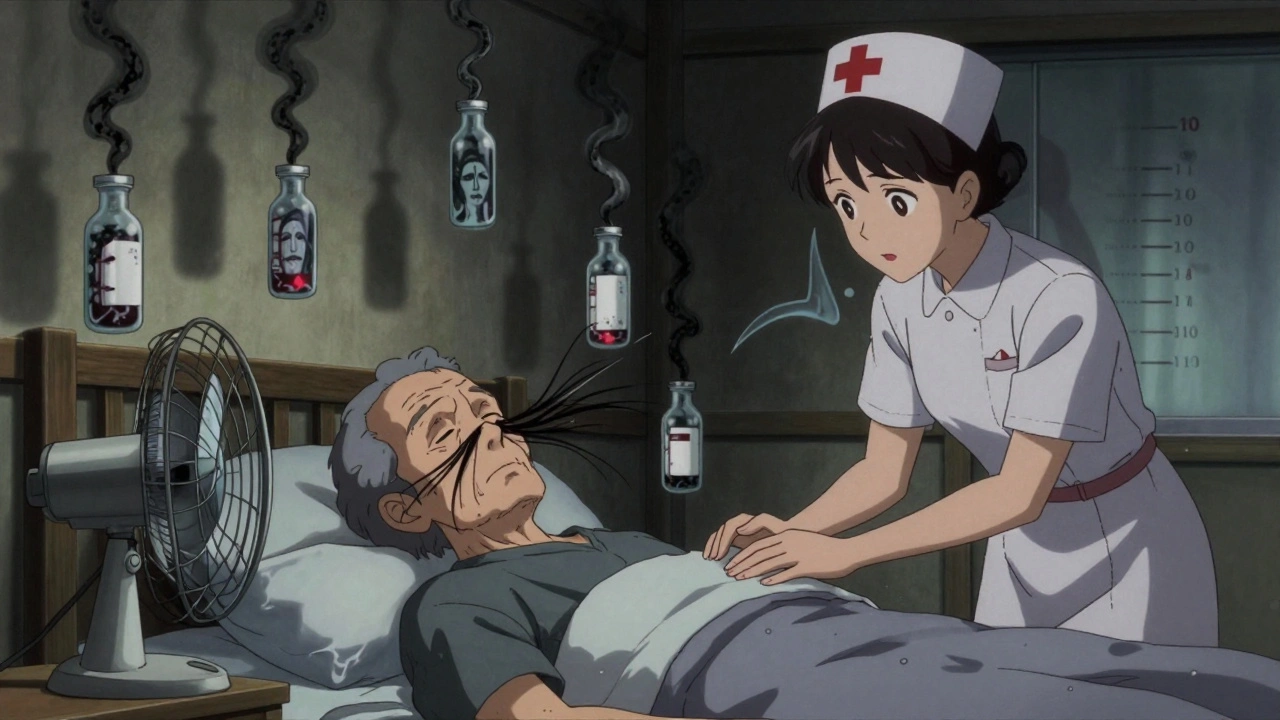
Medications aren’t the only tools. Sometimes the best relief comes from something simple. A cool cloth on the forehead. A fan blowing air across the face for breathlessness. Gentle massage for pain. Music therapy for anxiety. Prayer or quiet conversation for spiritual distress. A 2022 study showed that using a “body diagram” - where patients point to where pain is - improved communication by 31%. That’s huge. When families understand where the pain is, they stop asking, “Why are you so quiet?” and start saying, “Let’s try the fan.” Breathing techniques - slow inhale through the nose, longer exhale through the mouth - help with dyspnea. Positioning matters too. Sitting upright or leaning forward can ease breathing more than lying flat. And then there’s the emotional side. Many people with advanced illness feel like a burden. Others fear dying alone. These aren’t “symptoms” you can dose. They’re human needs. That’s where social workers and chaplains step in. A 2018 study from the National Coalition for Hospice and Palliative Care found that patients who received spiritual support reported 40% less physical suffering - because emotional pain often makes physical pain worse.Why Families Often Resist the Right Doses
One of the biggest hurdles in palliative care isn’t medical - it’s emotional. Families often think: “If we give more pain medicine, we’re killing them.” That’s a myth. Properly dosed opioids don’t cause death in people with advanced illness. They relieve suffering - and sometimes, that relief allows people to talk, hold hands, or say goodbye. The NCHPC guidelines say families have the right to know: “Your loved one has the right to live - and die - free of pain, with dignity.” But that message doesn’t always land. A nurse in Texas told me about a woman whose daughter refused to let her mother have morphine for bone pain. “She’s not supposed to be on that,” the daughter said. “It’s for addicts.” The mother was 89, with metastatic cancer. Her pain was an 8 out of 10. The daughter didn’t know the difference between addiction and appropriate pain control. That’s why education is part of the job. Teams spend time explaining: “This isn’t about ending life. It’s about making sure her last days aren’t filled with agony.”What Happens When Things Go Wrong?
Sometimes, even with the best plans, things don’t go as expected. Over-sedation is the biggest risk. If a patient becomes unresponsive, the team stops all sedatives and reassesses. Is it the medication? An infection? A new brain tumor? They check vital signs, labs, and mental status. Then they adjust - not by cutting everything, but by finding the root cause. Under-treatment is just as dangerous. If pain isn’t controlled, the body stays in stress mode. Heart rate stays high. Blood pressure spikes. Sleep disappears. The person becomes irritable, withdrawn, or confused. That’s not just discomfort - it’s physiological harm. One hospice nurse in Oregon said: “I’ve seen people who were in so much pain they stopped talking. After one dose of morphine? They smiled. They asked for ice cream. That’s the difference.”
What’s Changing in Palliative Care?
The field is evolving fast. In 2023, Fraser Health in Canada added guidance on medical cannabis. Some patients report 37% less opioid use when using cannabinoids - but 29% experience dizziness. It’s not a magic bullet, but it’s another option. Tele-palliative care is growing. In rural areas, 55% of counties have no palliative care provider. Video visits are helping. One pilot in Minnesota showed that patients on virtual palliative care had 18% better symptom control than those waiting for in-person visits. New research is looking at genetics. A 2022 study in JAMA Internal Medicine found that certain gene variants predict how someone will respond to opioids. In the future, a simple blood test might tell doctors: “This patient needs half the usual dose.” The National Coalition for Hospice and Palliative Care is updating its guidelines for 2025. The focus? Digital tools - apps that let patients report symptoms daily. That way, teams can adjust care before crises happen.How to Get Started - Even If You’re Not a Doctor
You don’t need to be a specialist to help. Here’s what you can do:- Ask: “What’s the plan for comfort?” - not just “What’s the plan for cure?”
- Track symptoms in a notebook: pain level, breathing, sleep, mood, appetite.
- Know the signs of uncontrolled pain: grimacing, moaning, pulling at sheets, refusing to move.
- Ask for a palliative care consult - even if the doctor says “it’s too early.” It’s never too early for comfort.
- Use the 0-10 pain scale with your loved one. “On a scale of 0 to 10, how’s the pain now?”
Final Thought: Comfort Is the Goal - Not Just Survival
Palliative and hospice care isn’t about giving up. It’s about choosing how you want to live - even when time is short. It’s about holding someone’s hand while they breathe easier. It’s about letting them taste their favorite food again. It’s about peace. The balance between symptom control and side effects isn’t perfect. But with the right tools, the right team, and the right mindset, it’s possible. And that’s what matters most.Is hospice care the same as giving up?
No. Hospice care is about shifting the focus from curing illness to maximizing comfort and quality of life. It’s not about giving up - it’s about choosing how you want to spend your final months. Many people in hospice report improved well-being because their pain and symptoms are managed, they’re not burdened by hospital visits, and they can be surrounded by loved ones in a familiar setting.
Can you still receive treatment while in palliative care?
Yes. Palliative care works alongside curative treatments like chemotherapy, radiation, or surgery. You don’t have to stop fighting the disease to get relief from its symptoms. In fact, studies show that patients who get early palliative care alongside cancer treatment have better symptom control and even live longer - up to 3.2 months longer in some cases.
Do pain medications like morphine shorten life?
When used correctly, no. Opioids like morphine are carefully dosed to relieve pain and breathlessness without causing dangerous sedation. In advanced illness, the body’s ability to process drugs changes. Doctors start with low doses and adjust slowly based on response - not on fear. Studies show that properly managed opioids do not hasten death. The real danger is uncontrolled pain, which stresses the body and worsens other symptoms.
What if my family disagrees about pain medication?
This is common. Some families fear addiction or believe pain medicine means “giving up.” Palliative care teams are trained to talk through these fears. They explain the difference between addiction and appropriate use, show evidence of improved comfort, and help families understand that dignity and peace are goals too. Sometimes, a simple conversation with a nurse or social worker changes everything.
Are there alternatives to pills for managing symptoms?
Yes. Many symptoms respond well to non-drug approaches. A fan or cool cloth helps with breathlessness. Gentle massage or repositioning eases pain. Music, prayer, or quiet presence reduces anxiety. For nausea, ginger tea or acupressure wristbands may help. These aren’t replacements for medicine - they’re partners. Together, they reduce the need for higher drug doses and lower the risk of side effects.
How do I know if palliative care is right for my loved one?
Ask yourself: Is your loved one struggling with pain, nausea, fatigue, anxiety, or trouble breathing? Do they feel overwhelmed by medical decisions? Do they want to spend more time at home, not in the hospital? If yes, palliative care can help - no matter the diagnosis or stage. You don’t need permission to ask. Just say: “Can we get a palliative care consult?”


15 Comments
Hamza Laassili
December 11, 2025 AT 23:44 PMI don't care what the guidelines say-morphine is a gateway drug. My cousin took it for back pain and ended up in rehab. They're just pushing pills to keep the hospitals rich. #StopTheOpioidCrisis!!!
Rawlson King
December 13, 2025 AT 18:02 PMThe science is sound, but the implementation is inconsistent. Many hospice teams lack adequate training in symptom titration. The 22% reduction in medication errors you cite? That’s still 78% of cases where patients are being under- or over-treated. This isn't a breakthrough-it's a baseline expectation.
Constantine Vigderman
December 15, 2025 AT 02:46 AMThis is SO important!! 🙌 I had my grandma in hospice last year and the team changed her life. She was in so much pain she wouldn’t smile-then one dose of morphine and she ate ice cream and told me her favorite joke. Don’t let fear rob people of peace. You CAN have both comfort AND dignity. 💪❤️
Cole Newman
December 15, 2025 AT 07:42 AMYou’re all missing the real issue-why are we even giving opioids to elderly cancer patients? The FDA should ban them for anyone over 75. Too many side effects. Just let nature take its course. I’ve seen people die peacefully without drugs-just quiet, clean, and dignified.
Casey Mellish
December 16, 2025 AT 14:20 PMI work in palliative care down under and I can confirm: non-pharmacological interventions are undervalued. A fan, a hand on the shoulder, playing their favorite ABBA song-these aren’t fluffy extras. They’re evidence-backed, culturally resonant, and often more effective than another pill. We need to fund these things like we fund meds.
Tyrone Marshall
December 18, 2025 AT 12:28 PMThere’s a quiet revolution happening here. We’re not just treating symptoms-we’re restoring personhood. When someone can laugh again, or hold their grandchild’s hand without wincing, that’s not medicine. That’s humanity. And it’s worth every ounce of effort, every careful dose, every conversation.
Emily Haworth
December 19, 2025 AT 05:13 AMI think the government is hiding something. Why are they pushing hospice so hard? Is it because they want to save money on Medicare? And why are they suddenly okay with cannabis? I read somewhere that Big Pharma is behind this whole ‘comfort care’ thing to replace expensive chemo with cheaper sedatives. 👁️🗨️
Tom Zerkoff
December 20, 2025 AT 07:13 AMThe assertion that opioids do not hasten death when properly administered is empirically supported by multiple randomized controlled trials, including those published in JAMA and The Lancet. However, the psychological burden on families remains a significant barrier to optimal care delivery, necessitating structured psychoeducation protocols.
Jamie Clark
December 21, 2025 AT 22:43 PMYou people are delusional. You call this ‘comfort’? It’s euthanasia by another name. They’re drugging people into silence so they don’t complain. I’ve seen it. They don’t want to die-they want to be quiet. And you’re helping them disappear.
Keasha Trawick
December 22, 2025 AT 22:39 PMOMG. I just had a moment. My mom was on hospice, and the nurse gave her a tiny bit of lorazepam-like, half a milligram-and she looked up, blinked, and said, ‘I can hear the birds again.’ Like, she hadn’t heard birds in weeks. That’s not medicine. That’s magic. And I’m not even religious. 🌿🕊️
Webster Bull
December 24, 2025 AT 00:40 AMPain scale 0-10. That’s it. Just ask. Don’t overthink it. And if they say 8? Give the meds. Don’t wait for permission. They’re not addicts. They’re suffering.
Deborah Andrich
December 24, 2025 AT 03:56 AMI lost my brother to pancreatic cancer. They didn’t give him enough morphine at first because they were scared. He died in agony. I’m not mad at the nurses. I’m mad at the system. Stop making families choose between love and fear. Just help them.
Donna Hammond
December 25, 2025 AT 17:55 PMThe body diagram technique is a game-changer. I use it with my patients every single day. One elderly man pointed to his lower back and said, ‘It feels like a hot knife.’ We adjusted his meds and he slept for the first time in three nights. Simple tools. Profound results.
Karen Mccullouch
December 27, 2025 AT 12:19 PMI’m not saying they’re lying-but why is this all so popular now? Who’s paying for the ‘tele-palliative’ apps? Is it Google? Are they collecting our data? I’m not letting my mom on any ‘symptom tracker’ app. Not after what happened with Facebook and the vaccines. 🚫📱
Michael Gardner
December 29, 2025 AT 10:52 AMYou say hospice isn’t giving up. But isn’t it? You’re choosing comfort over cure. That’s surrender. And I’m not saying that’s wrong-but don’t pretend it’s not. Sometimes, fighting is the most loving thing you can do.