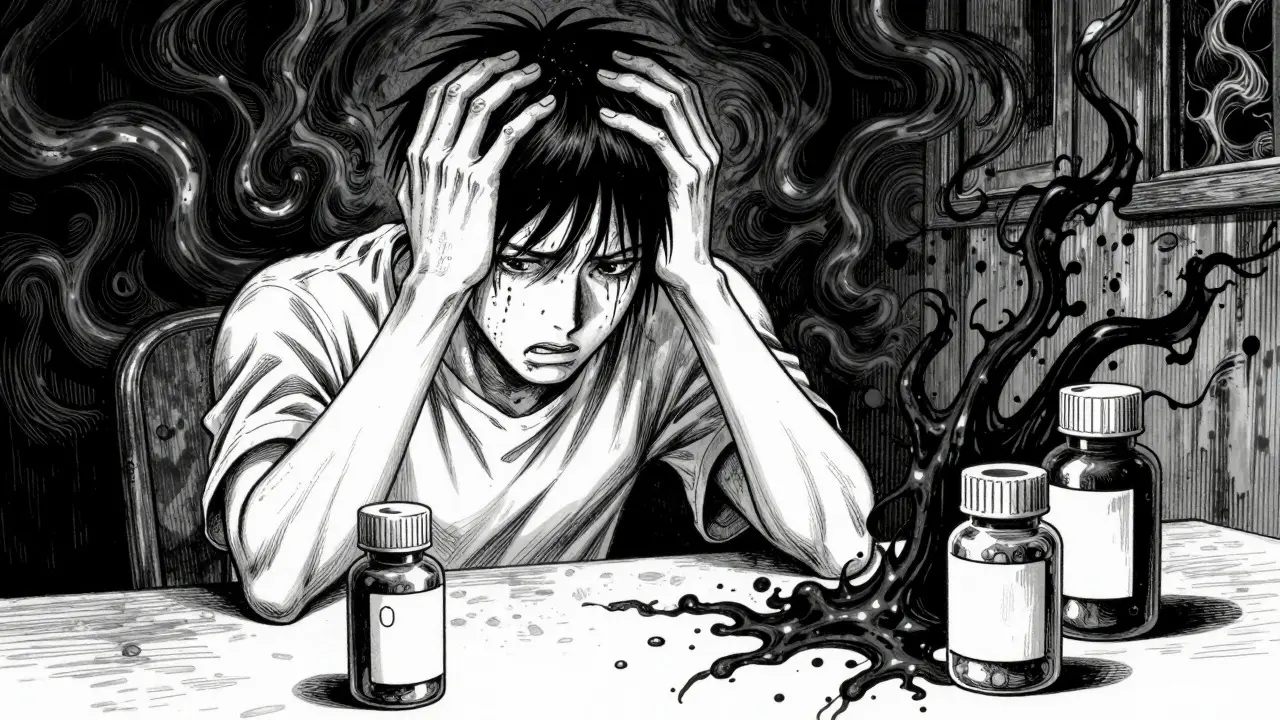
Imagine your mental health is finally stable. You are taking a specific combination of medications that has worked after years of trial and error. Then, your pharmacy calls to say they have switched one of your drugs to a generic version because the brand name is out of stock or too expensive. A week later, you feel the fog returning. Your anxiety spikes. The balance is gone. This is not just bad luck; it is a known clinical reality for many patients on complex psychiatric regimens.
Combining psychiatric medications is a common strategy when a single drug fails to control symptoms. However, introducing generic alternatives into these mixtures adds a layer of complexity that many patients and even some prescribers underestimate. The issue isn't that generics are "fake" or ineffective in general. It is about the narrow margins of safety and efficacy in psychopharmacology, where small changes in how a drug is absorbed can disrupt an entire treatment plan.
Why Doctors Combine Psychiatric Medications
Monotherapy-using just one medication-is the first line of defense for most mental health conditions. But for roughly 30% to 40% of patients with major depressive disorder, that single pill does enough to bring them back to baseline. This group faces what clinicians call treatment-resistant depression. To help them, doctors often turn to combination therapy.
This approach involves pairing two different classes of drugs to target multiple biological pathways simultaneously. For example, a patient might take a Selective Serotonin Reuptake Inhibitor (SSRI) like escitalopram, which boosts serotonin levels, alongside a low-dose atypical antipsychotic like aripiprazole. The antidepressant addresses the mood deficit, while the antipsychotic helps fine-tune dopamine signaling to improve energy and focus. Another classic pairing is combining an SSRI with bupropion. Bupropion works on norepinephrine and dopamine, which can counteract the sexual side effects often caused by SSRIs, allowing patients to stay on their primary antidepressant without losing quality of life.
These combinations are not random experiments. They are backed by extensive clinical data. The STAR*D trial, a massive study conducted by the National Institute of Mental Health, helped establish that adding a second agent could improve remission rates by 15% to 20% compared to sticking with a failing monotherapy. Fixed-dose combinations, such as Symbyax (olanzapine and fluoxetine), were developed specifically to simplify this process, ensuring both drugs are delivered in precise ratios. The goal is always the same: stabilize the brain chemistry when one lever isn't enough.
The Problem with Generic Substitution in Combinations
Here is where things get tricky. When you are taking one medication, a slight variation in absorption might be noticeable but manageable. When you are taking two or three, those variations can interact unpredictably. The Food and Drug Administration (FDA) requires generic drugs to be "bioequivalent" to their brand-name counterparts. This means the generic must deliver between 80% and 125% of the active ingredient into the bloodstream compared to the brand. For many drugs, this wide window is perfectly safe.
For psychiatric medications, especially those used in combination, this window can be too broad. A 2019 study published in the Journal of Clinical Psychiatry analyzed nearly 29,000 patients and found that those switched from brand-name SSRIs to generics experienced a 22.3% higher rate of treatment failure. Why? Because the inactive ingredients-the fillers, binders, and release mechanisms-differ between manufacturers. These differences can alter how quickly or slowly a drug is released into your system.
Consider extended-release formulations like venlafaxine XR (Effexor XR). Different generic manufacturers use different technologies to control the drug's release over 24 hours. One might use an osmotic pump, while another uses coated beads. If you switch manufacturers, the ratio of serotonin to norepinephrine reuptake inhibition can shift subtly. In a stable patient, this might cause nothing. In a patient also taking a mood stabilizer or an antipsychotic, this shift can destabilize blood levels, leading to breakthrough anxiety or even mania.
| Risk Factor | Impact on Combination Therapy | Clinical Evidence |
|---|---|---|
| Bioequivalence Window (80-125%) | Small dosage fluctuations can cascade when interacting with other drugs. | Hao et al. (2019): 22.3% higher treatment failure rate in switched patients. |
| Narrow Therapeutic Index (NTI) | Drugs like lithium require precise blood levels; generics may vary significantly. | UBC Case Series (2018): Mania recurrence within 14 days of switching lithium generics. |
| Release Mechanism Differences | Extended-release generics may dump drug faster or slower than brand names. | FDA Warning (2012): Inconsistent release in generic bupropion XL caused breakthrough symptoms. |
| Polypharmacy Interactions | Changes in one drug's metabolism can affect the concentration of the companion drug. | Goldberg (2020): 34% higher hospitalization risk for combo therapy patients post-switch. |
High-Risk Scenarios: Narrow Therapeutic Index Drugs
Not all psychiatric medications carry the same risk. The highest danger lies with drugs that have a "narrow therapeutic index." This means the difference between a helpful dose and a toxic or ineffective dose is very small. Lithium is the prime example. To work effectively for bipolar disorder, lithium levels in the blood must stay between 0.6 and 1.2 mmol/L. If a generic formulation absorbs slightly less efficiently, your level might drop to 0.55 mmol/L. That tiny drop can mean the difference between stability and a manic episode.
A case series from the University of British Columbia documented three bipolar patients who relapsed into mania within two weeks of switching from brand-name lithium to a generic. Their serum levels dropped despite them taking the exact same milligram dosage. This highlights a critical point: "same milligrams" does not always mean "same effect" in the body.
Anticonvulsants used as mood stabilizers, such as carbamazepine and valproate, also fall into this high-risk category. Similarly, clozapine, an antipsychotic used for treatment-resistant schizophrenia, requires strict monitoring. Experts like Dr. Charles Popkin from New York-Presbyterian Hospital argue that the FDA's standard bioequivalence window is simply too loose for these agents, especially when they are part of a combination regimen. A small change in one drug's pharmacokinetics can alter how the liver processes the second drug, leading to unexpected toxicity or loss of efficacy.
Patient Experiences and Real-World Data
Clinical trials provide clean data, but real-world usage is messier. Online support communities reveal a consistent pattern of frustration among patients on combination therapies. On platforms like Reddit and PatientsLikeMe, users frequently report that switching to a generic version of their augmenting agent (like Abilify or Seroquel) causes their primary symptom to return.
One common complaint involves generic bupropion XL. The FDA issued warnings in 2012 regarding inconsistent drug release profiles in certain generic versions, leading to reports of sudden mood swings and anxiety. Patients describe feeling "fine" on the brand name, only to experience "breakthrough depression" within days of the switch. Conversely, some patients do well with generics. A review on Drugs.com noted a patient whose nausea decreased after switching to a generic venlafaxine while on buspirone. This variability is exactly why a "one-size-fits-all" policy for generics fails in psychiatry.
Data from PatientsLikeMe shows that 38.7% of patients using psychiatric medication combinations reported worsened symptoms after a generic substitution, compared to only 12.3% of those on single medications. This disparity underscores the unique vulnerability of polypharmacy patients. The interaction between drugs amplifies the impact of any formulation change.

How to Manage Generic Substitutions Safely
If you are on a combination regimen, you are not powerless. There are concrete steps you and your healthcare team can take to mitigate risks.
- Document Baselines: Before any switch, record your current symptom severity using standardized scales if possible. Know what "stable" feels like for you.
- Check the Manufacturer: Ask your pharmacist which manufacturer produced your previous medication. If you tolerated a specific generic well, request that same manufacturer. Some pharmacies allow you to opt-out of automatic substitution if you ask.
- Monitor Closely: If a switch occurs, schedule a follow-up appointment within 7 to 10 days. Do not wait for your next routine check-up. Look for subtle changes in sleep, appetite, anxiety, or mood.
- Use Therapeutic Drug Monitoring: For drugs like lithium, valproate, or carbamazepine, request blood tests 7 to 14 days after a switch to ensure levels remain in the therapeutic range.
- Consider Authorized Generics: These are brand-name drugs sold under a generic label by the original manufacturer. They offer the cost savings of a generic with the identical formulation of the brand. About 43% of combination therapies now have authorized generic options.
Pharmacies and insurers are increasingly aware of these issues. California passed legislation in 2023 requiring pharmacists to notify prescribers when substituting generics for patients on multiple psychotropic drugs. Similar policies are emerging elsewhere. The Department of Veterans Affairs now mandates that patients stabilized on narrow therapeutic index combinations remain on the same generic manufacturer for at least 12 months to prevent disruption.
The Future of Psychiatric Polypharmacy
The tension between cost containment and clinical safety will continue. The generic psychotropic market is huge, representing 89% of prescriptions by volume. Insurers want to save money. But the human cost of failed treatments-hospitalizations, lost work days, and suffering-is rising. The Congressional Budget Office estimates that avoidable hospitalizations due to generic substitution issues could cost the healthcare system $2.4 billion annually by 2027 if current practices continue.
Regulatory bodies are responding. The FDA has proposed narrower bioequivalence ranges (90-111%) for complex extended-release antidepressants used in combination therapy. Pharmacogenetic testing may soon play a larger role, helping doctors predict how a patient's unique biology will process different generic formulations. Until then, the best defense is communication. Talk to your doctor and pharmacist. Don't assume "generic" means "identical" in the context of your specific brain chemistry and medication cocktail. Your stability is worth the extra vigilance.
Are generic psychiatric medications less effective than brand names?
Generally, no. Most generic psychiatric medications are equally effective for the majority of patients. However, for individuals on combination therapies or those taking narrow therapeutic index drugs like lithium, the allowable variance in absorption (80-125% bioequivalence) can lead to clinical instability. Studies show a higher rate of treatment failure in these specific groups when switched from brand to generic.
What is a narrow therapeutic index (NTI) drug?
An NTI drug is a medication where the difference between a therapeutic dose and a toxic or ineffective dose is very small. Examples include lithium, carbamazepine, and valproate. Small changes in how these drugs are absorbed by the body can lead to significant clinical consequences, making generic substitution riskier for these specific agents.
Can I refuse a generic substitution at the pharmacy?
Yes, in many cases. You can ask your pharmacist to dispense the brand name or a specific generic manufacturer. However, insurance plans may charge a higher copay for the brand name or a non-preferred generic. Your prescribing doctor can also write "Dispense As Written" (DAW) on the prescription to prevent automatic substitution, though insurance approval may still be required.
Why do combination therapies react worse to generic switches?
Combination therapies rely on precise interactions between drugs. If one drug's absorption changes slightly due to a different generic formulation, it can alter the metabolism or effectiveness of the other drug. This "cascade effect" can destabilize the entire regimen, whereas a single medication might tolerate minor absorption variances without clinical impact.
What are authorized generics?
Authorized generics are brand-name drugs sold under a generic label by the original manufacturer. They contain the exact same active and inactive ingredients as the brand name but are priced competitively. They offer a middle ground for patients who need the consistency of the brand formulation but want lower costs.