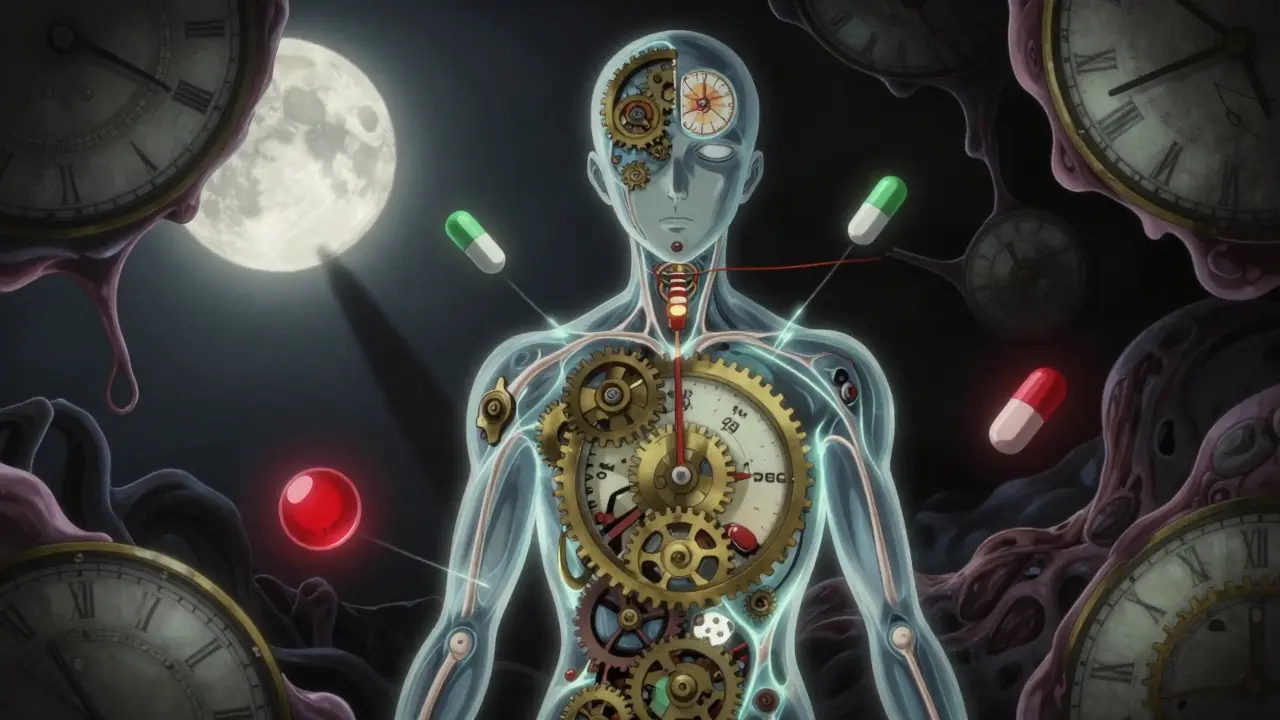
What if taking your pill at 8 a.m. instead of 8 p.m. could make your side effects worse-or even turn a safe drug into a dangerous one? It’s not a myth. The time you take your medication matters more than most people realize. For some drugs, being off by just 30 minutes can increase the risk of dizziness, low blood sugar, or internal bleeding. For others, timing can mean the difference between the drug working well or not working at all. This isn’t about being punctual-it’s about biology.
Why Your Body Has a Clock
Your body runs on a 24-hour rhythm called the circadian clock. It controls when you feel awake or sleepy, when your blood pressure rises, when your liver processes toxins, and even when your stomach produces acid. This clock doesn’t just affect your sleep-it affects how your body handles medicine.For example, liver enzymes that break down drugs like statins and beta-blockers are much more active at night. That means if you take a statin in the evening, your body can make better use of it. Studies show evening statin use lowers LDL cholesterol by 15-20% more than morning doses. Why? Because your liver makes most of its cholesterol at night. Taking the drug then blocks production right when it’s happening.
Same goes for blood pressure meds. ACE inhibitors taken at bedtime reduce nighttime blood pressure more effectively and cut the risk of heart attacks and strokes by nearly 30%, according to the MAPEC study. Morning doses? They help during the day, but leave you vulnerable at night when your blood pressure should naturally dip. Skipping that dip raises your long-term risk.
High-Risk Medications That Can’t Wait
Not all drugs are created equal when it comes to timing. Some can tolerate being taken an hour early or late. Others? Not even close.Insulin is one of the most timing-sensitive drugs. If you take rapid-acting insulin before a meal but eat 20 minutes late, your blood sugar can crash. In fact, mistimed insulin causes hypoglycemia in 22% of cases, according to clinical studies. That’s not just uncomfortable-it can lead to seizures or loss of consciousness.
Anticoagulants like warfarin are another big one. Even a few hours’ delay can increase your risk of bleeding by up to 37%. Why? Because warfarin’s effect builds slowly over days, and missing a dose-or taking it at the wrong time-throws off the delicate balance between clotting and bleeding. Patients who take it at inconsistent times are far more likely to end up in the ER.
Chemotherapy drugs also demand precision. Deviations of more than 30 minutes from the scheduled time can reduce effectiveness by 15-20%. Cancer cells divide at certain times of day, and some chemo agents are designed to hit them when they’re most vulnerable. Miss that window, and you’re not just wasting the dose-you’re giving the cancer a chance to recover.
When Timing Actually Helps
It’s not just about avoiding harm. Timing can make drugs work better-sometimes dramatically.Aspirin taken at bedtime, for instance, has been shown to lower blood pressure more than morning doses. That’s because aspirin affects platelet activity, which peaks in the early morning-when heart attacks are most common. Taking it at night gives it time to work before the danger window opens.
Glucocorticoids like prednisone are another example. If you take them in the morning, they mimic your body’s natural cortisol spike. Take them at night, and you risk disrupting your sleep, raising blood sugar, and suppressing your immune system longer than needed. That’s why doctors almost always prescribe them for morning use.
Even common meds like ibuprofen and naproxen show timing benefits. Taking them in the late afternoon can reduce morning joint pain in arthritis patients by up to 40%. Why? Because inflammation markers rise overnight. By dosing before the spike, you stay ahead of the pain.

Why Timing Errors Happen (And Why They’re So Common)
You’d think people would get this right. But timing errors are everywhere.In hospitals, nurses get interrupted an average of five times during a medication round. Each interruption raises the chance of a timing error from 39% to 61%. In ICUs, where precision matters most, 48-53% of IV medication errors involve timing. That’s not because staff are careless-it’s because the system is broken. Schedules clash with rounds, alarms go off, patients call for help, and the perfect time to give a drug slips away.
At home, it’s even messier. A survey of 1,200 patients found that 68% didn’t take their chronotherapy medications at the same time every day. Why? Work schedules, forgetfulness, confusion over instructions, and low health literacy. One patient took her evening statin at breakfast because she thought “evening” meant after dinner-and she ate dinner at 6 p.m. but didn’t get home until 8 p.m. She didn’t realize the timing mattered.
And let’s not forget caregivers. A study of home care found that 52% of timing errors happened because the caregiver had to work a shift that overlapped with the medication time. No one was home to give the pill. So it got skipped-or given at the wrong hour.
What You Can Do About It
You don’t need a PhD to get timing right. Here’s how to make it work:- Ask your doctor or pharmacist: “Is there a best time to take this?” Don’t assume it doesn’t matter. For high-risk drugs, this question could save your life.
- Use alarms: Set two alarms-one 15 minutes before, one at the exact time. Put your meds next to your phone or alarm clock.
- Keep a log: Write down when you take each pill. Even a sticky note on the fridge helps. If you miss a dose, note why. That info is gold for your doctor.
- Sync with daily routines: Take your pill with breakfast, after brushing your teeth, or right before bed. Habit beats memory every time.
- Check your pharmacy app: Many now let you set custom reminders. Some even warn you if you’re taking a drug at the wrong time based on its class.
If you’re on multiple meds, ask for a medication review. A pharmacist can flag which ones need strict timing and which ones are more flexible. You might be surprised-some pills you thought were urgent aren’t.
What’s Changing in Medicine
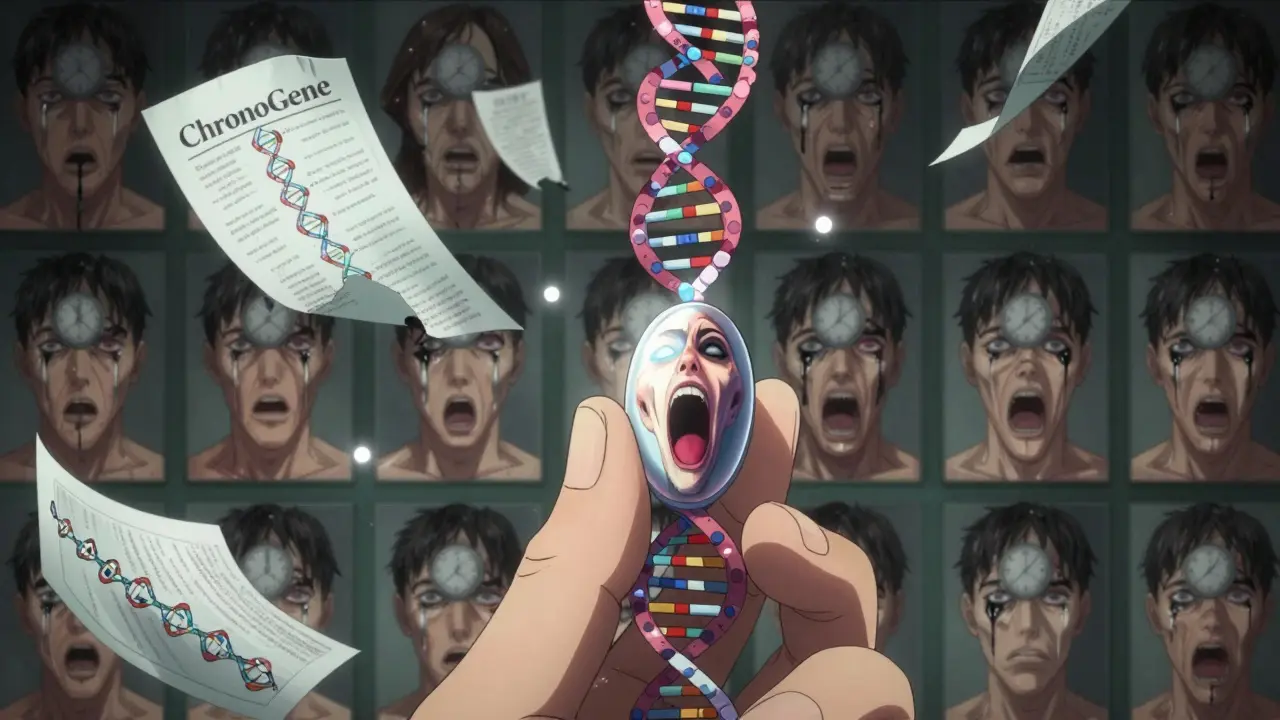
The medical world is finally catching up. The FDA now requires drug makers to include circadian data in new drug applications. In 2022, they reviewed 17 such submissions-up from just 3 in 2018. Electronic health records like Epic’s ChronoCare module now include timing alerts for high-risk drugs. If you’re on warfarin or insulin, your doctor’s system might pop up a warning if you schedule the dose at midnight.Research is going even further. The ChronoGene study, due to finish in late 2024, is testing whether your genes affect the best time to take your meds. Some people naturally wake up earlier. Others stay up late. Their bodies process drugs differently. In the future, your medication schedule might be personalized based on your DNA-not just your doctor’s guess.
By 2027, experts predict 65% of high-risk medications will have official timing guidelines. That’s a big shift from where we were a decade ago, when timing was an afterthought.
Bottom Line: Timing Isn’t Optional
Taking your medicine at the right time isn’t about being perfect. It’s about working with your body, not against it. For some drugs, it’s a small tweak. For others, it’s the difference between safety and danger.If you’re on statins, take them at night. If you’re on blood pressure meds, ask if bedtime dosing is right for you. If you’re on insulin or anticoagulants, don’t skip the alarm. And if your schedule makes it hard to stick to a routine-say so. Your doctor can help you adjust the plan, not just blame you for forgetting.
Your body knows when to work. Medicine should work with it-not against it.
Does the time I take my medication really affect side effects?
Yes, especially for certain medications. Your body’s circadian rhythm affects how drugs are absorbed, metabolized, and eliminated. For example, taking statins at night boosts their effectiveness and lowers LDL cholesterol more than morning doses. For insulin or blood thinners, even a 30-minute delay can increase the risk of hypoglycemia or bleeding. Timing isn’t just about convenience-it’s tied to your biology.
Which medications are most sensitive to timing?
High-risk medications include insulin, anticoagulants like warfarin, chemotherapy drugs, and some blood pressure medications like ACE inhibitors. These require strict timing because their effects are narrow and their side effects can be serious. For instance, mistimed insulin causes hypoglycemia in 22% of cases, and warfarin timing errors raise bleeding risk by up to 37%. Statins, aspirin, and corticosteroids also show clear timing benefits based on circadian biology.
Can I take my meds at a different time if it’s more convenient?
It depends. For drugs like ibuprofen or most antibiotics, being an hour or two off usually won’t hurt. But for insulin, warfarin, or chemotherapy, changing the time without medical advice can be dangerous. Always ask your pharmacist or doctor which medications are flexible and which aren’t. Some drugs have wide therapeutic windows; others don’t. Don’t guess.
Why do hospitals have so many timing errors?
Nurses are interrupted an average of five times during medication rounds, which increases error rates from 39% to 61%. IV medications are especially vulnerable, with error rates between 48% and 53%. Systems aren’t designed to handle interruptions well, and schedules often conflict with natural patient rhythms. Even small delays can compound into serious mistakes, especially with high-risk drugs.
How can I remember to take my meds at the right time?
Use alarms on your phone, pair your meds with daily habits (like brushing your teeth), and keep a simple log. Many pharmacy apps now let you set custom reminders. If you’re on multiple drugs, ask your pharmacist for a timing chart. For high-risk meds, set two alarms-one 15 minutes before and one at the exact time. Consistency matters more than perfection.




11 Comments
Celia McTighe
December 28, 2025 AT 03:19 AMThis is such a game-changer. I never realized my 8 p.m. statin was basically useless until I switched to bedtime. My LDL dropped 20% in 3 months. 🙌
Debra Cagwin
December 28, 2025 AT 05:17 AMI'm so glad this is getting attention. As a nurse, I've seen too many patients end up in the ER because they took warfarin at 2 a.m. instead of 8 p.m. A simple alarm can save lives. You're not being obsessive-you're being smart.
sonam gupta
December 29, 2025 AT 13:23 PMIn India we dont care about timing medicine people just take when they remember
Vu L
December 30, 2025 AT 13:04 PMLmao so now we’re treating pills like astrological events? Next they’ll tell us to take aspirin only during a full moon.
Ryan Touhill
December 30, 2025 AT 20:42 PMI find it fascinating how medicine is finally acknowledging circadian biology-but I wonder how much of this is just pharma-funded research pushing for more precise dosing schedules to increase compliance (and profits). The data is compelling, but the motives? Less so.
Sydney Lee
January 1, 2026 AT 07:44 AMIt's astounding that the average person can't manage to take a pill at the same time every day. This isn't rocket science-it's basic hygiene. If you're too lazy or disorganized to follow a medical regimen that could prevent a stroke, don't be surprised when your body rebels. The science is clear. Your incompetence is not a valid excuse.
Kelsey Youmans
January 1, 2026 AT 23:17 PMI appreciate the depth of this post. As someone who manages chronic illness in my family, I’ve seen how timing affects everything-from sleep to mood to hospital visits. The fact that even 30 minutes can make a difference is both humbling and empowering. Thank you for highlighting this with such care.
oluwarotimi w alaka
January 3, 2026 AT 13:08 PMthey dont want you to know this... the government and big pharma want you to take meds at random times so you keep coming back... its all about profit not health... they dont want you to be cured they want you to be dependent... and dont trust any doctor who says its not important... they are paid by the labs...
Teresa Marzo Lostalé
January 5, 2026 AT 09:31 AMIt’s funny how we’ve spent centuries trying to conquer nature, and now we’re finally learning to whisper to it instead of shout. Maybe the body’s clock was the answer all along-we just needed to stop rushing.
Nicole Beasley
January 6, 2026 AT 14:12 PMWait so if I take my ibuprofen at 4 p.m. I’ll feel less pain in the morning? 😱 That’s wild. I’m trying this tomorrow!
Hakim Bachiri
January 6, 2026 AT 21:00 PMI’ve been taking my warfarin at midnight for 3 years because my nurse said ‘just take it when you go to bed.’ I just got my INR back-12.7. I’m in the hospital. They said I’m lucky I didn’t bleed out. Don’t be like me. Set two alarms. Seriously. I’m alive because of this post.