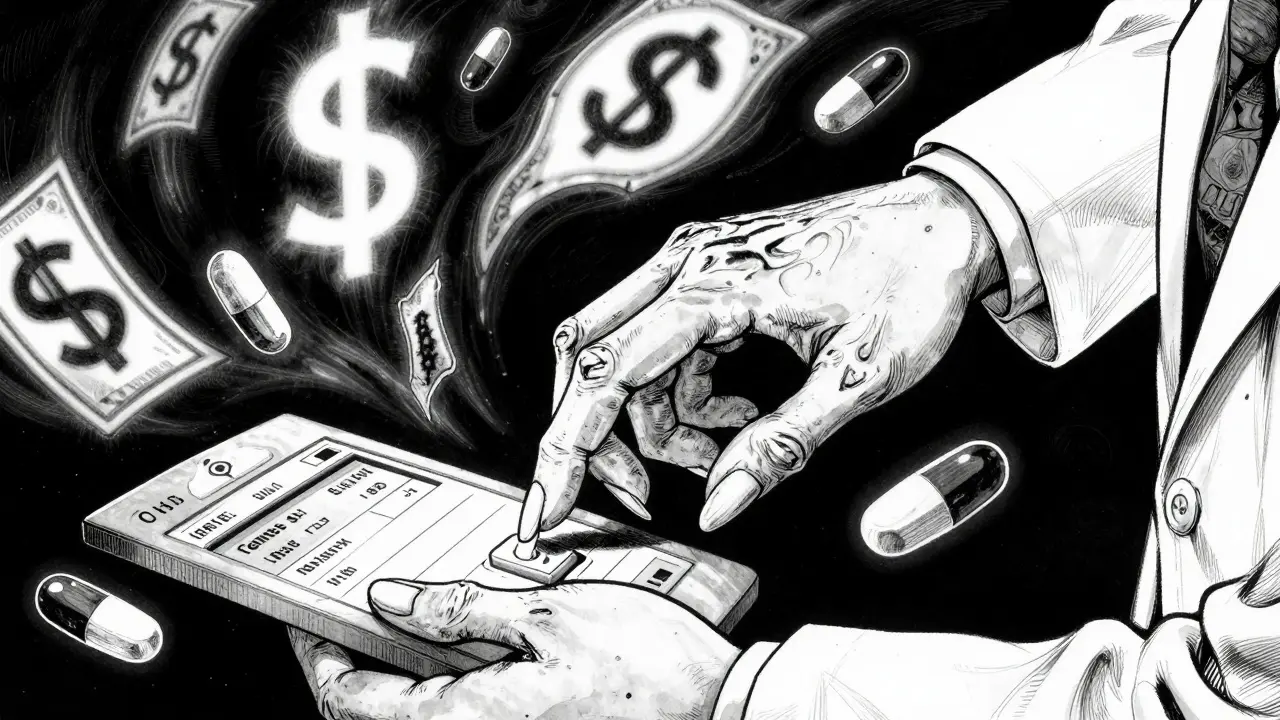
The Financial Side: Direct Rewards for Providers
For many clinicians, the most immediate draw of these programs is the direct financial impact. We aren't just talking about pennies here. Some Blue Cross Blue Shield companies have offered physicians between $5 and $15 for every generic prescription they write within specific therapeutic classes. For a busy primary care provider, these small wins can stack up to annual bonuses reaching $5,000.Programs like UnitedHealthcare's 'Value-Based Prescribing Program' take this a step further by shifting the focus from individual pills to overall value. These models have seen generic utilization jump by nearly 25% in primary care settings. When the incentive is tied to a quality metric rather than a mandatory requirement, most doctors view it positively. It turns a routine administrative task into a measurable performance win. However, it's a delicate balance. If a provider feels they are being paid to ignore a patient's specific need for a brand-name formulation, the incentive becomes a burden rather than a reward.
Beyond the Paycheck: Non-Financial Incentives
Money isn't the only lever that works. In a high-stress medical environment, time and convenience are often more valuable than a small bonus. Many health systems now use "workflow incentives" to nudge providers toward generics. One of the most effective tools is the Electronic Health Record (or EHR), which can be set to "generic-first" by default. When the system automatically suggests the generic version, providers are 22.4% more likely to use it simply because it's the path of least resistance.Other non-financial perks include:
- Fast-track Prior Authorizations: Providers who consistently prescribe generics often get their authorization requests processed faster, reducing the tedious paperwork that leads to burnout.
- Priority Scheduling: Some integrated systems offer administrative perks to high-performing providers.
- Clinical Decision Support: Sophisticated alerts that only pop up when a cheaper, equally effective alternative exists, helping doctors stay current without the "alert fatigue" caused by constant notifications.

The Clash of Incentives: When Rewards Conflict
Not all incentives align. In fact, some systems create "perverse incentives" that actually discourage generic use. Take the 340B Program, which allows certain providers to buy drugs at a significant discount. Research shows that clinicians eligible for 340B discounts actually have lower generic prescribing rates-about 52.3% compared to nearly 60% for those without the discount. Why? Because the deep discounts on brand-name drugs make the expensive option more attractive to the clinic's bottom line.Similarly, when physicians have their own dispensing rights-meaning they sell the medication directly to the patient-they tend to prescribe more expensive drugs. This creates a conflict of interest where the provider's role as a pharmacist clashes with their role as a clinician. It's a stark reminder that whatever reward is put on the table will inevitably shape the behavior of the person receiving it.
| Incentive Type | Mechanism | Impact on Generic Use | Primary Risk |
|---|---|---|---|
| Direct Financial | Per-prescription bonuses | High (up to 25% increase) | Conflict of interest/Perceived coercion |
| EHR Defaults | "Generic-first" settings | Very High (22%+ increase) | Reduced clinical nuance |
| Formulary Tiering | Lower patient co-pays | Moderate (8-12% increase) | Indirect influence on provider |
| Administrative | Faster prior authorizations | Moderate | Harder to quantify |
The Provider's Dilemma: Clinical Autonomy vs. Cost Savings
If you talk to doctors on forums like Sermo or Reddit, you'll find a divide. Some, like internal medicine physicians in California, appreciate the extra income-sometimes thousands of dollars a year-for doing something they would have done anyway. But others, particularly those managing patients with complex comorbidities, worry about "cookie-cutter medicine."There is a real fear that incentives might push a doctor to prescribe a generic for a patient who specifically needs a brand-name formulation due to an inactive ingredient or a specific delivery mechanism. When a program becomes too rigid, it can erode the trust between a patient and their doctor. If a patient suspects their physician chose a drug based on a bonus rather than a clinical need, the therapeutic relationship is damaged. This is why the American College of Physicians emphasizes that incentives must be voluntary quality metrics, not mandatory requirements that restrict clinical judgment.

Implementing Incentives: What Actually Works?
Moving a clinic toward a generic-first model isn't as simple as sending an email. It requires a strategic rollout. The most successful implementations typically involve a 3-to-6-month integration period where the EHR is updated and staff are trained. On average, providers need about 15 to 20 hours of training to feel comfortable with new prescribing defaults and incentive tracking.To avoid failure, health systems should follow these rules of thumb:
- Avoid "One-Size-Fits-All": Exclude medications where brand formulation is medically necessary from the incentive list.
- Transparency: Be clear about how the rewards are calculated to avoid suspicions of "kickbacks."
- Focus on Adherence: Combine provider rewards with patient rewards. For example, the CMS "$2 Drug List" model proved that lowering patient co-pays for generics increases utilization by over 17%.
Looking Ahead: The Future of Prescribing
We are moving toward a more sophisticated era of Value-Based Care. The 2022 Inflation Reduction Act is set to strengthen generic competition by reforming patents, which experts think will push generic use even higher by 2027. We are also seeing the rise of "value-based prescribing contracts," where a doctor's payment is tied not just to the cost of the drug, but to the actual clinical outcome of the patient.While the industry predicts that generics will make up 94% of all prescriptions by 2028, the challenge remains the same: keeping the human element in medicine. The goal isn't just to save money-it's to ensure that the most affordable, effective treatment reaches the patient without compromising the doctor's ability to treat the individual, not the average.
Do generic prescribing incentives lead to lower quality of care?
Not necessarily, provided the incentives are designed correctly. When rewards are tied to therapeutic equivalence-meaning the generic is clinically identical to the brand-there is no loss in quality. However, risks arise if the system is too rigid and discourages providers from using brand-name drugs in complex cases where a specific formulation is medically necessary.
How much can a doctor actually earn from these incentives?
Earnings vary widely by program. Some Blue Cross Blue Shield initiatives offer $5-$15 per generic prescription, which can lead to annual bonuses of up to $5,000 per provider. Other programs provide smaller, aggregated payments based on overall generic utilization rates across their entire patient panel.
What is the difference between a financial incentive and a formulary tier?
A formulary tier is a patient-facing incentive; it makes generics cheaper for the patient via lower co-pays. A provider incentive is a direct reward (money or time) given to the doctor for choosing the generic. While tiers influence behavior indirectly, direct provider incentives generally have a stronger impact on increasing generic prescribing rates.
Are there non-financial ways to encourage generic prescribing?
Yes. The most effective non-financial method is integrating "generic-first" defaults in EHR systems. Other methods include expediting the prior authorization process for providers who use generics and providing clinical decision support alerts that highlight affordable alternatives during the prescribing process.
Why do some programs, like 340B, actually discourage generics?
The 340B program provides deep discounts on brand-name drugs to eligible clinics. This creates a financial incentive for the clinic to prescribe the brand-name version because they can acquire it very cheaply, even if a generic is available on the wider market. This is a classic example of misaligned incentives.





13 Comments
Del Bourne
April 6, 2026 AT 09:32 AMIt's really important to highlight that therapeutic equivalence is the gold standard here. When the active ingredients are identical, the cost savings for the patient are immense, and the provider's incentive simply aligns the financial reward with a positive patient outcome. I've seen many cases where patients were sticking to brands simply because their doctor didn't suggest the generic alternative, so these nudges are actually quite helpful for the average person.
jack hunter
April 7, 2026 AT 13:10 PMclassic corporate greed disguise as 'sustainablity' lol. they just want to pay docs peanuts to push the cheapest stuff while the big pharma companies still make billions on the backend anyway. its all a game and we are just the pawns in the midle of it all
Benjamin cusden
April 8, 2026 AT 22:07 PMThe mention of the 340B program is the only intellectually stimulating part of this discussion. Most people fail to grasp that institutional procurement strategies almost always override individual clinician preference. It is a rudimentary exercise in game theory: the entity that captures the most value-in this case, the clinic via the 340B discount-will naturally steer the prescription toward the brand-name drug regardless of the generic's existence. It's quite simplistic when you actually understand how healthcare economics operate.
Ethan Davis
April 9, 2026 AT 17:58 PMFollow the money. These 'incentives' are just a way for insurance companies to control exactly what goes into our bodies without the doctor actually having to explain why they're switching us to a cheaper version. They're basically paying off the docs to be salesmen for the insurance firms. Wake up!
Victoria Gregory
April 11, 2026 AT 09:35 AMI love the idea of making healthcare more affordable for everyone!!! 🌟 It's so wonderful when we can find a way to help the patients and the doctors at the same time... such a win-win situation!! ✨💖
Jamar Taylor
April 11, 2026 AT 15:57 PMLet's keep this energy going! If we can streamline the process and get more people on affordable meds, we're winning the battle for better public health. Keep pushing for those EHR defaults!
Srikanth Makineni
April 12, 2026 AT 21:57 PMEHR defaults are the real winner here. Less friction equals more generics. Simple
Kathleen Painter
April 14, 2026 AT 21:15 PMI've spent a lot of time thinking about how these systems impact the actual human connection in the exam room, and I feel like as long as we maintain an open dialogue about why a generic is being chosen, we can avoid that 'cookie-cutter' feeling that so many people fear. It's really about the mentorship role the doctor plays in guiding the patient through their treatment options, and if the doctor is transparent about the cost-saving benefits, most patients are more than happy to go with the cheaper option because it reduces their own financial stress, which in turn improves their overall mental well-being and adherence to the medication anyway, creating a positive feedback loop for everyone involved in the care process.
Laurie Iten
April 14, 2026 AT 21:24 PMthe balance between profit and care is a thin line we must walk carefully
Timothy Burroughs
April 16, 2026 AT 19:32 PMtypical american healthcare mess trying to fix a leak with a bandaid while the whole house is on fire it is pathetic how we have to pay doctors to do the right thing
Stephen Luce
April 17, 2026 AT 20:07 PMI can totally see why some patients would feel uneasy if they knew their doctor was getting a bonus. It's a tough spot for the provider to be in, trying to do what's best for the wallet and the health at the same time.
Nikhil Bhatia
April 18, 2026 AT 11:12 AMWhatever
dwight koyner
April 19, 2026 AT 05:03 AMIt is imperative to ensure that these incentive structures remain transparent. When the financial reward is clearly delineated as a quality metric rather than a kickback, it preserves the integrity of the physician-patient relationship and ensures that the primary objective remains the delivery of high-quality, cost-effective care.