
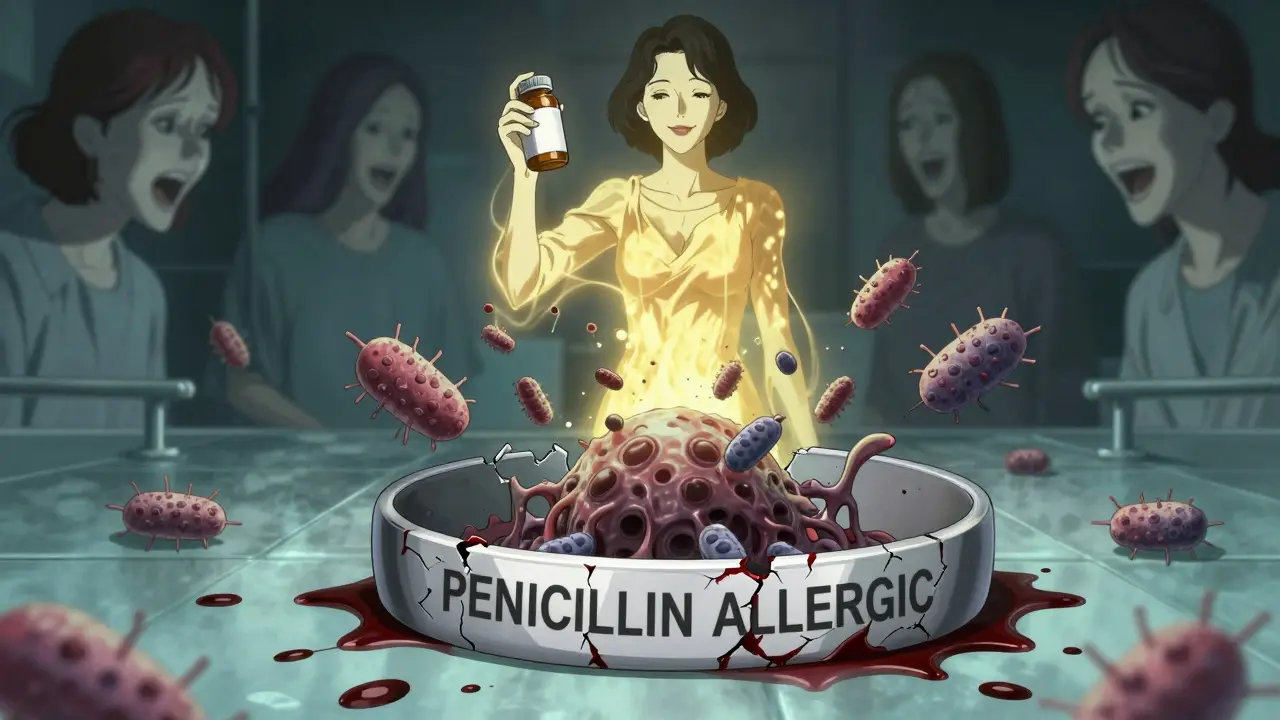
Many people believe they’re allergic to antibiotics-especially penicillin-because they had a rash, stomach upset, or dizziness years ago. But here’s the truth: penicillin allergy is often misdiagnosed. In fact, 9 out of 10 people who think they’re allergic to penicillin aren’t. That’s not just a myth-it’s backed by data from the CDC and major medical societies. The problem? Mislabeling leads to worse outcomes: longer hospital stays, higher costs, and stronger antibiotics that fuel resistance. The fix? Proper allergy testing. And if you’ve been told you’re allergic, preparing right for that test could change your health for good.
Stop These Medications Before Testing
One of the biggest mistakes people make is not stopping the right meds before their test. Antihistamines-like Benadryl, Zyrtec, Claritin, and Allegra-can hide signs of an allergic reaction during testing. That means your test could come back negative even if you’re truly allergic. That’s dangerous.
First-generation antihistamines such as diphenhydramine and hydroxyzine must be stopped at least 72 hours before your appointment. For second-generation ones-cetirizine, loratadine, fexofenadine, and levocetirizine-you need to go cold turkey for a full 7 days. Some people don’t realize that even over-the-counter sleep aids or cold medicines contain these ingredients. Check every bottle.
Tricyclic antidepressants like doxepin also have antihistamine effects. If you’re on one, you’ll need to stop it 14 days before testing. Don’t quit these on your own-talk to your doctor. They might switch you temporarily to a non-interfering alternative.
Don’t stop essential meds like blood pressure drugs or heart medications unless your allergist says so. Beta-blockers, for example, are okay to keep taking, but they can mask early warning signs of anaphylaxis. Your doctor will watch you extra closely if you’re on them. Same goes for ACE inhibitors-they can make allergic reactions harder to treat. Tell your allergist every pill, patch, or supplement you’re using.
What Happens During the Test
Antibiotic allergy testing isn’t one thing-it’s a step-by-step process designed to be safe and accurate. Most centers follow the same protocol, especially for penicillin and related drugs like amoxicillin or cephalexin.
First, there’s the skin prick test. A tiny drop of penicillin reagent is placed on your forearm or back, then the skin is lightly pricked. It doesn’t hurt much-like a mosquito bite. If you’re allergic, you’ll get a red, itchy bump within 15 minutes. If nothing happens, you move to the next step.
The second step is the intradermal test. A small amount of the same reagent is injected just under the skin. You’ll see a little bubble form. Again, if you’re allergic, swelling and redness bigger than 3mm will appear. This test is more sensitive than the prick test and catches reactions the first test might miss.
If both skin tests are negative, you’ll get an oral challenge. This is the final step. You’ll swallow a small dose-usually 10% of a regular pill-then wait 30 minutes. If you’re fine, you’ll take the full dose and be monitored for another hour. This is where most people are surprised: it’s just swallowing a pill. No needles, no IVs. And the risk of a serious reaction? Less than 0.06%. That’s lower than the risk of being struck by lightning.
Every clinic doing this test has epinephrine, antihistamines, and oxygen ready. They’re trained to handle rare reactions. You’re not being tested alone-you’re in a controlled environment with experts watching every second.

What a Positive Result Means
If you react during the skin test or oral challenge, it means you likely have a true IgE-mediated allergy. That’s the kind that can cause anaphylaxis. If that’s you, you’ll be given a medical alert bracelet and a list of antibiotics to avoid. But here’s the good news: even if you’re allergic now, you might not be forever.
Studies show about half of people who had a severe reaction to penicillin as a child lose the allergy within 5 years. After 10 years, that number jumps to 80%. That’s why retesting later in life makes sense-even if you were told you were allergic decades ago.
Some people get delayed reactions-itching or swelling at the test site 4 to 8 hours later. That’s not a sign of danger. It’s a local reaction, common in 15% of patients. A little hydrocortisone cream helps. No need to panic.
But if you get hives, trouble breathing, or swelling of the lips or tongue during the test, that’s a true positive. Don’t ignore it. That’s your body telling you to avoid penicillin and related drugs. Your allergist will help you understand what alternatives are safe.
Why This Test Matters More Than You Think
Here’s the real impact: if you’re wrongly labeled allergic to penicillin, doctors can’t use it. Instead, they give you broader-spectrum antibiotics like vancomycin, daptomycin, or fluoroquinolones. These drugs cost up to 150 times more. One patient in a 2023 study switched from $1,850-per-dose daptomycin to $12 penicillin for a bone infection. Their annual antibiotic bill dropped from $67,525 to $4,380.
It’s not just money. Broader antibiotics kill off good bacteria, increase the risk of C. diff infections, and push bacteria toward resistance. The CDC estimates that mislabeled penicillin allergies lead to 69% more use of these drugs. That’s not just bad for you-it’s bad for everyone.
Testing saves lives. One study found that patients who were cleared of penicillin allergy had 32% fewer infection complications and stayed in the hospital 1.7 days less on average. Every dollar spent on testing saves $5.70 in avoided costs. That’s why leading hospitals are now building formal “de-labeling” programs. By 2027, 75% of U.S. hospitals plan to have them.
What Patients Really Say
Most people are nervous before testing. But after? The feedback is overwhelming.
A 2023 survey of over 1,200 patients found that 92% said the test was less uncomfortable than they expected. On Reddit, users shared: “The skin prick felt like a mosquito bite.” “I thought I’d be hooked up to machines. I just swallowed a pill.”
The biggest complaint? The prep work. Stopping antihistamines for a week is annoying, especially if you rely on them for seasonal allergies. But patients who stuck with it said it was worth it. One woman in Birmingham told her allergist she’d been avoiding penicillin since age 12 after a rash. At 41, she tested negative. She’s now taking amoxicillin for a sinus infection-and saving hundreds a year.
Another patient, a teacher with recurring ear infections, had been on expensive antibiotics for years. After testing, she switched to penicillin. Her insurance approved it. Her doctor said she was “lucky” to have found the right path. She wasn’t lucky-she was informed.
What If You Can’t Get Tested?
Not everyone has easy access to an allergist. In rural areas, 63% of counties have no allergy specialist. Primary care doctors often don’t follow testing guidelines-only 17% do consistently.
But change is coming. A pilot program at UCSF showed that with telehealth supervision, low-risk patients could safely do oral challenges at home. The success rate? 94.7%. The NIH is also funding a new blood test that could replace skin testing altogether. Right now, blood tests for penicillin allergy aren’t reliable. That’s changing.
If you’re stuck, ask your doctor for a referral. If they say no, ask why. You have a right to know if you’re truly allergic. Don’t let outdated labels hold you back.




15 Comments
Juan Reibelo
January 23, 2026 AT 20:36 PMI’ve been avoiding penicillin since I was 10-rash after a tonsil infection. Thought I was doomed to expensive antibiotics forever. Got tested last year. Negative. Swallowed a whole pill in front of my allergist like it was a gummy bear. Now I’m saving $3,000 a year. Why didn’t anyone tell me this sooner?
Also-stop taking Zyrtec for a week. I forgot. Test came back inconclusive. Had to reschedule. Don’t be me.
Don Foster
January 25, 2026 AT 07:53 AM9 out of 10 people are wrong about penicillin allergies? That’s not data that’s wishful thinking. You’re telling me the CDC knows better than my own body’s reaction? I got hives. I got swelling. I got scared. You think I’m lying because your stats say so? No thanks. I’ll stick with vancomycin thanks. Your math doesn’t override my lived experience.
Also beta-blockers are fine? Really? You’re putting people at risk for anaphylaxis masking. That’s not medical advice that’s a death sentence waiting to happen.
Phil Maxwell
January 26, 2026 AT 06:13 AMMy mom had the test last month. She was terrified. Thought she’d be stuck in a hospital for days. Ended up being a 2-hour appointment. They did the skin prick, then the injection, then she just ate a pill. Walked out like nothing happened. She’s been on amoxicillin for her sinus infection now. No issues. Honestly? It’s way less scary than it sounds.
Just don’t forget to stop the antihistamines. That part is brutal. I had to give up my allergy meds for a week and it felt like my sinuses were on fire.
Tommy Sandri
January 27, 2026 AT 04:40 AMIt is imperative to underscore the public health implications of mislabeled antibiotic allergies. The economic burden, compounded by the acceleration of antimicrobial resistance, constitutes a significant strain on healthcare infrastructure. The data presented by the CDC and peer-reviewed studies are unequivocal in demonstrating the efficacy and safety of structured de-labeling protocols.
Furthermore, the integration of telehealth-assisted oral challenges represents a paradigm shift in allergen accessibility, particularly in underserved regions. This innovation aligns with the principles of equitable healthcare delivery and should be prioritized in policy reform.
Karen Conlin
January 27, 2026 AT 07:33 AMY’all need to stop being scared of this test. I used to be the person who avoided penicillin like it was poison-until I got tested. It was literally just a few tiny pricks and then a pill. I didn’t die. I didn’t even break out. Now I’m taking the cheapest, most effective antibiotic for my UTIs. My insurance is thrilled. My doctor is thrilled. I’m thrilled.
If you’re on antihistamines for seasonal allergies? Suck it up for a week. Your future self will thank you. This isn’t a luxury. This is how you stop being a walking antibiotic overuse statistic. You’re not special. Your body isn’t broken. You just got mislabeled. Fix it.
asa MNG
January 28, 2026 AT 07:11 AMOMG I DID THIS LAST YEAR 😭 I thought I was allergic to everything. Took me 20 years to figure out I wasn’t even allergic to penicillin. I was taking azithromycin for EVERYTHING. My body was wrecked. C diff twice. Now I take amoxicillin like candy. The prep sucked tho. Stopped my Zyrtec and my face felt like a balloon. But WORTH IT. My doctor said I saved the system like $8k. I’m a hero 🙌
PS: I still take Benadryl for my cats sneezing. It’s fine. Just not before the test. 🐱❤️
Sushrita Chakraborty
January 29, 2026 AT 01:54 AMAs a healthcare professional from India, I have observed a significant gap in public awareness regarding antibiotic allergy misdiagnosis. The cultural stigma around medication use often leads to self-diagnosis and avoidance, which in turn contributes to inappropriate prescribing. The data presented here is not only scientifically sound but also culturally relevant.
It is imperative that primary care providers receive training in allergy de-labeling protocols. In rural India, where access to allergists is minimal, telehealth-based oral challenges could be a transformative intervention. We must not allow misinformation to perpetuate unnecessary suffering and economic burden.
Josh McEvoy
January 29, 2026 AT 18:10 PMso i took the test… and i cried. not because it hurt. because i realized i’d been avoiding penicillin since i was 8. 33 years. 33 years of expensive antibiotics. 33 years of my mom saying "you’re allergic to everything" like it was a family trait.
now i’m on amoxicillin. my insurance paid for it. my doctor high-fived me. i cried again. this time happy.
also… i didn’t even know my cold medicine had antihistamines. i’m so dumb.
Heather McCubbin
January 29, 2026 AT 21:35 PMPeople think they’re allergic to penicillin because they got a rash once? That’s not an allergy. That’s your body saying "nope". But you’re not allergic. You’re just sensitive. And you’re letting Big Pharma keep you scared so they can sell you $200 antibiotics.
You don’t need testing. You need to stop trusting doctors who don’t know the difference between a rash and anaphylaxis. I’ve seen people die because they were given the wrong drug because they were "allergic". This isn’t science. It’s corporate laziness.
Chloe Hadland
January 31, 2026 AT 03:24 AMMy sister did this test and it changed her life. She’d been on clindamycin for every infection since she was 16. Had stomach issues every time. After testing? Negative. Now she takes penicillin. No more bloating. No more $500 bills. She said the whole thing felt like a doctor’s appointment where they just poked her and asked if she felt itchy.
Just… stop being scared. The worst part is waiting. The test itself? Totally fine. You’re not going to die. You’re going to get your life back.
Michael Camilleri
January 31, 2026 AT 07:26 AMYou people are so naive. You think a skin test is going to catch everything? What about delayed reactions? What about non-IgE mediated allergies? You’re reducing a complex immune response to a cartoon quiz. And then you act like you’re a hero for taking a pill?
My cousin had a reaction two days after the "negative" test. Ended up in ICU. You think that’s okay? You think the CDC’s numbers mean anything when real people are getting hurt?
Stop pushing this as a win. It’s a gamble. And you’re gambling with lives.
Darren Links
January 31, 2026 AT 08:06 AMWhy are we letting Americans dictate global antibiotic policy? In Europe, we don’t do these "de-labeling" tests because we know allergies are real. We don’t need your statistics to tell us what our bodies feel. You think penicillin is harmless? You’ve never seen a true anaphylactic reaction. We don’t need your "safe" pill challenge. We need respect for real reactions.
Also-your "9 out of 10" stat? That’s American data. We have different genetics. Different diets. Different microbiomes. You’re not helping. You’re exporting ignorance.
Kevin Waters
February 2, 2026 AT 04:41 AMJust want to add something practical: if you’re on tricyclics like doxepin for depression, don’t panic. Talk to your doctor. They can switch you to something like sertraline for two weeks. It’s not ideal, but it’s safer than getting a false negative on your test. I did it. Took me 10 days to adjust, but I got through it.
And if you’re worried about the oral challenge? Just breathe. They watch you for an hour. If anything happens, they’ve got epinephrine ready. It’s not like they’re just handing you a pill and saying "good luck". You’re not alone in that room.
Jamie Hooper
February 2, 2026 AT 23:51 PMso i did the test and it was fine but the prep was the worst part. i had to stop my allergy meds and i was sniffling like a cartoon. my partner kept asking if i was sick. i was like "no i’m just allergic to being allergic"
also i didn’t realize my night cream had antihistamines. who puts that in moisturizer??
now i’m on penicillin and my sinus infection is gone in 2 days. i’m basically a superhero.
Husain Atther
February 3, 2026 AT 03:26 AMAs someone from a rural area in India where allergists are nonexistent, I want to say: this article gives me hope. I’ve seen patients suffer for years because doctors assumed they were allergic to penicillin and prescribed expensive, broad-spectrum drugs. The telehealth pilot mentioned here is exactly what we need. If we can train primary care workers to guide patients through safe oral challenges under supervision, we can save lives and money.
Let’s not wait for perfect infrastructure. Let’s adapt what works. This isn’t just about penicillin-it’s about dignity in healthcare.